

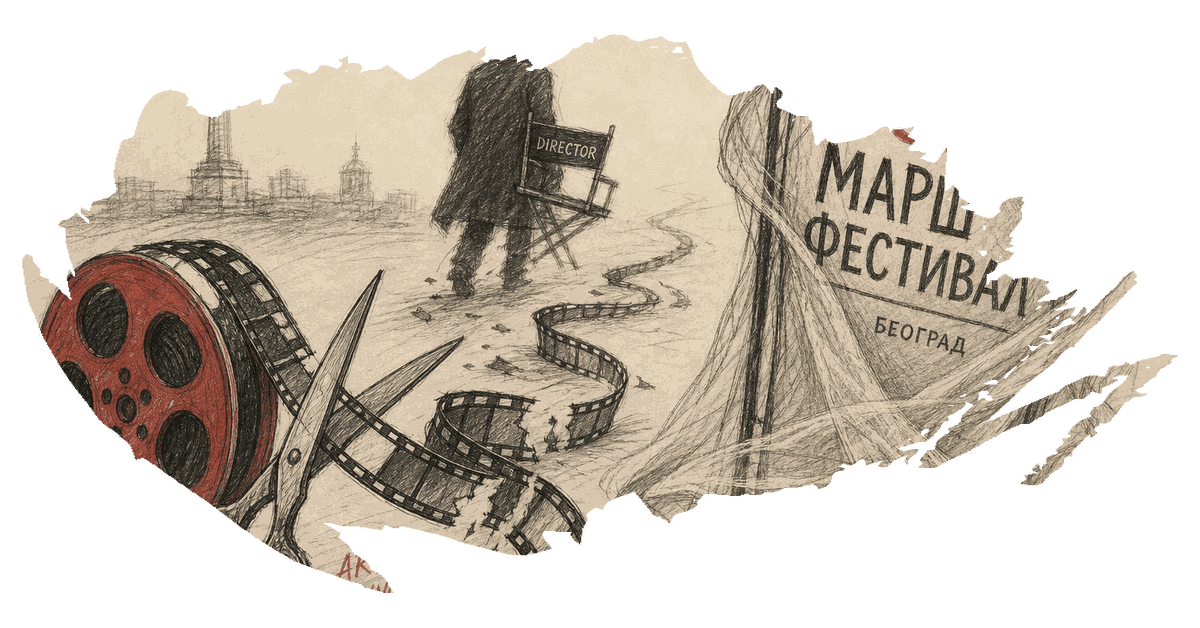
The 73rd March Festival in Serbia is facing significant challenges as several directors, including Stefan Ivančić, have withdrawn their films in protest against what they perceive as censorship by the Festival Board. The controversy erupted following the resignation of Dejan Dabić, the festival’s artistic director, who stepped down after the Board refused to delay a session meant for him to explain his film selections. This incident has raised concerns about the festival’s integrity and the broader implications of censorship in Serbian cultural events.
Stefan Ivančić, whose film “When Dawn” was slated to be part of the festival, publicly criticized the Board’s actions, describing them as a form of censorship. Ivančić’s film, which explores socio-political issues in Serbia, was withdrawn as he felt participating would be hypocritical under the current circumstances. He expressed his support for Dabić, emphasizing the importance of artistic freedom and criticizing the Board’s decision to potentially reject films based on their content. Ivančić stated, “It is precisely the ban that makes the idea visible and strong,” highlighting the power of art to challenge societal norms.

The March Festival, known as the oldest film festival in Serbia, is scheduled to take place from September 21 to 27 at the Youth Center of Belgrade. This year’s edition was supposed to feature a double selection, covering two years, as the festival did not occur last year. However, with the withdrawal of films, the lineup of 31 domestic films is expected to be significantly reduced.
The resignation of Dabić, who cited health reasons for his inability to attend the session, left the festival without a new artistic director or a clear plan for the already completed selection. The Board’s decision to proceed without addressing these issues has led to widespread dissatisfaction among filmmakers. Despite the turmoil, the Secretariat for Culture has assured that the festival will go ahead as planned.
The situation at the March Festival is not an isolated incident but part of a broader pattern of censorship concerns in Serbian arts and culture. Previous discussions have highlighted similar issues at other cultural events, where political and artistic freedoms often come into conflict. The withdrawal of films from the festival underscores the ongoing struggle for artistic expression in Serbia, where filmmakers and artists frequently face challenges in showcasing works that critique or reflect on societal realities.
Ivančić’s decision to withdraw his film and his vocal criticism of the festival’s Board have sparked discussions about the role of censorship in shaping cultural narratives. His film “When Dawn,” which premiered at the International Film Festival in Rotterdam last year, tells the story of a single mother involved in internet scams after losing her job, reflecting the socio-economic challenges in contemporary Serbia. The film’s withdrawal from the March Festival highlights the tension between artistic freedom and institutional control.
The March Festival’s current predicament reflects the broader cultural landscape in Serbia, where artists and cultural organizers often navigate complex political and social dynamics. The festival’s future, along with the broader implications for Serbian filmmakers, remains uncertain as the cultural community grapples with issues of censorship and artistic autonomy.
0 Comments