

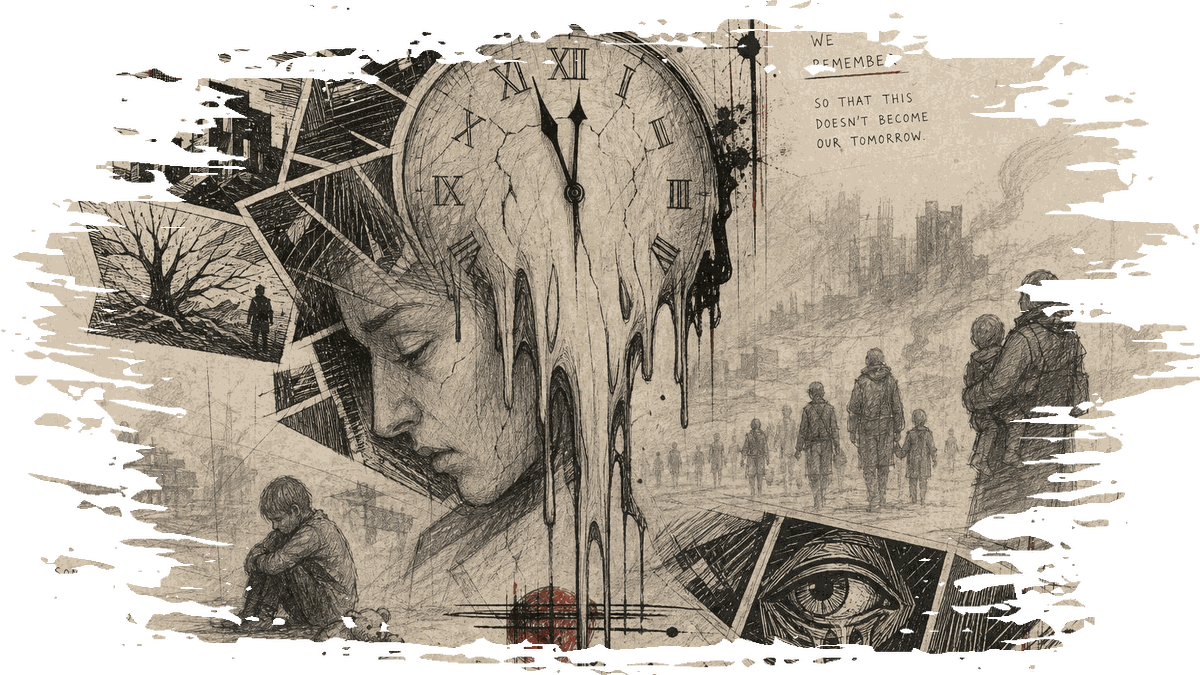
Rastko Šejić’s animated film “War Noon” has been selected for the official competition at the 10th International Film Festival of Democratic Memory (FESCIMED) in Madrid. The festival, which takes place from December 2 to 6, is known for showcasing films that are deeply engaged with social issues, focusing on themes such as historical memory, political violence, and human rights. Held at the Madrid Cinematheque within the Matadero Madrid cultural complex, FESCIMED is organized by Arte y Memoria, an independent collective dedicated to using film as a tool for truth, justice, and reparation for victims.
“War Noon,” a one-minute anti-war animation, explores the psychological impacts of war through a distinctive visual style inspired by woodcut techniques. Rather than depicting war directly, the film delves into the psychological fragmentation, moral confusion, and the fragile humanity that persists amidst destruction. The narrative is based on a poem by Živojin Rakočević, which portrays the silence preceding conflict, written during his time in the Kosovo ghetto.

The inclusion of “War Noon” in FESCIMED underscores the growing international recognition of Serbian filmmakers who tackle complex social issues. The film is part of a competition featuring 19 films selected from numerous international entries, highlighting the global interest in narratives that address the consequences of war and the preservation of democratic memory.
This recognition comes at a time when Serbian cinema is increasingly noted for its artistic and social commentary, reflecting the country’s intricate historical backdrop. The selection of “War Noon” at such a prestigious festival not only highlights the film’s thematic depth but also signals a broader acceptance and appreciation of Serbian contributions to global cinematic discourse on war and memory.
Before its selection for FESCIMED, “War Noon” was also a finalist at the Migration Matters festival in Stockholm, further establishing its resonance with international audiences. This growing recognition of Serbian films that engage with themes of war and memory is indicative of a cultural shift within the country’s film industry, as filmmakers continue to explore and comment on Serbia’s complex historical and social landscape.
The festival’s focus on socially engaged films aligns with the thematic concerns of “War Noon,” making its inclusion particularly significant. By participating in FESCIMED, Šejić’s film joins a broader conversation about the role of art in addressing and preserving historical truths and advocating for victims of political violence. This platform provides an opportunity for Serbian filmmakers to contribute to global dialogues on these critical issues, potentially influencing both audiences and the film industry at large.
0 Comments