

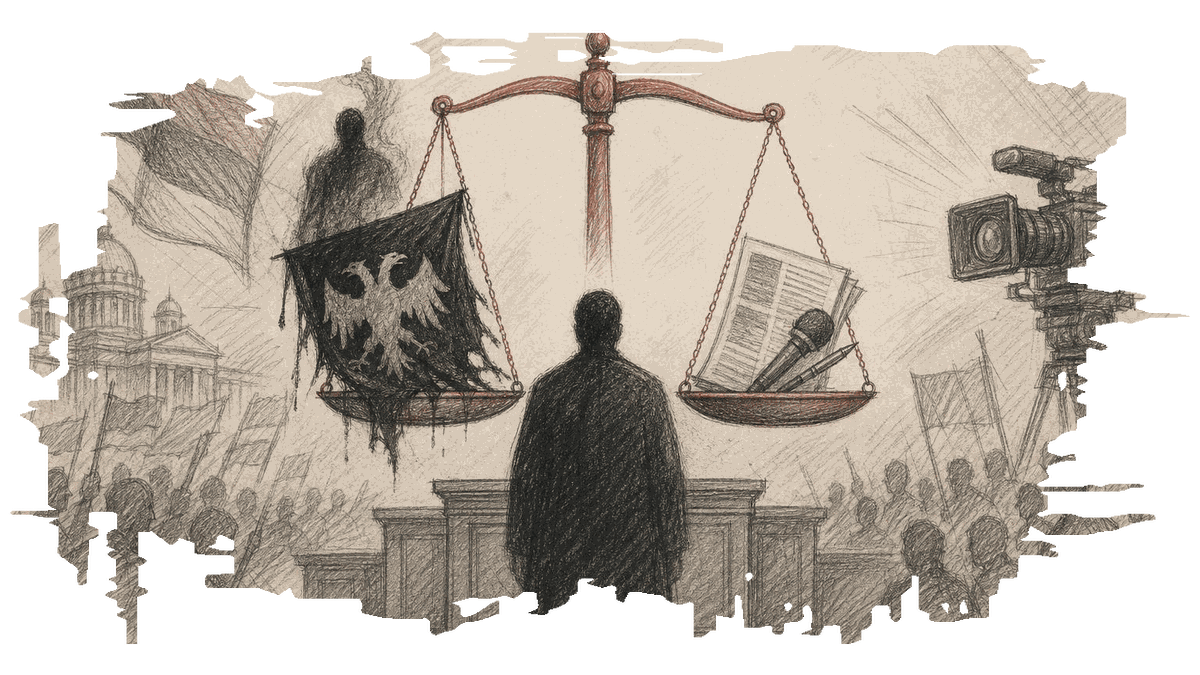
Vladan Sretenović, who is on trial for attacking a news crew, appeared in court wearing a shirt featuring Ratko Mladić, a convicted war criminal, raising concerns about the normalization of extremist symbols in Serbia. The trial, which took place on October 12, 2026, comes after the incident in November 2025, where Sretenović and his associates assaulted a crew from N1 television outside the Serbian parliament. The attack involved the destruction of the crew’s equipment, yet despite the presence of over ten police officers, no immediate action was taken against Sretenović.
Sretenović’s appearance in court, donning a shirt with Mladić’s image and a cap associated with him, along with two associates wearing similar attire, has been criticized by the Association of Independent Electronic Media (ANEM). The shirt bore a message, reportedly attributed to Patriarch Pavle, which read, “A man is stronger dead than a non-man alive.” This display went unchallenged by the presiding judge, Ružica Savić, during the proceedings.

The attack on the N1 crew, which included award-winning journalist Maja Nikolić and cameraman Ivan Pavlović, occurred in a tense environment marked by the presence of the illegal paramilitary settlement known as “Ćacilend.” This area, stretching from Pionirski Park to Bulevar Kralja Aleksandra, has been associated with issues of paramilitary presence and public safety. The incident highlights ongoing tensions in Serbia regarding the legacy of the Yugoslav Wars and the glorification of war criminals.
Sretenović’s criminal history includes a previous conviction for murder, where his sentence was reduced from 35 to 15 years. After serving his time, he was convicted again for violent behavior in Arilje, resulting in a year and a half imprisonment. He was on the run until his arrest in Croatia and subsequent extradition to Serbia, which occurred a month and a half after the attack on the N1 crew.
The trial has drawn attention to the broader issue of rising nationalism and extremism in Serbia. The judicial system’s response to such displays of extremism remains uncertain, raising questions about accountability and the implications for press freedom and public safety. Press organizations and civil society have expressed concern over the normalization of extremist symbols and the lack of immediate police intervention during the attack.
As the trial continues, the court will decide on various procedural matters, including the testimony of journalist Maja Nikolić. Sretenović has declined to answer questions from the court, prosecution, or the representatives of the injured parties. His defense lawyer has requested the court to hear from the legal representative of N1, as the former director Igor Božić is no longer in that role.
The incident and subsequent trial are set against a backdrop of Serbia’s struggle with its wartime past and the current political climate, where the glorification of war criminals is not merely a fringe issue but has significant public and political implications. This case underscores the challenges Serbia faces in addressing its historical legacy while ensuring the safety and freedom of the press.


0 Comments