

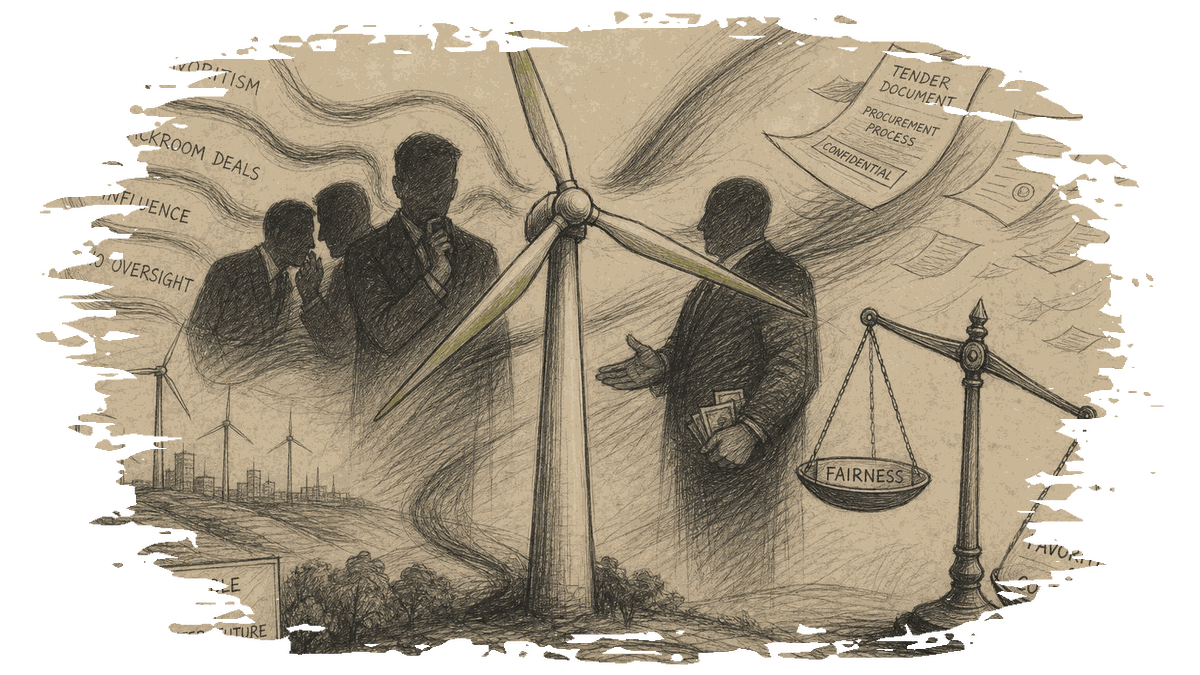
The Serbian state-owned power company Elektroprivreda Srbije (EPS) is facing criticism over its plans to acquire renewable energy projects due to concerns about transparency and potential corruption. The process, which involves purchasing projects in wind, water, and solar energy, is criticized for its lack of public oversight. Experts warn that the broad discretionary power granted to EPS in this procurement process could lead to favoritism and corruption.
EPS’s initiative to expand its renewable energy portfolio comes as part of Serbia’s efforts to reduce pollution and ensure a stable electricity supply, as well as to comply with European Union accession requirements. However, the manner in which EPS is conducting this procurement has raised alarms. The evaluation of projects will be based on the Discounted Cash Flow (DCF) methodology, a common practice among state energy companies in the region. Despite this, Dejan Stojadinović, a renewable energy expert, points out that the public will not be able to independently verify whether the assumptions used in the evaluation are fair or overly favorable to sellers. He notes that while the method itself is sound, the integrity of the entire evaluation process depends on numerous unknowns.

Furthermore, the results of the due diligence process, which significantly influence the pricing of these projects, will not be accessible to the public due to the inclusion of confidential data. This lack of transparency is compounded by the fact that the procurement process is not classified as a public tender. As a result, bidders do not have the right to appeal to the Republic Commission for the Protection of Rights in Public Procurement Procedures, and disputes must be resolved through the courts.
Stojadinović also highlights that the composition and independence of the project evaluation committee are not defined, and the tender documentation does not require the public disclosure of results, including the identities of bidders, purchase prices, or reasons for rejecting offers. These omissions do not necessarily indicate that corruption or favoritism will occur, but the absence of procedures to prevent such outcomes or to allow external verification raises concerns.
The renewable energy sector in Serbia has historically been a lucrative field for businessmen with close ties to the government. In April 2026, a new method for calculating electricity prices was introduced to facilitate the operation of renewable energy sources. While these changes are technically oriented and do not affect household electricity prices, they primarily benefit energy producers, particularly those in solar and wind power. Miloš Zdravković, an energy expert, notes that entering the renewable energy business in Serbia is largely limited to a select group of individuals and companies, often those with familial or close connections to top government officials.
The first wind farm in Serbia, for example, was not built by a major foreign company, despite significant interest, but by Serbian businessman Miodrag Kostić, who was uniquely positioned to provide the necessary state-prescribed guarantees through his own bank. This situation underscores the perception that regulations are tailored to benefit a privileged few, further enriching those who are already wealthy.
The EPS procurement process and its potential implications for public trust and accountability in Serbia’s energy sector are significant. The lack of transparency and the potential for favoritism and corruption could undermine public confidence in the state’s ability to manage its energy transition effectively. As Serbia continues to navigate its path towards renewable energy, ensuring transparency and accountability in state-owned enterprises remains a critical challenge.



0 Comments