

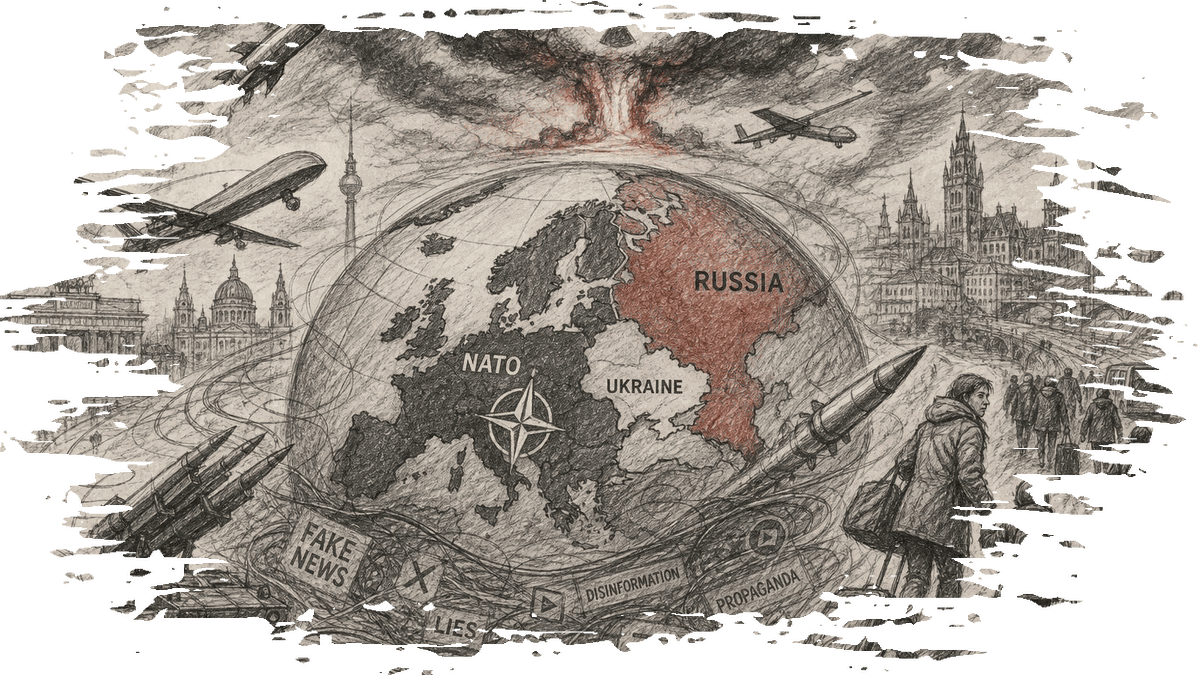
The conflict in Ukraine, now nearing its fifth year, is increasingly being compared to the two World Wars due to its scale and impact on Europe. As the war drags on, there are growing concerns that it may escalate into a broader conflict involving NATO and Russia, raising fears of a potential nuclear confrontation. Experts warn that a direct conflict between these two nuclear-armed entities could quickly escalate, given Russia’s relatively weaker conventional military capabilities compared to NATO, which might prompt it to resort to nuclear weapons.
The situation has become more precarious as both sides have intensified their aggressive rhetoric. In recent months, there have been numerous exchanges of threats between European and Russian officials. For instance, Dmitry Medvedev, a close ally of Russian President Vladimir Putin, has openly identified European drone production facilities as potential targets. In response, European officials have made bold statements about their military capabilities, with Germany’s air force commander and Poland’s foreign minister making assertive remarks about their countries’ readiness to confront Russia.

This war of words has reached a critical point, with Moscow recently lowering its threshold for the use of nuclear weapons and formally warning NATO of its readiness to employ such measures. This development follows leaked plans that identify Kaliningrad, a key Russian military stronghold, as a primary target in the event of a conflict between Russia and NATO.
The risks of miscalculation and misinformation are higher than ever, with both sides frequently exchanging threats. The potential for accidental escalation is further compounded by the dense fog of disinformation, which is sometimes intentional. This has led to heightened tensions across Europe, with countries like the Baltic states implementing mass evacuation plans and German hospitals preparing for potential mass casualties.
The conflict’s escalation has also led to accusations of sabotage by European officials, who claim that Russia has been involved in a series of disruptive activities targeting defense industry facilities across Europe. One notable incident involved a set of drones loaded with explosives discovered near Leipzig airport, a key NATO logistics hub for supplying Ukraine. Although no casualties occurred, the incident has been compared to significant historical attacks, highlighting the severity of the situation.
As the conflict continues, there is an increasing sense of urgency among European capitals, with discussions about military conscription and preparations for what seems like an almost inevitable confrontation. This tense atmosphere is exacerbated by the ongoing Russian airstrikes in Ukraine, which have seen Russian munitions and drones frequently crossing into European airspace.
The stakes of a direct Russian-European war are incredibly high. Experts have long argued that such a conflict would likely escalate into a nuclear war, with devastating consequences for humanity. This scenario underscores the importance of careful diplomacy and restraint, which world leaders have historically exercised to prevent conflicts between NATO and the former Soviet Union from escalating to such catastrophic levels.
Despite these efforts, the current situation remains volatile. The international community is closely monitoring developments, hoping to prevent the realization of the darkest predictions of anti-war advocates, who have long warned that NATO member states might unwittingly stumble into a larger and more dangerous conflict with Russia.
The ongoing war in Ukraine, the largest land conflict in Europe since World War II, continues to evolve, with the potential for broader implications that could reshape the geopolitical landscape. As the situation unfolds, the world watches with bated breath, aware of the high stakes involved and the critical importance of finding a peaceful resolution to prevent further escalation.



0 Comments