

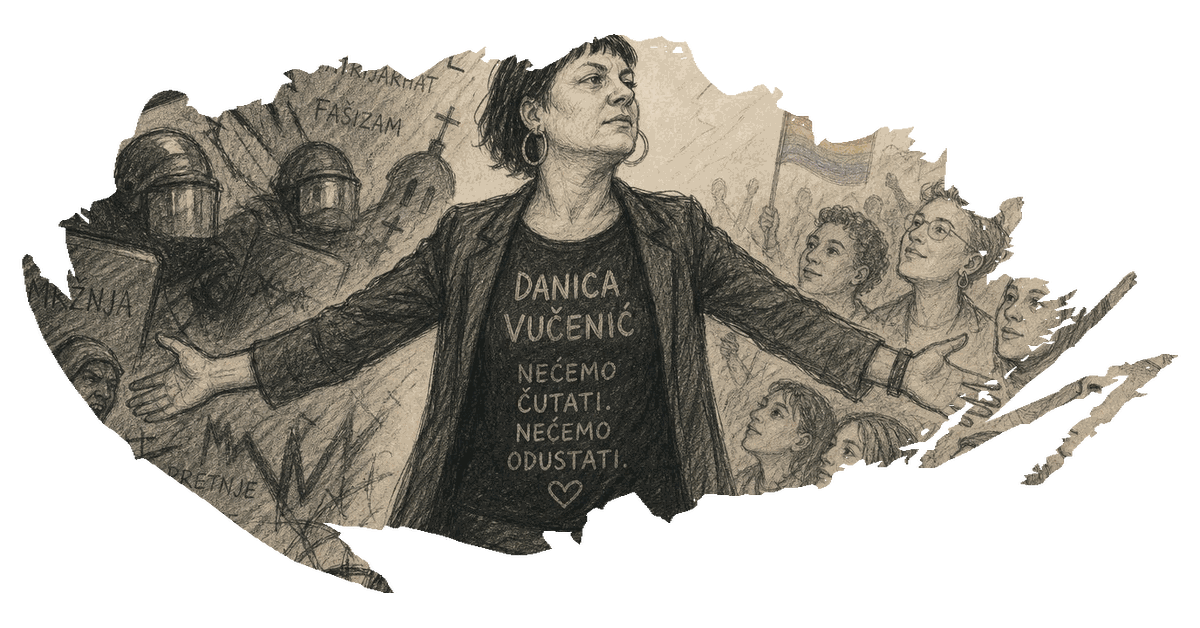
This year’s Pride event in Serbia is being overshadowed by ongoing violence and societal tensions, as highlighted by activist Danica Vučenić. Vučenić, who has been named the godmother of this year’s Pride, drew parallels between the current situation and the violent incidents of 2001, known as the “bloody Pride,” when LGBT activists were brutally attacked in Belgrade. She emphasized that the brutality against minority communities in Serbia has intensified over the past two years, becoming a widespread phenomenon rather than isolated incidents.
Vučenić, a seasoned journalist and editor, has used her platform to question the progress of LGBT rights and public safety in Serbia. She pointed out that the slogan for this year’s Pride, “There is room for all of us,” mirrors the slogan from the 2001 event, underscoring the lack of significant change in societal attitudes towards LGBT rights over the past 25 years. “We are living in a multiplied ‘bloody Pride,'” Vučenić remarked, noting that violence against activists and minority groups has become more prevalent, indicating a troubling trend in public safety.

The first “bloody Pride” in 2001 marked a significant moment in the history of LGBT rights in Serbia, as activists were attacked by hooligans and right-wing groups in the center of Belgrade. Vučenić recalled the absence of police intervention during these attacks, which included participation from religious figures. Despite the passage of time, Vučenić asserts that the context remains largely unchanged, with ongoing violence against minority communities and activists.
Vučenić’s reflections come at a time when human rights and freedoms are perceived to be under threat in Serbia, not only for minority communities but for the majority as well. She expressed concern that the system and state are the primary threats to these rights, emphasizing the need for collective action to defend minority and human rights. “Defending and protecting the minority community means defending and protecting ourselves and all of us together,” she stated.
The current societal climate in Serbia, according to Vučenić, reflects a regression in democratic capacity. She criticized the prevailing view of diversity as a weakness rather than a strength, highlighting the increase in attacks on LGBT individuals, students, journalists, NGO activists, and public figures. The focus, she noted, has shifted away from legislative issues such as the rights of same-sex partnerships and transgender individuals, towards more immediate threats to life and safety.
Vučenić’s remarks underscore the ongoing struggle for acceptance and safety for the LGBT community in Serbia, as well as the broader challenges facing human rights in the country. Her role as the godmother of Pride provides her with a platform to advocate for these issues, which she views as a personal and professional commitment. “For me, this is a great honor, privilege, and joy,” she said, affirming her dedication to the cause.
As Serbia prepares for this year’s Pride event, the reflections of activists like Vučenić highlight the need for continued advocacy and societal change. The historical context of the “bloody Pride” serves as a reminder of the challenges faced by the LGBT community in Serbia, while the current situation calls for renewed efforts to address violence and promote inclusivity.




0 Comments