

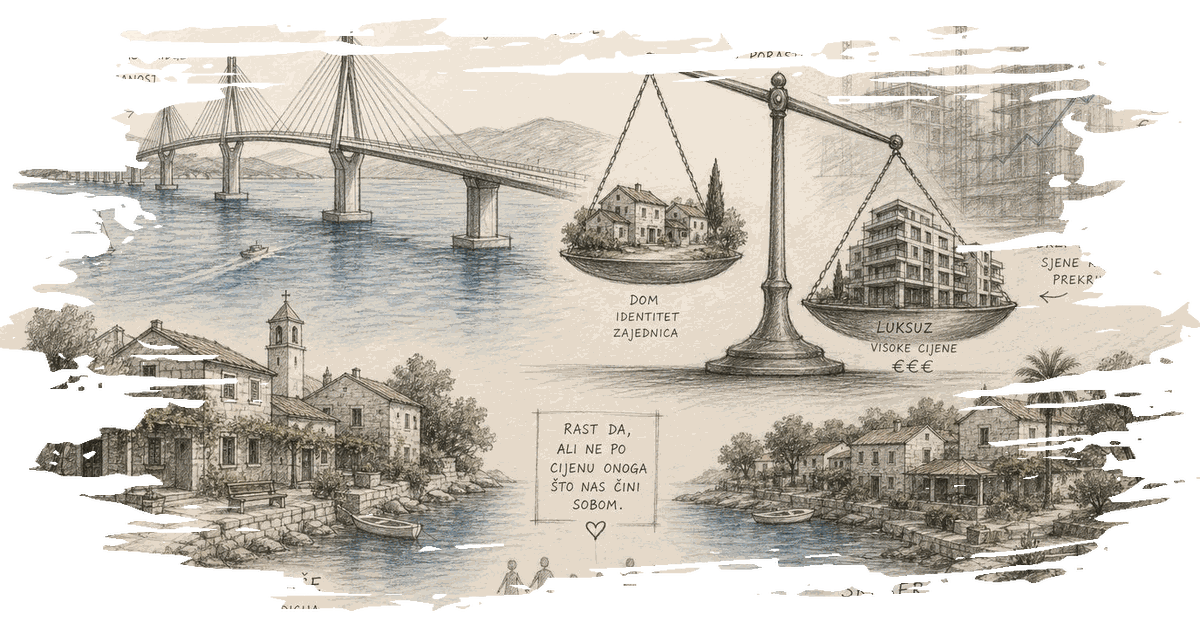
Real estate prices on the Adriatic coast have surged, with new construction now reaching nearly 4,000 euros per square meter. This increase is particularly evident in smaller towns such as Drače and Sreser on the Pelješac Peninsula. The opening of the Pelješac Bridge has played a significant role in this development, making these previously remote areas more accessible and attractive to investors and buyers from various parts of Croatia and Europe.
Local authorities are responding to the rapid changes by attempting to alter urban planning regulations. Their goal is to limit multi-family construction and preserve the authenticity and character of these coastal towns. Vlatko Mratović, the mayor of Janjina, which oversees Drače and Sreser, acknowledged the unexpected intensity of the construction wave. He expressed concerns about the potential for overdevelopment, similar to scenarios seen in parts of Makarska and Vir. Mratović noted that while the current situation is manageable, there is a pressing need to “pull the brake” to prevent excessive building.

The demand for real estate is particularly high for smaller apartments, driven by the budget constraints of buyers. According to Zvonimir Nikolić, owner of the real estate agency Opus Nekretnine, there is a continuous and significant interest in new constructions, especially smaller apartments. Buyers are coming from Zagreb, Austria, Bosnia and Herzegovina, Scandinavia, and other parts of Europe. This influx of interest has led to a transformation in the landscape of these towns, with new residential buildings altering the traditional Mediterranean ambiance.
While all constructions are legally sanctioned, there is criticism regarding the lack of urban planning in the central areas of these towns. The new architecture is often described as lacking context and concept, with buildings that do not engage with the surrounding environment or incorporate green spaces. Borislav Doklestić, a noted urban planner, commented on the current construction trend, stating that it lacks consideration for the cultural environment and primarily serves spatial planning parameters and investors’ interests.
The real estate boom has not only changed the physical landscape but also raised concerns about the cultural and social impacts on local communities. The rapid development has led to a shift in the towns’ visual identity, with some fearing that the unique character of these small coastal towns might be lost. Despite these concerns, the real estate market continues to thrive, with ongoing construction projects and high demand for properties.
In response to these developments, local authorities are working on revising spatial plans to restrict multi-family housing and increase green spaces. This initiative aims to manage the growth sustainably and maintain the towns’ cultural heritage. However, the process of implementing new regulations is ongoing, and there is uncertainty about the long-term effects of the current real estate trends on the local communities and environments.
Overall, the rising real estate prices and increased accessibility due to the Pelješac Bridge have brought significant changes to the Adriatic coast, attracting diverse investors and reshaping the local landscape. As local authorities strive to balance development with preservation, the future of these coastal towns remains a topic of concern and discussion among residents, planners, and investors alike.




0 Comments