

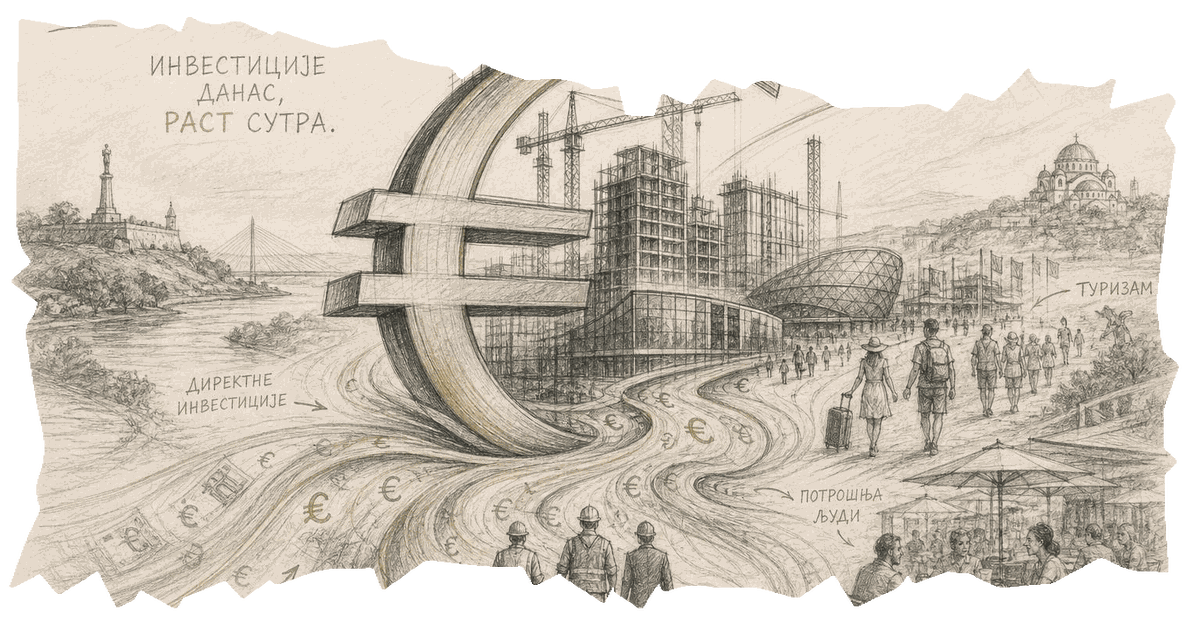
The Serbian government is investing two billion euros in the Ekspo 2027 project, with projections suggesting a potential return of 3.82 billion euros through taxes, according to a study by consulting firm Luis Berger. This analysis, which is part of a broader economic, social, and environmental impact assessment, suggests that for every euro invested, the Serbian state could receive 1.91 dinars back. The study anticipates that the project will not only generate significant tax revenue but also attract private investments amounting to approximately 1.83 billion euros. This could lead to a total economic value addition of 9.1 billion euros by 2037.
The projections are based on a comprehensive evaluation period that extends from the start of preparations for the Ekspo in 2023 through to a decade after the event’s conclusion in August 2027. This timeframe is considered standard for assessing the long-term impacts of such large-scale projects. The study estimates that private investments will be split, with around 500 million euros expected before the event and the remaining 1.3 billion euros after its conclusion.

The economic impact is expected to be realized through various channels. Direct effects include investments in the construction of the Ekspo complex, payments to contractors, and maintenance costs. Indirect effects are anticipated from the procurement of construction materials and the engagement of service companies for the complex’s operations. Induced effects are projected from the spending of workers’ salaries and the consumption by tourists visiting the complex and surrounding areas.
The study outlines that the capital investments in the Ekspo complex, including exhibition halls and national pavilions, will amount to 1.23 billion euros. An additional 775 million euros will be allocated for supporting infrastructure such as roads, railways, water supply, and energy facilities. This excludes the National Football Stadium, which is not formally part of the Ekspo event.
The projections also suggest that the greatest economic benefits will be realized in the decade following the Ekspo, with an estimated 5.43 billion euros in added value. The period leading up to the event is expected to contribute 2.5 billion euros, while the event itself is projected to add 1.13 billion euros. Tax revenues are similarly expected to peak post-Ekspo, with 2.33 billion euros anticipated between 2028 and 2037.
Despite these optimistic projections, the study’s findings are speculative and based on assumptions that may not materialize. The lack of independent verification of the study’s conclusions could lead to skepticism regarding the projected economic benefits. Experts and local economic analysts may question the feasibility of achieving these returns, given the inherent uncertainties in such large-scale projects.
The Ekspo 2027 project has been previously discussed in terms of its potential to enhance Serbia’s international profile and boost tourism. The involvement of Chinese workers and investments has been highlighted in past coverage, emphasizing the project’s significance in Serbia’s economic and diplomatic landscape.
As Serbia prepares for the Ekspo 2027, the government and stakeholders will need to carefully monitor the project’s progress and economic outcomes. The realization of the projected benefits will depend on effective management and execution, as well as the broader economic environment in the coming years.




0 Comments