The Special Court in The Hague is set to deliver its first-instance verdict on September 16 against former Kosovo Liberation Army (KLA) leader Hashim Thaçi and his co-defendants for alleged war crimes during the Kosovo conflict. The trial, which has been closely watched by both Serbia and Kosovo, involves serious charges against Thaçi, Kadri Veseli, Redžep Seljimi, and Jakup Krasnići. They are accused of crimes including persecution, unlawful detention, torture, and murder, committed against Serbs, Roma, and Albanians deemed collaborators, in over 40 KLA detention facilities in Kosovo and Albania between 1998 and 1999.
The proceedings have been extensive, with evidence presented from approximately 270 witnesses and thousands of documents. Prosecutors have requested that the court find all defendants guilty and sentence them to 45 years in prison. The defendants, however, have maintained their innocence, arguing that the prosecution failed to prove their guilt.

The trial has been complex, requiring the court to extend the deadline for the verdict twice due to the volume of evidence, which includes 29,238 pages of records. The court, chaired by U.S. judge Charles Smith, with judges Christoph Barthe from Germany and Ginel Mettraux from Switzerland, along with reserve judge Fergal Gaynor from Ireland, has been tasked with reviewing the substantial material.
The charges against Thaçi and his co-defendants are grave, including ten counts of war crimes and crimes against humanity. These encompass political and ethnic persecution, unlawful detention, and murder, among others. The indictment identifies 75 victims, including 51 Serbs, 23 Albanians, and one Roma, with at least 102 of the 407 detainees allegedly killed.
The trial has also involved significant participation from victims, with over 150 individuals taking part in the proceedings. If the defendants are found guilty, these victims will be entitled to compensation. The court was established in 2015 by the Kosovo Assembly under international pressure following a 2011 report by Council of Europe rapporteur Dick Marty, which detailed KLA crimes in Kosovo and Albania.
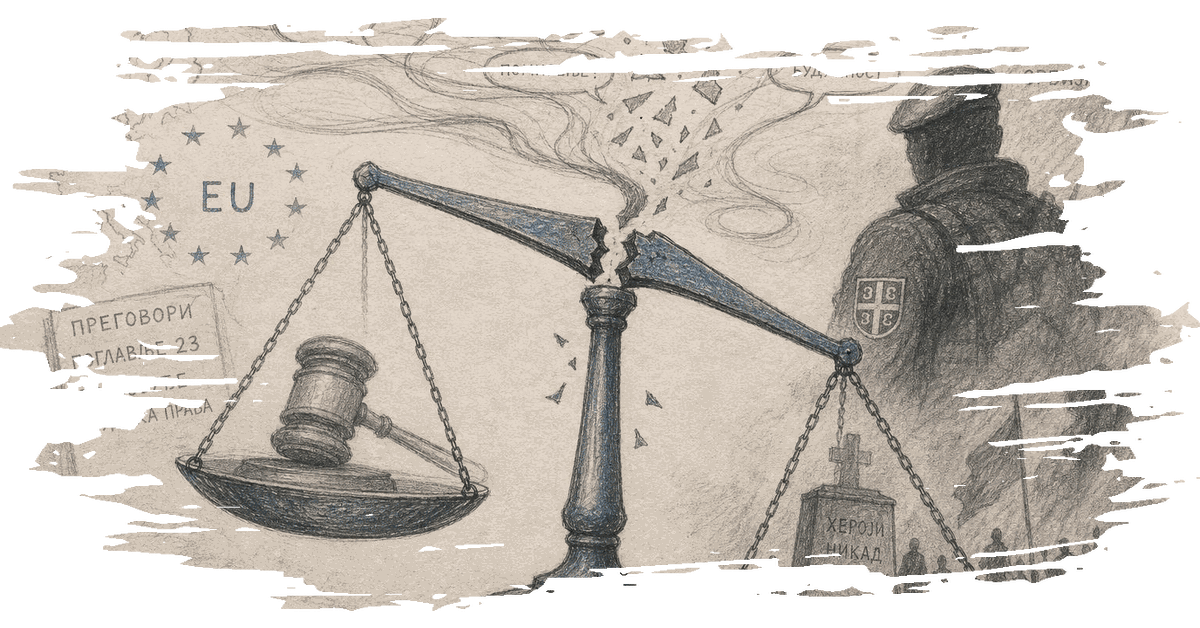
In Kosovo, the trial has sparked significant public mobilization. There are preparations for a march in support of the accused, with some groups viewing them as heroes. This reflects a broader sentiment among certain segments of the population, despite the serious charges they face.
The outcome of the trial is anticipated to have significant political and social repercussions in both Serbia and Kosovo. The historical context of the KLA’s actions during the Kosovo conflict remains a contentious issue, with polarized narratives in both regions. The verdict is expected to influence ongoing dialogue about war crimes and regional stability.
The trial has also highlighted the challenges in addressing war crimes from the Kosovo conflict, a deeply divisive issue in Serbian and Albanian relations. The court’s decision will likely impact the political landscape and public sentiment in the region, as communities await the outcome with differing expectations and emotions.