

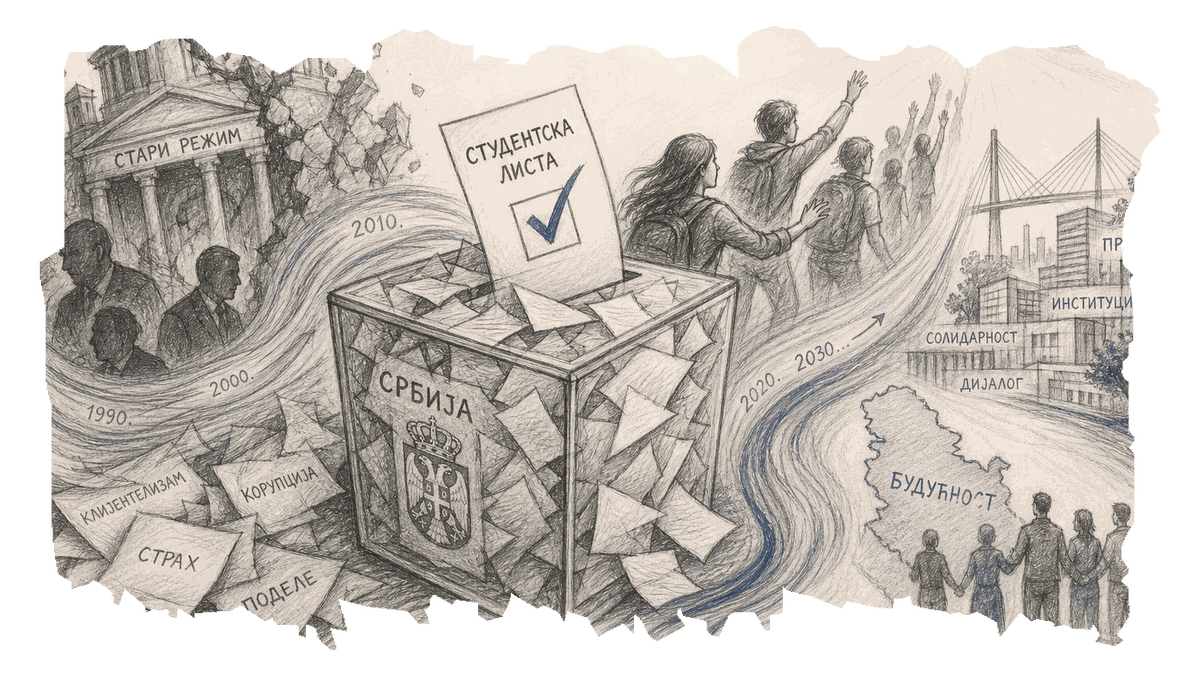
The recent parliamentary elections in Serbia have resulted in a significant political shift, with the Students’ List securing a decisive victory by obtaining 53.04% of the votes. This marks the end of the 14-year dominance of the Serbian Progressive Party (SNS), which garnered 38.97% of the votes and 103 mandates. The election outcome has not only altered the political landscape but also initiated discussions about the formation of a new government and the potential candidates for the position of Prime Minister.
Among the names being considered for the Prime Minister’s role are Radomir Saičić, Ilija Srdanović, and Dejan Šoškić. Political analyst Zoran Milosavljević emphasized the importance of the new Prime Minister’s ability to manage the transition of power and address the challenges facing the new government. He suggested that Saičić, an academic, might be well-suited to handle these challenges, though he also acknowledged the credentials of Srdanović, a professor at the Medical Faculty.
The victory of the Students’ List is seen as a legitimate expression of the public’s desire for change, as highlighted by Milosavljević. He noted that the widespread participation in the elections indicates a strong mandate for the new leadership, reflecting the citizens’ demand for reforms and a departure from the previous administration’s policies.
The transition of the SNS to the opposition is expected to bring about significant changes within the party, including potential membership attrition. Despite the electoral defeat, former President Aleksandar Vučić, who has extensive experience in opposition roles, has expressed his readiness to continue his political struggle, either from within parliament or through party structures.
As the SNS navigates its new role, there are indications that some party members may attempt to align themselves with the new ruling party. Milosavljević pointed out that such shifts in political allegiance are not uncommon in Serbia, especially after electoral losses, and some individuals have already begun expressing support for the Students’ List through social media.
Vučić addressed the issue of party defections during a recent press conference, stating that losing insincere allies can be beneficial. He expressed satisfaction with the departure of those who prioritize personal gain over party loyalty, urging them to join the new government if they wish.
The election results have also raised questions about the future of traditional parties like the Socialist Party of Serbia (SPS), which failed to surpass the electoral threshold. Duško Lopandić, Vice President of the European Movement in Serbia, suggested that leaders of these parties need to reassess their strategies in light of the changing political environment.
The Students’ List, which emerged from a movement of student protests, now faces the challenge of forming a government and implementing its agenda. Saičić has outlined key priorities for the new administration, including the rule of law, anti-corruption measures, media freedom, and economic development. The initial steps in combating corruption involve institutional reforms, making public contracts transparent, and involving the prosecution in the process.
As Serbia prepares for this political transition, the focus will be on how the Students’ List manages to fulfill its promises and maintain stability. The new government’s approach to governance and its interactions with the opposition will be closely watched, as will its ability to address both domestic and international expectations. The political dynamics in Serbia are set for a transformation, with the potential for new alliances and shifts in the traditional power structures.




0 Comments