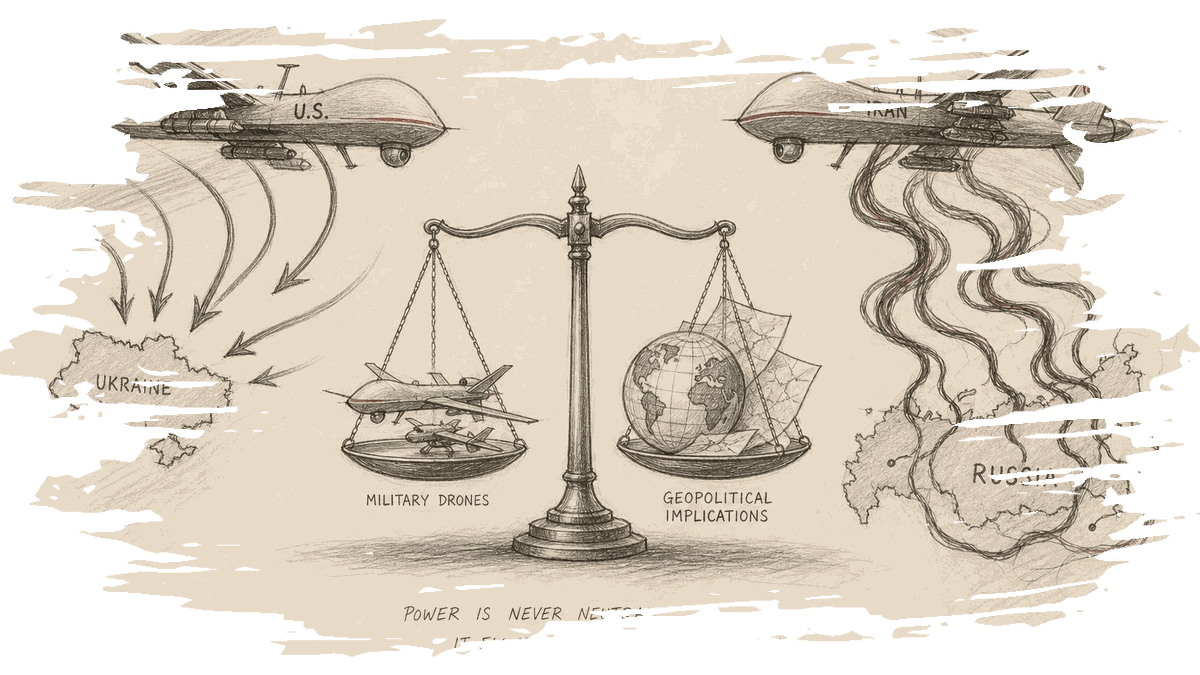
The United States and Iran have emerged as the dominant exporters of military drones globally, accounting for a combined 86% of the 16,822 military drones exported worldwide from 2022 to 2025, according to data from the Stockholm International Peace Research Institute (SIPRI). This significant export volume underscores the pivotal role these countries play in the ongoing conflict between Ukraine and Russia, as nearly all of these drones have been deployed in this region.
The United States exported 7,593 military drones during this period, with a substantial increase in exports from 1,010 units in 2022 to a peak of 3,219 in 2024. However, this figure sharply declined to 402 in 2025. The majority of these drones, approximately 95%, were sent to Ukraine, highlighting the U.S.’s strategic support for Ukraine in its conflict with Russia. The types of drones exported by the U.S. were predominantly one-way attack drones and loitering munitions, designed for single-use operations.

Iran, on the other hand, maintained a steady export rate, delivering about 2,000 drones annually from 2023 to 2025. Nearly all of Iran’s drones, 99%, were supplied to Russia, further fueling the military engagement in the region. These exports primarily consisted of Shahed-136 drones, which Russia also assembled and produced under license, yet they are still counted as Iranian exports by SIPRI.
The data reveals that while the U.S. and Iran are the top exporters, other countries like Germany and Poland also contributed significantly, with Germany exporting 1,000 drones and Poland 690 during the same period. Notably, Türkiye, despite exporting only 381 drones, sold to 28 countries, more than any other supplier, indicating a broad international reach.
The sharp decrease in U.S. drone exports in 2025 coincided with a halt in new U.S. military aid to Ukraine, suggesting a potential shift in U.S. foreign policy or military strategy. In contrast, Iran’s consistent export rate highlights its sustained commitment to supporting Russia, possibly as a counter to Western influence in the region.
The dominance of the U.S. and Iran in the military drone export market has significant implications for the Ukraine-Russia conflict. The strategic deployment of drones by both sides has become a critical factor in the ongoing military operations. The U.S.’s provision of drones to Ukraine supports its defense capabilities against Russian advances, while Iran’s supply to Russia bolsters its offensive operations.
This export data not only reflects the current geopolitical alliances but also raises questions about the future of military engagements and the role of drone technology in modern warfare. As the conflict continues, the reliance on drones is likely to persist, with potential implications for military strategies and international relations.
The data also highlights the evolving nature of warfare, where unmanned aerial vehicles play a crucial role in both offensive and defensive operations. The strategic use of drones by Ukraine and Russia underscores the importance of technological advancements in military capabilities and the ongoing arms race among global powers.
In conclusion, the U.S. and Iran’s dominance in military drone exports has significantly impacted the dynamics of the Ukraine-Russia conflict. As both countries continue to leverage their technological advancements in drone warfare, the geopolitical landscape is likely to see further shifts, with drones remaining a central element in military strategies.