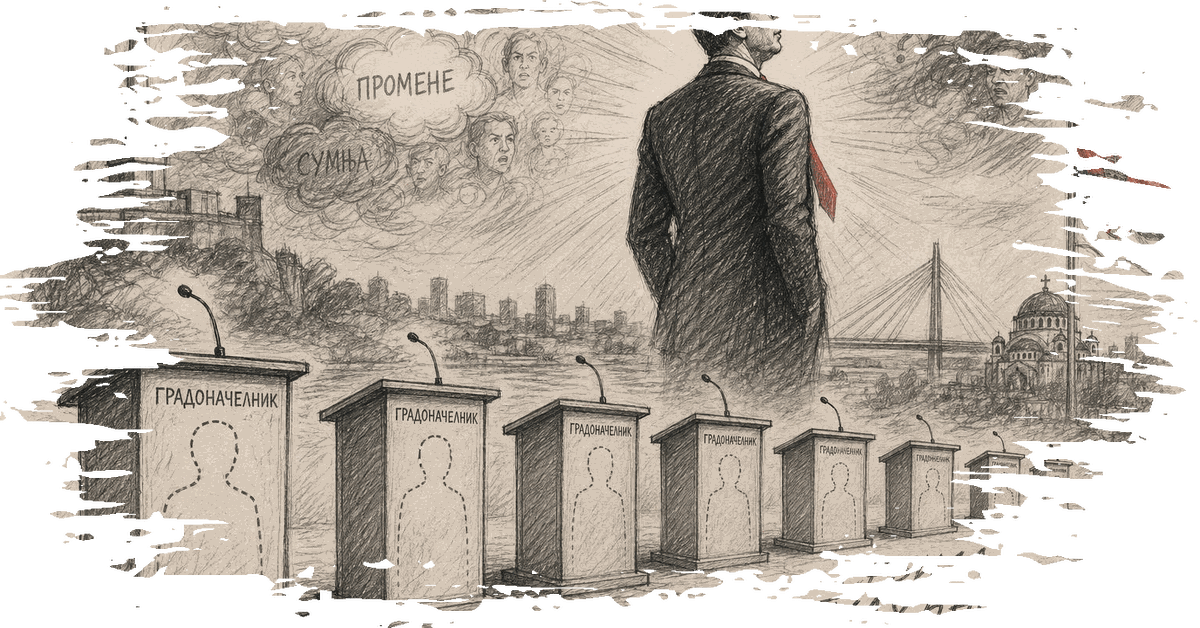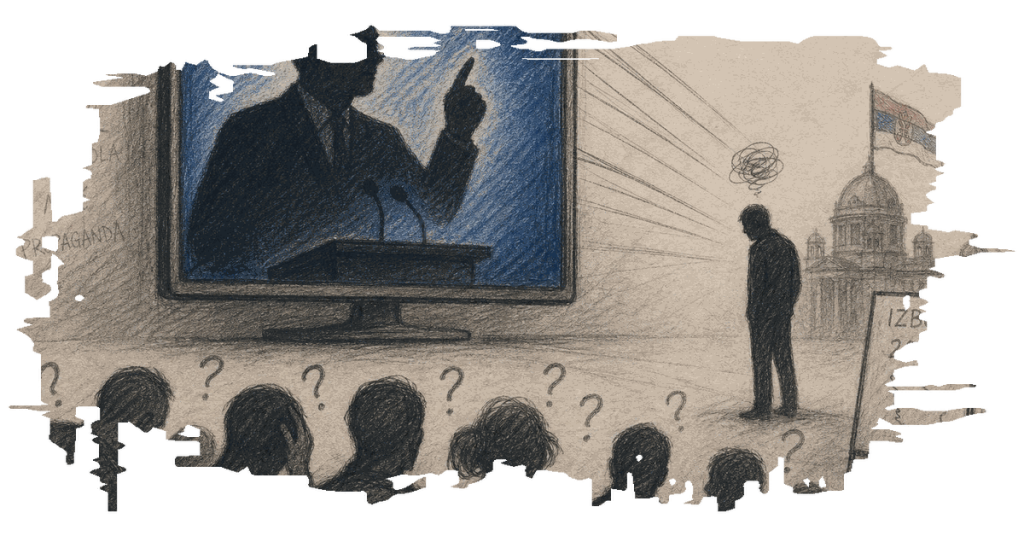
Miloš Jovanović, leader of the New Democratic Party of Serbia (New DSS), has criticized Ilija Srdanović for his decision to refuse a televised debate with Serbian President Aleksandar Vučić. Jovanović, speaking on the subject of political TV debates, expressed that declining such opportunities is not a beneficial strategy for the opposition. He questioned whether anyone could effectively challenge Vučić in a debate setting, suggesting that Srdanović’s refusal was motivated by a fear of losing.
Jovanović’s comments come amid a politically charged atmosphere in Serbia, as the country approaches its parliamentary elections. He noted that while he holds a negative view of Vučić, he acknowledges the president’s debating skills, stating, “Do not underestimate Vučić.” Jovanović asserted that he would not shy away from a debate with Vučić himself, although he was uncertain about the outcome. He suggested that Srdanović should have accepted the debate challenge, even if it would not have been easy for him.

The decision by Srdanović, who is at the forefront of the student-led opposition list, has sparked discussions about the effectiveness of TV debates in Serbian politics. Historically, debates have been a platform for political leaders to present their views directly to the public, but Srdanović has dismissed the need to engage with Vučić in this manner. He has previously stated that he prefers to converse with individuals who have meaningful contributions to make, implying that a debate with Vučić does not align with his campaign priorities.
Jovanović also criticized the broader opposition strategy, including the student-led movement, which he perceives as lacking a clear plan and understanding of the political landscape. He argued that the opposition’s approach of demanding withdrawals or forced support is weak and ineffective. This critique highlights ongoing tensions within the Serbian opposition, as various factions struggle to present a united front against Vučić’s Serbian Progressive Party (SNS).
The refusal to engage in a televised debate with Vučić could have significant implications for Srdanović and the student movement he represents. It raises questions about their readiness to confront the ruling party and their ability to communicate their vision to the electorate. As the elections draw near, the opposition’s strategy and public perception will be crucial in determining their impact on the political landscape.
This development also underscores the challenges faced by the opposition in navigating the complex political environment in Serbia. With Vučić planning to step down as president to pursue the role of prime minister, the political dynamics are shifting, and the opposition must adapt to these changes. Jovanović’s critique of Srdanović’s decision not to debate Vučić adds another layer to the ongoing discourse about the effectiveness of opposition strategies in the lead-up to the elections.