

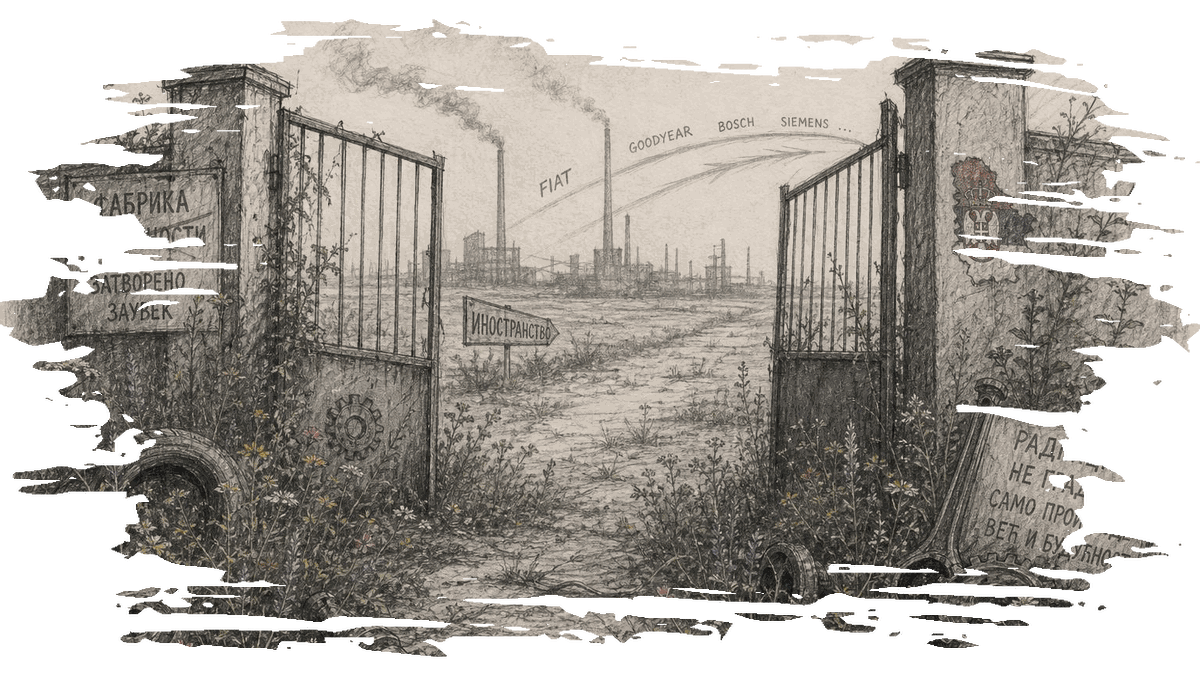
The impending closure of factories by foreign companies in Serbia is set to affect approximately 2,000 jobs, raising concerns about the sustainability of the country’s low-cost labor model amid rising operational costs. German automotive supplier Drekselmajer will shutter its Zrenjanin plant by the end of March 2027, impacting around 1,000 employees. Meanwhile, Turkish textile company Aster Tekstil plans to close its factory in Niš by December 15, leaving 400 workers without jobs. Additionally, the Italian company Vali is relocating its production from Valjevo to Loznica.
The departure of these companies underscores a broader trend of foreign investors reassessing their operations in Serbia. Economic experts attribute these closures to increased labor costs, economic challenges in Europe, and competition from countries with cheaper labor. Slobodan Minić, a member of Serbia’s Fiscal Council, noted that the country’s labor costs in labor-intensive industries have nearly matched those in Central and Eastern Europe, driven by rising average and minimum wages and the strengthening of the euro. This economic shift has made Serbia less attractive to companies seeking low-cost production bases.
The situation is exacerbated by the ongoing crisis in the European automotive industry, which has adversely affected local suppliers in Serbia. Ljubodrag Savić, a retired professor from the Faculty of Economics, highlighted the impact of global competition, particularly from Chinese factories that produce goods at significantly lower costs than their European counterparts. This has prompted many European companies to relocate production to regions like North Africa, where labor costs are lower, and union protections are weaker.
The Serbian government’s strategy of attracting foreign investment through subsidies, which began intensively in 2014, has played a crucial role in employing people in underdeveloped regions. However, experts agree that this model has reached its limits. Despite over 250 foreign investors signing subsidy agreements over the past decade, the strategy has not sufficiently evolved to focus on higher value-added activities that could offer higher wages.
Minić pointed out that foreign direct investments account for only 4% of Serbia’s GDP, a figure matched by domestic private investments. The structural deficit in the balance of payments is particularly concerning, with outflows from profits, dividends, and interest exceeding new foreign direct investment inflows by over 2 billion euros last year, and reaching 1.6 billion euros in the first eight months of the current year. This creates medium-term pressures on the dinar and foreign exchange reserves.
For the affected workers, the primary concern is securing their rights. Labor law attorney Nikola Panjković emphasized that employers cannot unilaterally close factories without adhering to legal procedures. In cases of declaring technological redundancies, companies are required to issue formal notices and pay legally mandated severance packages and any outstanding wages. Both Drekselmajer and Aster Tekstil have announced that they will fulfill all obligations to employees, including severance payments, in accordance with Serbian laws.
The closures highlight the need for Serbia to shift its growth focus towards strengthening the domestic private sector, improving regulatory frameworks, and upholding the rule of law, rather than relying solely on low-value-added jobs. The current wave of factory closures not only threatens immediate job losses but also poses significant implications for future foreign investments in the country. As Serbia grapples with these economic challenges, the sustainability of its current economic model remains a critical issue for policymakers and industry stakeholders alike.



0 Comments