

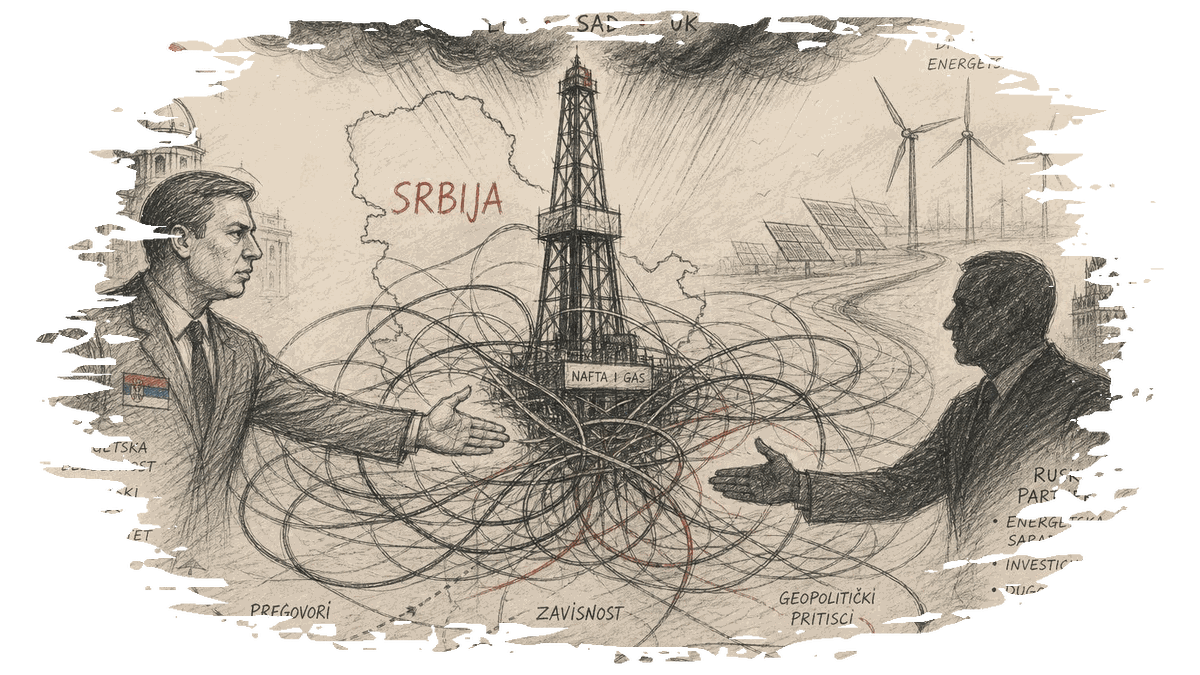
Dejan Šoškić, a representative of Serbia’s Students’ List, has called for a more proactive approach in negotiating the ownership structure of Naftna Industrija Srbije (NIS), a major Serbian oil company. Šoškić emphasized the importance of exercising the right of first refusal in these negotiations, particularly in light of the changing geopolitical landscape. He criticized the Serbian government’s passive stance on the issue, urging for direct negotiations with Russian partners to secure Serbia’s energy security.
Šoškić, a former governor and professor at the Faculty of Economics, expressed his views during an interview with Radio Television of Serbia. He argued that the current geopolitical and business circumstances necessitate a reevaluation of NIS’s ownership structure. “I personally think that the right of first refusal makes a lot of sense, as do direct negotiations with the Russian side,” Šoškić stated, highlighting the need for Serbia to engage more actively in these discussions.
The NIS, partially owned by the Serbian government, was sold to Russian partners several years ago. This arrangement has been under scrutiny, especially with the imposition of U.S. sanctions on the company, which have complicated its operations. Šoškić noted that resolving these issues through direct dialogue with the United States is crucial to avoid jeopardizing NIS’s business activities. He pointed out the influence the U.S. exerts over international financial flows, which impacts companies operating in Serbia.
Šoškić also addressed the broader context of energy supply, stressing the need for Serbia to diversify its energy sources to avoid dependence on a single supplier. He mentioned that while European countries continue to import Russian energy, Serbia must develop alternative supply routes to ensure its energy independence. “Serbia simply must take care of its interests first and foremost,” he said, advocating for a strategy that opens up alternatives and ensures competitive energy prices.
In addition to his critique of the government’s handling of NIS, Šoškić reiterated his stance against nationalization, warning that such drastic measures could harm Serbia’s image and its relations with foreign partners. He called for a solution that would be mutually beneficial for both Serbia and its Russian partners, suggesting that negotiations should have been initiated as early as 2022.
The ongoing discussions about NIS’s ownership and Serbia’s energy strategy are set against a backdrop of geopolitical tensions and economic sanctions. While Šoškić’s proposals focus on securing Serbia’s energy future through strategic negotiations and diversification, the reception of these ideas by Russian partners and their potential impact on Serbia’s energy supply remain uncertain.

0 Comments