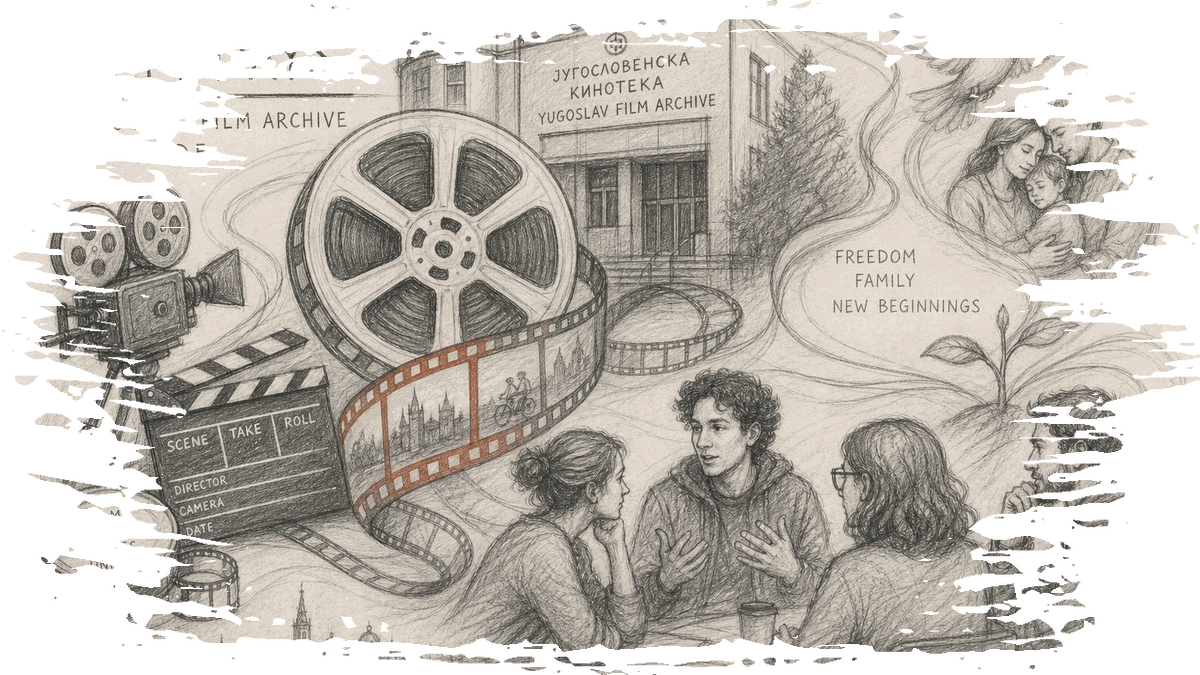
The Czech and Slovak Film Days are set to return to Belgrade, showcasing a selection of contemporary films from October 15 to 18 at the Yugoslav Film Archive. This year’s festival will feature a diverse lineup of eleven films, including student shorts and a variety of genres such as coming-of-age stories, historical dramas, and comedies. The event aims to highlight the evolution of Czech and Slovak cinema and introduce new directorial talents to Serbian audiences.
The festival will open with a block of five student films, providing a platform for emerging filmmakers. Among these are titles like “Reci samo jednu reč i moja duša će ozdraviti,” “Očevi,” “Neke stvari ostaju zauvek,” “Sada će me voleti,” and “Lutanje (Bludna svetla).” Directors Marie Topolova and Petr Vlček will be present for a discussion, offering insights into the new generation of Czech filmmakers.

A significant highlight of the festival is the screening of “Potop,” the Slovak candidate for the Oscar for Best International Feature Film. The film delves into themes of home, family, and freedom, set against the backdrop of significant historical changes affecting ordinary lives. Slovak Republic Ambassador Mihal Pavuk expressed pride in the film’s selection for the Oscars and emphasized the opportunity for Belgrade audiences to engage with the film’s producer, Tomaš Gič, during a post-screening discussion.
The festival’s program also includes other notable films such as “Perla” and “Neuništivi,” which explore themes of freedom, past, family, dreams, and new beginnings. The comedy “Konj” presents a humorous scenario where a teacher finds a horse in his living room, while the poetic road movie “Karavan” follows Ester on a journey through Italy with her autistic son, prompting her to reflect on her own desires for the first time in years. Lucie Orbok, director of the Czech Center Belgrade, noted that the film “Karavan,” which premiered at the Cannes Film Festival, encourages viewers to pause and consider their own life aspirations.
Jan Bondi, the Ambassador of the Czech Republic in Serbia, expressed enthusiasm for the festival’s role in bringing contemporary Czech and Slovak films to Belgrade, highlighting the opportunity to discover new directors and stories that transcend borders. He believes that the festival’s diverse program will leave a lasting impression on audiences.
Tickets for the festival are priced at 250 dinars and can be purchased at the Yugoslav Film Archive’s box office an hour before each screening. All films will be subtitled in Serbian, ensuring accessibility for local audiences.
The Czech and Slovak Film Days continue a tradition of cultural exchange between Serbia and Central Europe, with Czech and Slovak films having a longstanding presence in Serbian film festivals. This event not only celebrates the richness of Central European cinema but also fosters international cinematic dialogue, offering Serbian audiences a glimpse into the diverse narratives and artistic expressions emerging from these neighboring countries.