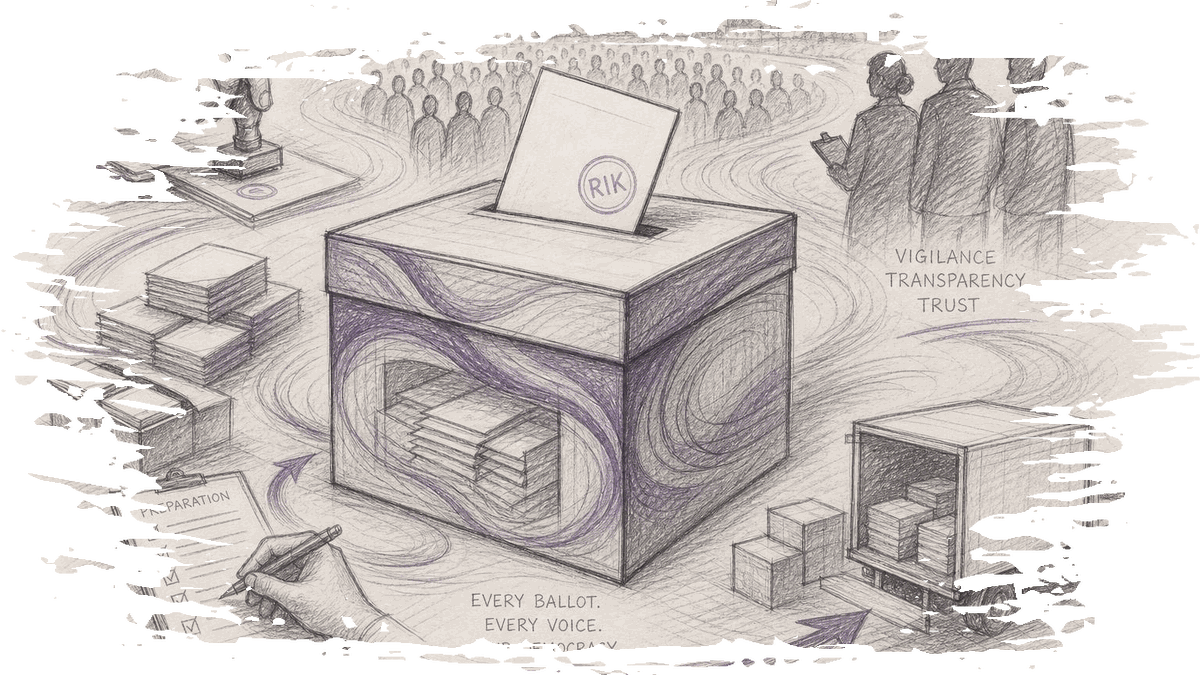
In preparation for Serbia’s upcoming parliamentary elections on October 25, 2026, the Republic Election Commission (RIK) has detailed the meticulous process of ballot preparation and distribution, underscoring the importance of maintaining electoral integrity. According to RIK, the ballots will be printed in purple, while the control lists, used to verify the integrity of the ballot boxes, will be white. This color distinction is a standard measure to ensure that the voting process is transparent and secure.
The printing of ballots is conducted under strict supervision at the Službeni Glasnik printing house. The number of ballots printed must precisely match the number of registered voters, as stipulated by Serbian electoral law. Each ballot will display the election’s name, the voting date, the names of the electoral lists, and a unique stamp from RIK. This process is designed to uphold the secrecy of the vote, with voters instructed to circle the number corresponding to their chosen list.

Once printed, the ballots are transported to RIK and subsequently distributed to local election commissions across Serbia. This distribution must occur no later than 24 hours before voting begins. Local election boards are responsible for ensuring that all materials are accounted for and that conditions are met for the start of voting. These boards also oversee the voting process, verifying voter identities and ensuring the secrecy and orderliness of the election.
Election monitors, both domestic and international, play a crucial role in overseeing the electoral process. They are tasked with ensuring that voting procedures are followed correctly and that any irregularities are reported. Observers can register up to seven days before the election, while international missions must do so ten days prior. Their presence is vital in maintaining public trust in the electoral process, especially in light of past allegations of electoral fraud in Serbia.
After the polls close, the counting of votes begins. The ballots are sorted into valid and invalid categories, and the results are meticulously recorded in an official report. This report is signed by all members of the election board, and any objections to the process can be noted and included in the documentation. Observers also maintain their own records to ensure transparency.
The preparation and distribution of ballots are integral to the integrity of the electoral process in Serbia. The RIK’s detailed procedures are designed to prevent fraud and ensure that the elections are conducted fairly. As Serbia approaches its parliamentary elections, the focus on these processes highlights the ongoing efforts to enhance electoral transparency and public confidence in the democratic process.