

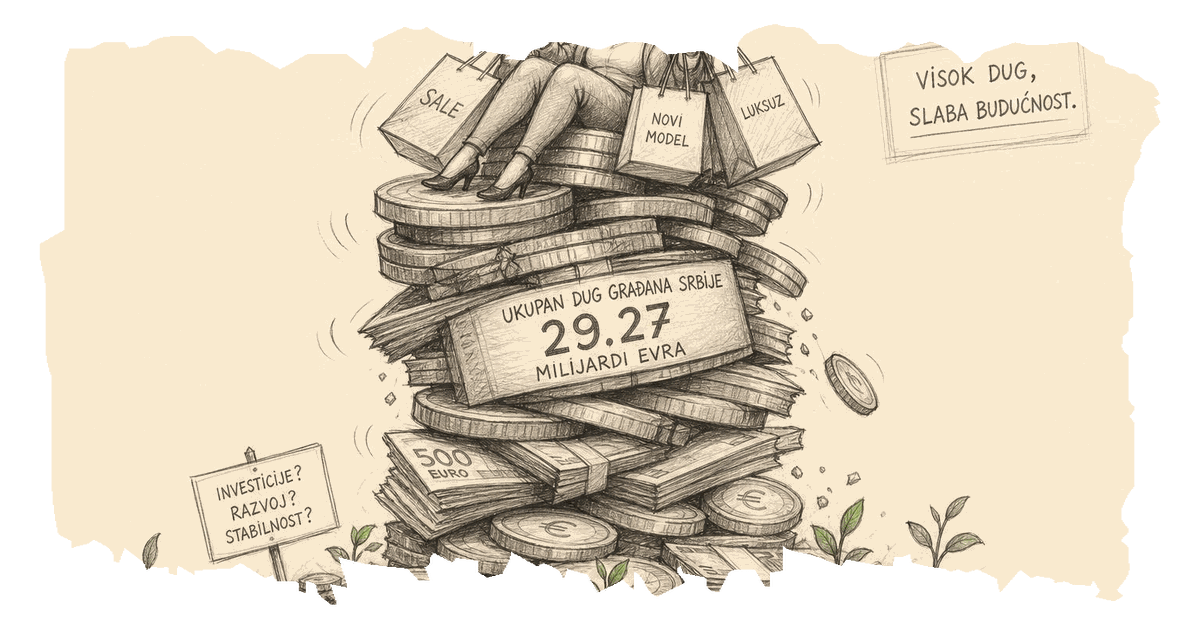
As of November 30, 2026, citizens and businesses in Serbia owed banks a cumulative total of approximately 29.27 billion euros, reflecting a 2.7% increase from the previous year, according to a recent credit report by the Association of Serbian Banks. This rise in debt has been primarily driven by cash loans, which constitute the largest portion of citizen debt, amounting to around 5.96 billion euros. The trend of increasing short-term consumer loans is particularly notable, with figures rising from 170 billion dinars in 2012 to approximately 830 billion dinars (around 7 billion euros) by the end of November 2026.
Professor Goran Radosavljević from the FEFA faculty has expressed concerns over the reasons behind this borrowing trend. He highlights that citizens are increasingly taking on debt for current consumption rather than for investment purposes. “Citizens are borrowing for current consumption, which could lead to economic issues,” Radosavljević warns. The structure of the debt indicates a significant preference for short-term consumer loans over investment loans, which could have long-term implications for economic stability.

The Serbian economy is experiencing a rise in debt levels among both individuals and businesses. While the debt for liquidity and working capital in the business sector has increased from approximately 470 billion dinars to 740 billion dinars, investment loans have shown slower growth. Radosavljević points out that the faster growth of liquidity loans compared to investment loans suggests underlying economic challenges. He explains that both citizens and businesses are facing liquidity problems, leading to a reliance on short-term borrowing to finance consumption.
The implications of this borrowing pattern are significant. Radosavljević notes that the standard of living in Serbia is low, as evidenced by Eurostat data placing Serbia among the countries with the lowest income per capita in Europe. Only Ukraine, Bosnia and Herzegovina, North Macedonia, Albania, and Moldova have lower income levels. Despite rising prices due to high inflation, consumption remains relatively high, with citizens compensating for the shortfall in funds through short-term borrowing.
The situation raises concerns about the potential economic instability that could result from this trend. If citizens continue to borrow primarily for consumption rather than investment, it could hinder economic growth and exacerbate financial vulnerabilities. The reliance on short-term loans to maintain consumption levels suggests a precarious financial situation for many Serbian households.
The Serbian government and financial institutions may need to consider policy responses to address these challenges. Encouraging more sustainable borrowing practices and promoting investment over consumption could be crucial steps in ensuring long-term economic stability. Additionally, providing financial education and support to citizens could help them make informed borrowing decisions and improve their financial resilience.
Overall, the rising debt levels in Serbia highlight a concerning trend of short-term borrowing for consumption, which could have significant implications for the country’s economic future. As Professor Radosavljević emphasizes, addressing this issue will be essential to prevent potential economic instability and ensure sustainable growth.



0 Comments