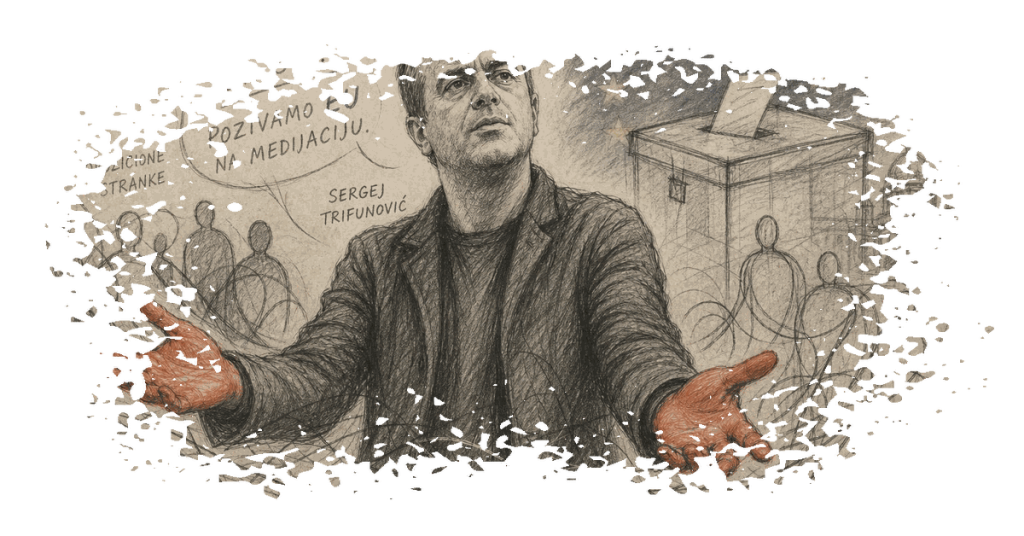
Sergej Trifunović, president of the Movement of Free Citizens (PSG), has made a public appeal to the European Union (EU) for mediation in the upcoming Serbian elections. In an open letter addressed to David McAllister, the chairman of the European Parliament’s Committee on Foreign Affairs, Trifunović urged the EU to facilitate dialogue between Serbian authorities, opposition parties, civil society, and journalists to ensure fair electoral conditions for the 2020 elections.

Trifunović’s letter highlights the growing concerns among opposition parties about the fairness of the electoral process. He noted that many opposition parties are contemplating a boycott of the elections due to perceived unfair conditions. “Regular elections are supposed to occur in 2020, but in recent weeks, most opposition parties are seriously considering boycotting these elections because there are no conditions for them to be fair and honest,” Trifunović stated in his letter.
The PSG leader emphasized the importance of EU involvement, drawing parallels to the EU’s role in North Macedonia, where EU-facilitated dialogues have been instrumental in resolving political crises. Trifunović suggested that a similar approach could help Serbia overcome its current political challenges. “The organization of dialogue under the patronage of the European Union would be a significant step in overcoming the current crisis,” he wrote, adding that the EU must ensure the full implementation of any agreements reached during these negotiations.
Trifunović also called for a public report to address systemic issues in Serbia’s rule of law, akin to the “Priebe reports” used in North Macedonia to improve governance and electoral conditions. He stressed that since both ruling and opposition parties in Serbia agree on the country’s EU accession, they should accept EU mediation to avoid a severe political crisis.
This call for EU mediation comes amid ongoing discussions about electoral integrity in Serbia. Previous debates have centered on the fairness of the electoral process and the potential role of the EU in facilitating dialogue. The opposition’s contemplation of an election boycott underscores the persistent tensions in Serbian politics regarding electoral conditions.
The effectiveness of EU mediation in Serbian politics is uncertain, with potential skepticism from various political factions about its impact. The structure of the proposed dialogue and the specific outcomes expected remain unclear. However, Trifunović’s appeal highlights the urgent need for international involvement to ensure fair electoral processes and prevent further political instability in Serbia.