Serbia has recently taken significant steps towards integrating high-tech industries into its economy by opening a factory for humanoid robot production in collaboration with China. This development marks a strategic shift from the country’s previous focus on attracting foreign investment in the automotive and textile sectors, which has shown diminishing returns. Additionally, Serbia has signed a contract with a Chinese company to construct a factory for producing batteries for robots and drones. Furthermore, the production of sophisticated military drones in partnership with Israel is expected to commence by the end of September.
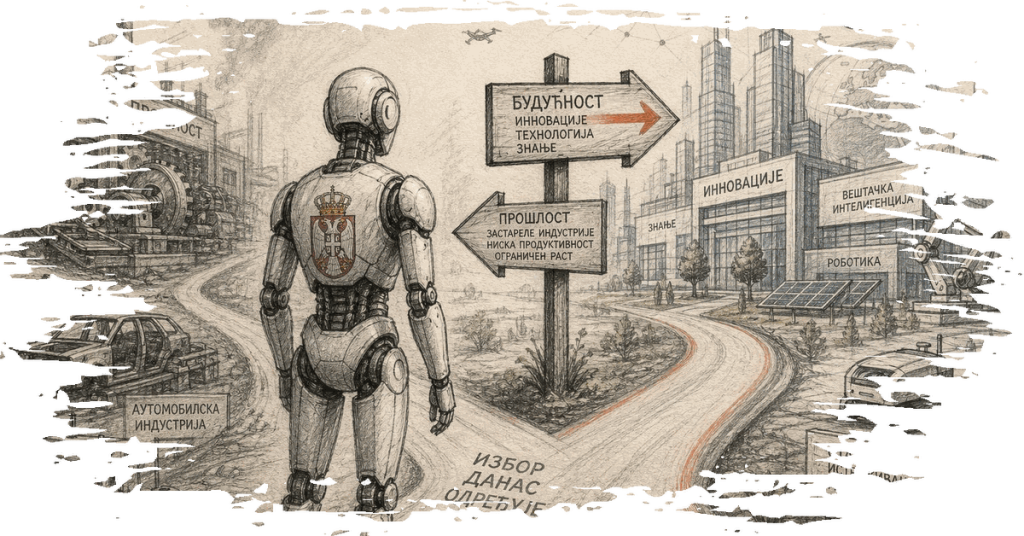
These initiatives are part of Serbia’s broader strategy to attract high-tech investments and align with the evolving technological landscape. Nenad Jevtović, a researcher at the Institute for Development and Innovation, notes that this pivot comes at a time when Serbia’s previous economic growth model, heavily reliant on foreign direct investments in simpler industries, is no longer as effective. Jevtović explains that the new focus on high-tech projects is a response to the challenges faced by the earlier model, which was intensified post-2014 and based on offering relatively cheap labor to foreign companies.

The opening of the humanoid robot factory, which is the first of its kind in Serbia and the region, is not merely another manufacturing facility. According to Marko Čadež, President of the Chamber of Commerce of Serbia, this move signifies Serbia’s entry into a nascent industry, comparable to the early stages of mobile phone and electric car industries. Čadež emphasizes that humanoid robots will increasingly be used for tasks that are difficult, dirty, or monotonous for humans, addressing labor shortages faced by companies in Serbia and across Europe.
Despite the progress, there are concerns about the extent to which these technological advancements will benefit Serbia domestically. The primary issue is whether the technology and intellectual property will remain in Serbia or primarily benefit foreign companies. If foreign firms bring in the robots, technology, design, software, and components, while Serbia provides the infrastructure and labor, the country risks becoming merely a manufacturing base rather than a hub for technological development. The ideal scenario, as Jevtović suggests, would involve Serbia developing its own technological ecosystem, with local companies producing components and software, thereby retaining knowledge and added value within the country.
Jevtović acknowledges that while the current factories are primarily assembly sites, they represent a step forward from previous investments in simpler tasks, such as cable winding. He argues that Serbia should aim to build its technological ecosystem, though he cautions that developing its own technology will take decades of investment in research and development. The current global technological landscape is dominated by a few countries, making it unrealistic for Serbia, with its population of approximately 6.5 million and current economic conditions, to quickly reach the forefront of technology.
The shift towards high-tech industries is seen as a necessary pivot for Serbia, given the reduction in foreign direct investments due to weaker economic trends in Europe. Jevtović views the production of robots and other high-tech products as progress compared to previous investments. However, he stresses that the ultimate goal should be for Serbia to eventually develop and produce its own technology, a process that will require sustained investment in research and development over many years.
In summary, Serbia’s recent investments in humanoid robot production and high-tech industries represent a strategic shift in its economic model. While these initiatives offer potential for economic growth and technological advancement, the long-term success will depend on Serbia’s ability to retain technological knowledge and develop its own capabilities. The challenge lies in transforming from a manufacturing base for foreign technologies to a country capable of producing its own high-tech innovations.