

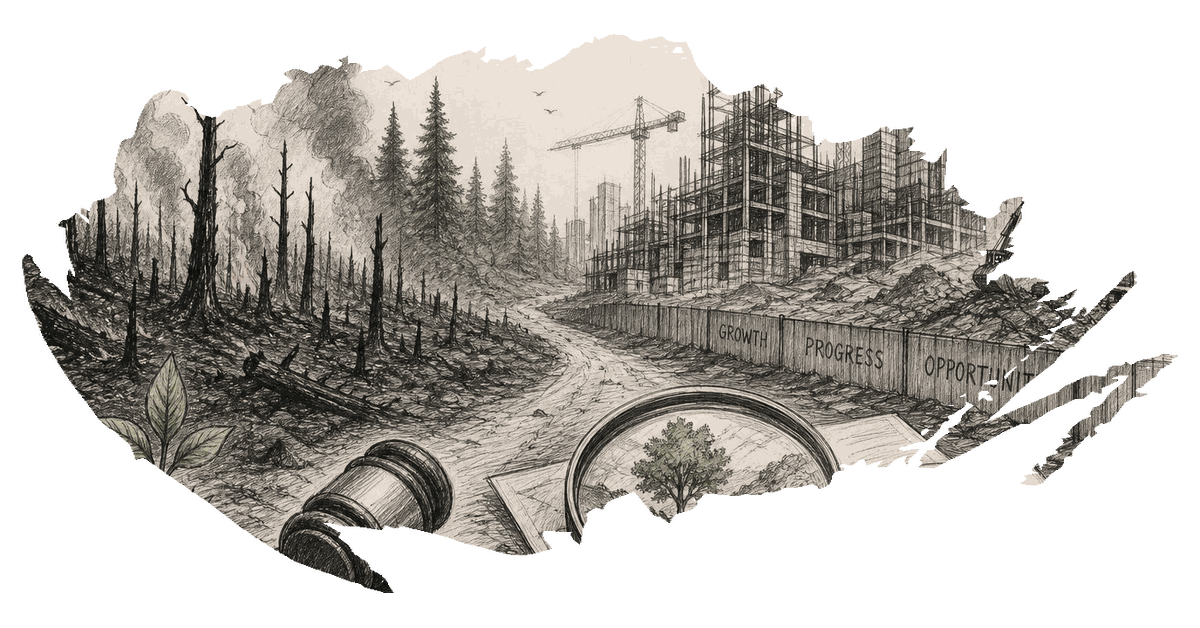
The National Assembly of Serbia has passed amendments to the Planning and Construction Law, sparking concerns from civil organizations about potential exploitation of forest lands affected by wildfires. The amendments, adopted on August 31, 2026, without prior public consultation, allow for changes in the use of forest areas damaged by fire if deemed necessary for projects of public interest. This legislative change has drawn criticism from Transparency Serbia and the Regulatory Institute for Renewable Energy and Environment (RERI), who argue that the lack of transparency and public discourse could lead to misuse of these lands.
According to a joint statement from Transparency Serbia and RERI, the amendments were introduced in a consolidated procedure comprising 59 agenda items and without any public debate. A key modification involves Article 88 of the existing law, which now stipulates that forest land damaged or destroyed by fire retains its pre-fire designated use. However, an exception permits a change in land use if it is necessary for projects identified as being in the public interest or for the construction of public infrastructure.

The organizations highlighted that the Ministry of Construction, Transport, and Infrastructure did not organize a public discussion on these amendments. Furthermore, the provisions concerning the use of forest land were not included in the original proposal submitted by the Serbian government on August 7, 2026. Instead, these changes were incorporated following a proposal by the parliamentary Committee on Spatial Planning, Transport, Infrastructure, and Telecommunications during a session on August 26, 2026. The proposal was supported by the Minister of Construction, Transport, and Infrastructure, Aleksandra Sofronijević, and unanimously approved by the 12 committee members present.
Transparency Serbia and RERI have expressed concerns that the amendments could facilitate the conversion of forest land into construction sites for a wide range of projects approved by the Serbian government’s commission. They noted that there is no barrier to proposing such projects even after a catastrophic fire, raising fears that the amendments could be used to benefit potential investors.
The timing of these legislative changes coincides with devastating wildfires in the Deliblatska peščara, Europe’s largest sand dune area, which is a protected nature reserve of exceptional national importance. The lack of transparency in the legislative process, according to the organizations, has only fueled public anxiety about the future of lands affected by the fires.
In response to public discourse suggesting that the fires might be used to accommodate investor needs, the ministers of environmental protection and energy, Sara Pavkov and Dubravka Đedović Handanović, respectively, have denied such claims. Despite these assurances, the adopted amendment appears to protect burned forest land from a change in use, while simultaneously easing the process for converting forest land into construction sites for a broad range of government-approved projects.
Transparency Serbia and RERI have called for a new process to assess and mitigate all risks associated with these legislative changes. They urge the Ministry of Construction and the members of parliament who voted for the proposal to provide a reasoned explanation for their decision, including a detailed description of the procedure that must be followed for land use changes in the event of forest preservation and fire damage. Until a convincing rationale is presented and public consultations are organized to evaluate the motives, consequences, and risks of these legal amendments, the National Assembly should urgently adopt supplements to delay the implementation of the new legal solutions, the organizations conclude.



0 Comments