

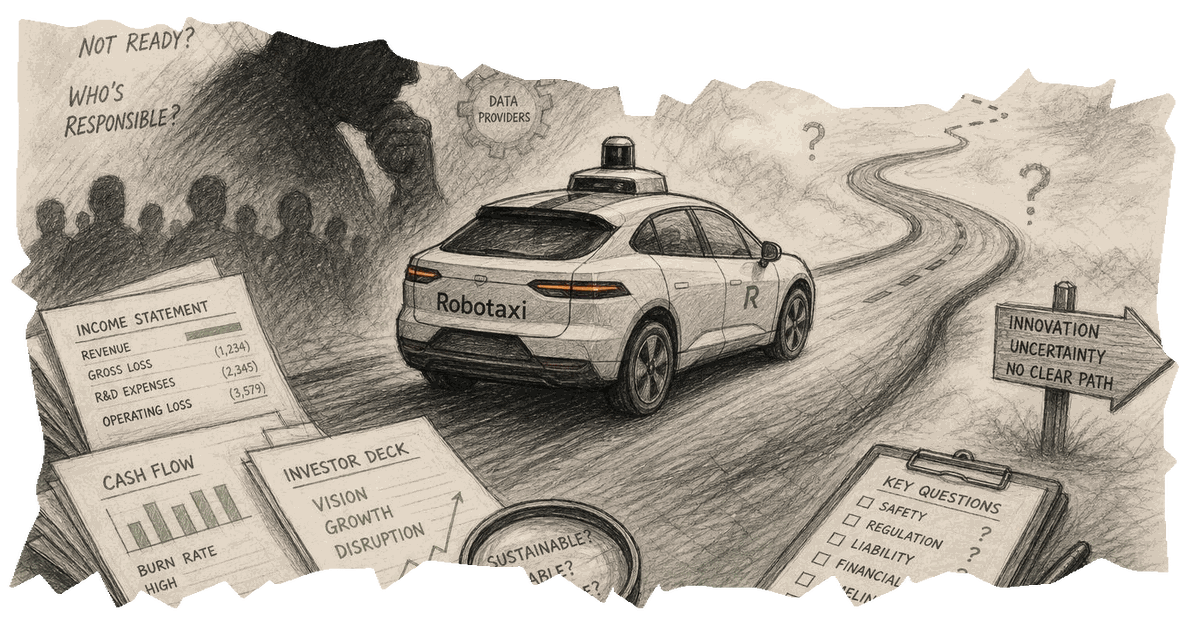
Verne, a company associated with Croatian entrepreneur Mate Rimac, has announced its willingness to return European Union funds if a final evaluation reveals that the contractual obligations for its robotaxi project were not met. This statement marks the first public acknowledgment by the company regarding the potential return of funds. The project, which was part of the National Recovery and Resilience Plan, was allocated 179.5 million euros, of which 89.7 million euros have already been drawn.
The project’s completion was officially marked on August 30, and Verne now has a month to submit the final report. Following this, the relevant authorities will assess the achievements, determine which expenses are acceptable, and decide if any funds need to be returned.

Lucijan Carić, an expert in information security, has been a vocal critic of the project’s feasibility, particularly questioning the promised fifth level of driving autonomy. Carić has consistently argued that achieving a fully autonomous vehicle at this level is currently impossible. He points out that the official project documentation explicitly promised a fully autonomous electric vehicle, which he claims was unachievable from the start.
Carić’s skepticism is rooted in the fact that the fifth level of autonomy, as described, does not exist. He notes that Verne’s offerings do not match the ambitious claims, suggesting that the company is instead providing a quasi-commercial service that tests solutions from third-party providers rather than delivering a proprietary technological breakthrough. Carić also criticizes the use of platforms from companies like Uber and Chinese providers, arguing that these do not represent a significant technological advancement.
The project’s transparency and the government’s involvement have also been questioned. Carić highlights that the contracts were non-transparent and negotiated behind closed doors, with changes to regulations that were not publicly disclosed. Furthermore, the feasibility study, which allegedly supported the project’s claims, has never been publicly presented.
The situation has raised concerns about how the European Union will respond to the project’s shortcomings. Carić speculates that the EU might overlook certain issues, possibly rationalizing the expenditure as being used for salaries rather than technological advancements. He also points out that the project’s financial structure, with private investors contributing only slightly more than public funds, makes the project’s complexity difficult to manage.
The final evaluation of the project is pending and will determine the next steps regarding the potential return of funds. This outcome could significantly impact the narrative surrounding the project, particularly in terms of public funding accountability and the feasibility of such ambitious technological endeavors.




0 Comments