

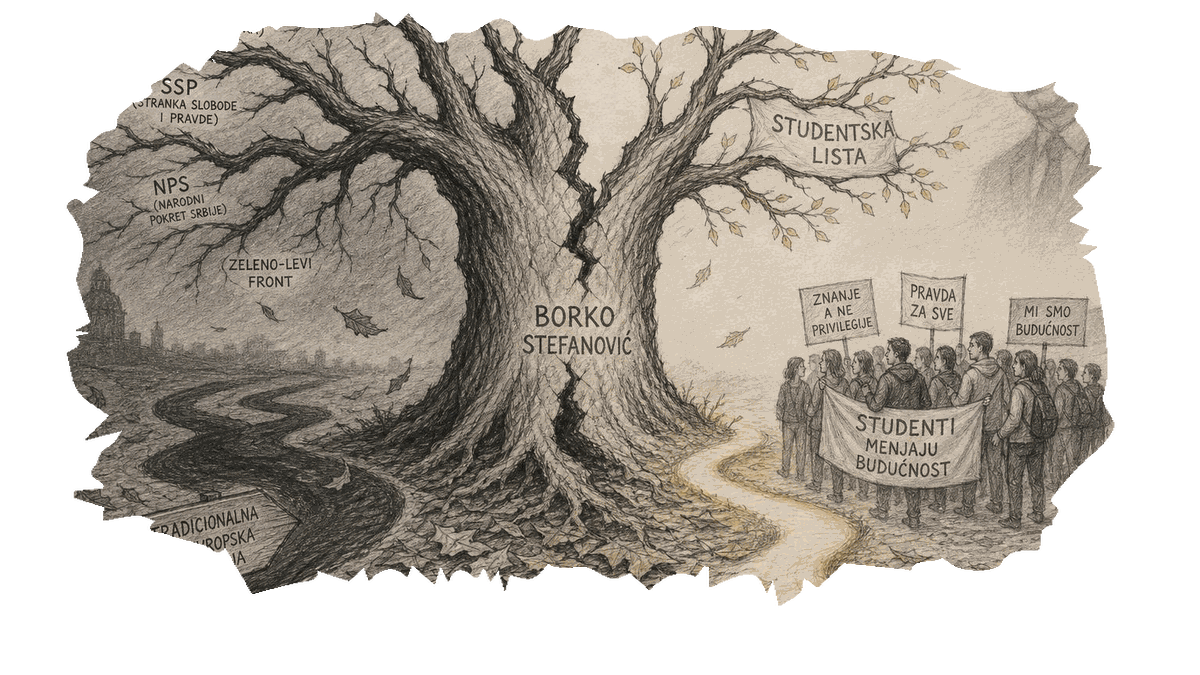
Borko Stefanović, the deputy president of the Freedom and Justice Party (SSP) in Serbia, has made a surprising political move by publicly endorsing the Students’ List over the ‘European Serbia’ list, just weeks before the upcoming parliamentary elections. This decision has sparked significant reactions within the Serbian political landscape, with President Aleksandar Vučić and other political figures weighing in on the implications of Stefanović’s shift in allegiance.
Stefanović’s support for the Students’ List, which he announced on social media, comes as a departure from his previous stance. As recently as June, Stefanović had publicly backed the SSP’s decision to participate in the elections as part of a coalition with other pro-European parties. His recent criticism of his former colleagues centers on what he perceives as their failure to act responsibly in the electoral process. Stefanović stated that the SSP’s insistence on participating in the elections as a separate opposition list, despite the failure to unify the entire opposition, is a significant mistake and a misreading of the political climate in Serbia.

The timing of Stefanović’s announcement has drawn criticism, particularly as he had been actively involved in the SSP’s campaign efforts, including participating in a joint photograph with party leaders and representatives of the ‘European Serbia’ list just a month ago. His decision to switch support so close to the elections has been described by some as a betrayal, with President Vučić characterizing it as a “stab in the back” to Dragan Đilas, the leader of the SSP. Vučić accused Stefanović of waiting until the last moment to make his announcement, suggesting it was motivated by personal grievances regarding his position on the electoral list.
Stefanović’s move has also prompted reactions from within the opposition, with some expressing confusion and disappointment over his decision. Critics argue that his actions undermine the efforts to present a united front against the ruling Serbian Progressive Party (SNS), led by Vučić. The SSP’s leader, Đilas, responded to the situation by emphasizing the importance of tolerance for differing opinions within the party, highlighting the democratic nature of their internal discussions.
The broader context of this development is rooted in the longstanding divisions within Serbia’s opposition. The political landscape has been characterized by fragmented opposition groups, each with differing strategies and visions for challenging the SNS’s dominance. The Students’ List, which has gained traction amid ongoing student protests, represents a significant force in the current political climate. However, the opposition’s inability to present a unified front has been a persistent issue, as evidenced by the lack of consensus on electoral participation and strategy.
As the elections approach, the impact of Stefanović’s endorsement of the Students’ List remains to be seen. Political analysts suggest that this move could influence voter perceptions and potentially shift the dynamics within the opposition. The Students’ List, which has positioned itself as a vehicle for change, could benefit from Stefanović’s support, although it remains uncertain how this will translate into electoral success.
In the lead-up to the elections, the opposition faces significant challenges in mobilizing support and overcoming internal divisions. The outcome of the elections will not only determine the composition of Serbia’s parliament but also shape the future trajectory of the country’s political landscape. The Students’ List, with its appeal to younger voters and those disillusioned with traditional political parties, could play a pivotal role in this process, particularly if it manages to consolidate support from other opposition factions.
Overall, Stefanović’s decision to back the Students’ List highlights the complexities and fluidity of Serbian politics, where alliances and strategies can shift rapidly in response to changing circumstances. As the election date nears, all eyes will be on how these developments unfold and what they mean for the future of political opposition in Serbia.




0 Comments