

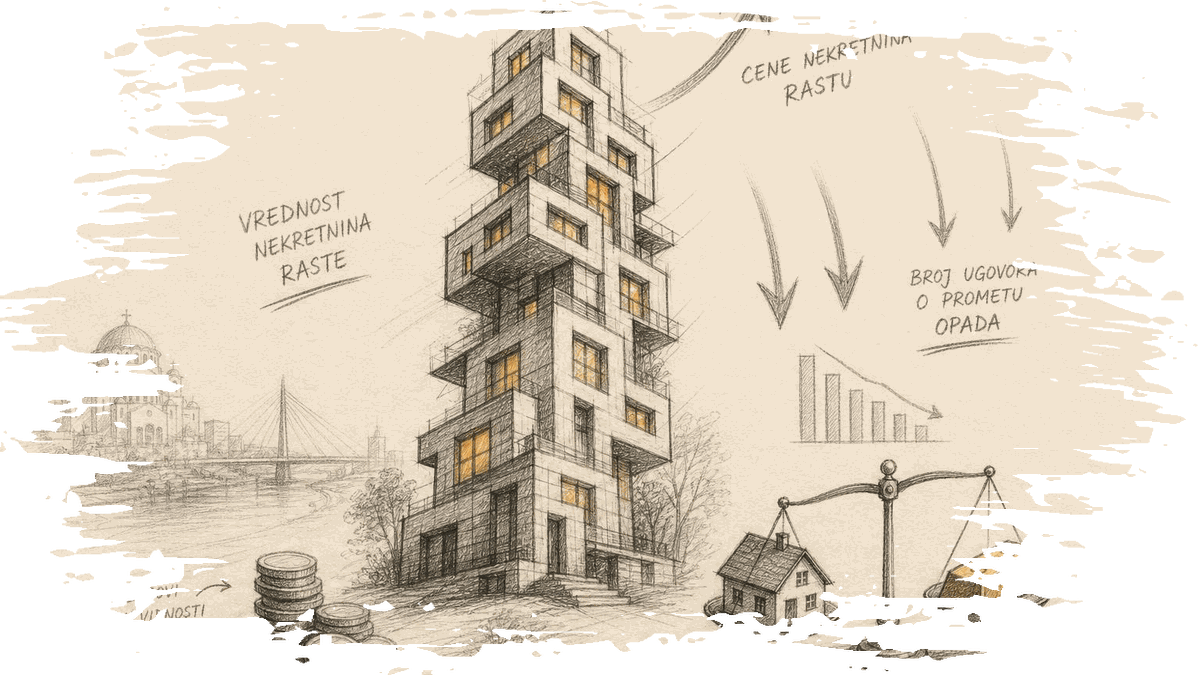
The real estate market in Serbia has reached a total value of 4.2 billion euros in the first half of 2026, marking a 10.1% increase from the previous year. However, the number of sales contracts has seen only a marginal increase of 0.2%, indicating a disparity between market value growth and actual transaction volume. This trend is particularly noticeable in the apartment market, where the value rose by 11.4% despite a 1.9% decrease in the number of transactions.
Economic analyst Georgi Hristov, director of Tavex zlato&srebro, cautions that rising property prices do not necessarily translate into successful investments. He emphasizes the importance of considering associated costs and liquidity when investing in real estate. Hristov points out that while real estate has traditionally been a popular investment option in Serbia, the mere increase in property prices should not be the sole factor in declaring it the best investment choice.

Hristov advises potential investors to account for all related expenses, such as taxes, maintenance, and periods when the property might not be rented out, as well as the costs involved in buying and selling. He notes that only by factoring in these expenditures can investors accurately assess the profitability of their investment.
One significant challenge with real estate investments is their relatively low liquidity. Unlike other investment forms that can be quickly liquidated, selling a property can take several months, which limits an investor’s ability to access funds quickly when needed. “Real estate is relatively illiquid; if you need money urgently, selling can take months,” Hristov explains.
As an alternative to real estate, Hristov highlights investment in gold, which offers different asset management possibilities. Gold investments can start with smaller amounts and allow for gradual increases, with the option to sell only part of the asset when funds are needed. However, Hristov also notes that gold carries its own risks, such as price fluctuations and the difference between buying and selling prices.
Hristov’s analysis comes amid a broader cultural shift in Serbia, where a significant portion of the population prefers saving over investing. A recent study by M2S Research found that 66% of adult Serbians save regularly or occasionally, while only 16% currently invest. This trend underscores a growing emphasis on financial security over wealth accumulation.
Despite the increase in real estate market value, the stagnation in transaction numbers suggests that the market’s growth is not as robust as it may appear at first glance. This situation calls for careful consideration by investors, who must weigh the potential returns against the inherent risks and costs.
In conclusion, while the Serbian real estate market continues to grow in value, potential investors should not overlook the complexities and challenges associated with property investments. By considering factors such as costs, liquidity, and alternative investment options, investors can make more informed decisions about their financial strategies.



0 Comments