The European Central Bank (ECB) is grappling with significant challenges in its efforts to rejuvenate the European Union’s economy, as current growth rates remain below expectations. According to a report by Sputnik, the eurozone, led by Germany, has experienced the strongest economic growth in the past nine months, primarily due to industrial recovery. However, the GDP growth for the eurozone in the current quarter is only 0.3%, a figure that pales in comparison to China’s 4.7% growth in the first half of the year. Analysts from the Dutch Triodos Bank have warned that Europe’s economic growth could be further hindered by droughts and fires, potentially resulting in a growth rate close to zero instead of the anticipated 1.1%.
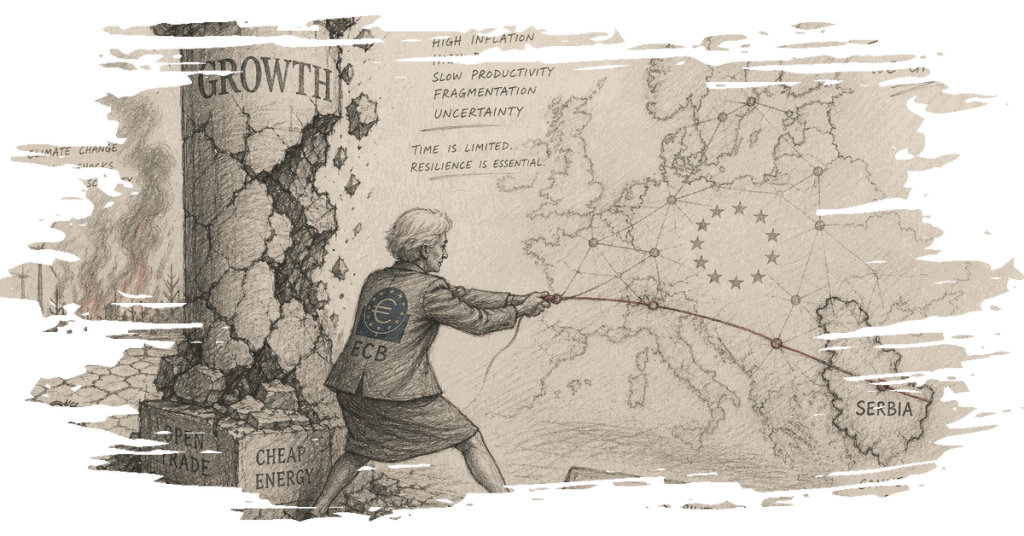
ECB President Christine Lagarde has suggested that the traditional foundations of European economic growth—open global trade, cheap energy, and a stable geopolitical order—may no longer be sustainable. In response, there is an ongoing discussion about how to better leverage the EU’s market size and establish a unified capital market. The proposals for these economic reforms are particularly significant for non-EU countries like Serbia, which are heavily reliant on trade and investment from the EU.

The potential establishment of a unified capital market in the EU could have profound implications for Serbia. As a non-EU country that depends significantly on the European market, Serbia’s economic strategies and policies could be influenced by these developments. Dr. Veljko Mijušković, a lecturer at the Faculty of Economics in Belgrade, discussed these implications during a podcast hosted by Sputnik. The conversation highlighted the potential risks and benefits for Serbia in adapting to changes in the EU economic model.
Serbia’s economy has historically been intertwined with the EU, with trade and investment playing crucial roles. The potential shift in the EU’s economic strategy could necessitate adjustments in Serbia’s economic policies to maintain its economic stability and growth. This situation underscores the importance for Serbia to closely monitor the EU’s economic policy changes and assess their potential impacts on its economy.
The discussions within the ECB reflect broader concerns about the viability of the EU’s economic model in the face of global economic shifts. The emphasis on creating a unified capital market aims to enhance the EU’s economic resilience and competitiveness. For Serbia, aligning its economic policies with these changes could be critical in ensuring continued economic collaboration and benefit from the EU’s market dynamics.
In summary, the ECB’s proposals to revitalize the EU economy by reconsidering its traditional growth pillars and creating a unified capital market present both challenges and opportunities for Serbia. As the EU navigates these economic reforms, Serbia must remain vigilant and adaptive to maintain its economic ties and leverage potential benefits from the evolving European economic landscape.