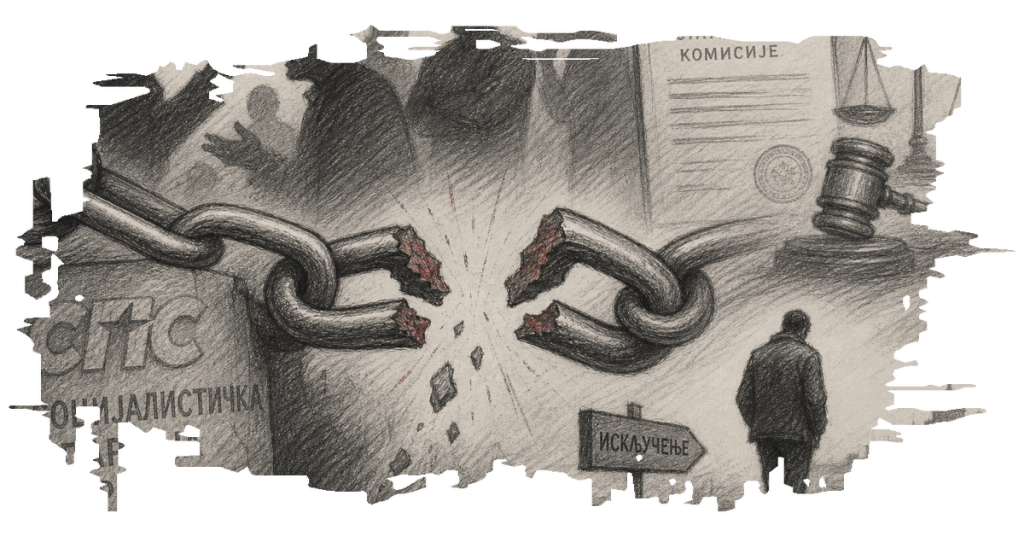
Branko Ružić, a prominent figure within the Socialist Party of Serbia (SPS), has been expelled from the party following a decision by the Statutory Commission of SPS. This decision was reached during a meeting attended by all 11 members of the commission, highlighting the seriousness of the action. Ružić’s expulsion is attributed to a significant violation of the party’s statute, marking a pivotal moment in the party’s internal dynamics.
Ružić, who has been a long-standing member of the SPS, has held several high-ranking positions, including serving three terms as a minister. His tenure in the party has been marked by occasional public criticisms of the SPS and the government, which have now culminated in his expulsion. These criticisms have previously been a subject of scrutiny by the Statutory Commission, and Ružić has faced suspension in the past due to his public dissent.

The decision to expel Ružić was not taken lightly. The meeting of the Statutory Commission was initially scheduled for an earlier date but was postponed to ensure full attendance, underscoring the importance of having a unanimous decision. This move aims to prevent any future challenges to the decision’s legitimacy.
Ružić’s public criticisms have not only strained his relationship with the SPS but also with coalition partners, particularly the Serbian Progressive Party (SNS), with which the SPS has been allied in government. His statements have been seen as creating confusion among the electorate, especially in rural areas where voters may not be fully informed about the nuances of party politics.
Despite his vocal presence in the media, Ružić’s parliamentary record shows limited engagement. According to data from the Open Parliament, he has been elected as a member of parliament six times and has served as the head of the SPS parliamentary group on three occasions. However, his parliamentary activity has been minimal, with only two recorded speeches and a significant number of absences during voting sessions.
The expulsion of Ružić raises questions about the future direction of the SPS and its internal cohesion. As a significant figure within the party, his departure could signal a shift in the party’s approach to dissent and internal criticism. It also poses potential implications for the SPS’s electoral prospects, as the party navigates its relationship with coalition partners and its standing with the electorate.
Reactions from other political figures and analysts could provide further insight into the broader impact of Ružić’s expulsion on Serbian politics. The decision may reflect deeper internal conflicts within the SPS that are not publicly disclosed, and the motivations behind the expulsion may extend beyond the stated violation of the party’s statute.
As the political landscape in Serbia continues to evolve, the expulsion of a high-profile member like Ružić could influence the strategies and alliances of the SPS in the lead-up to future elections. The party will need to manage the potential fallout from this decision and address any internal divisions to maintain its position in Serbian politics.