

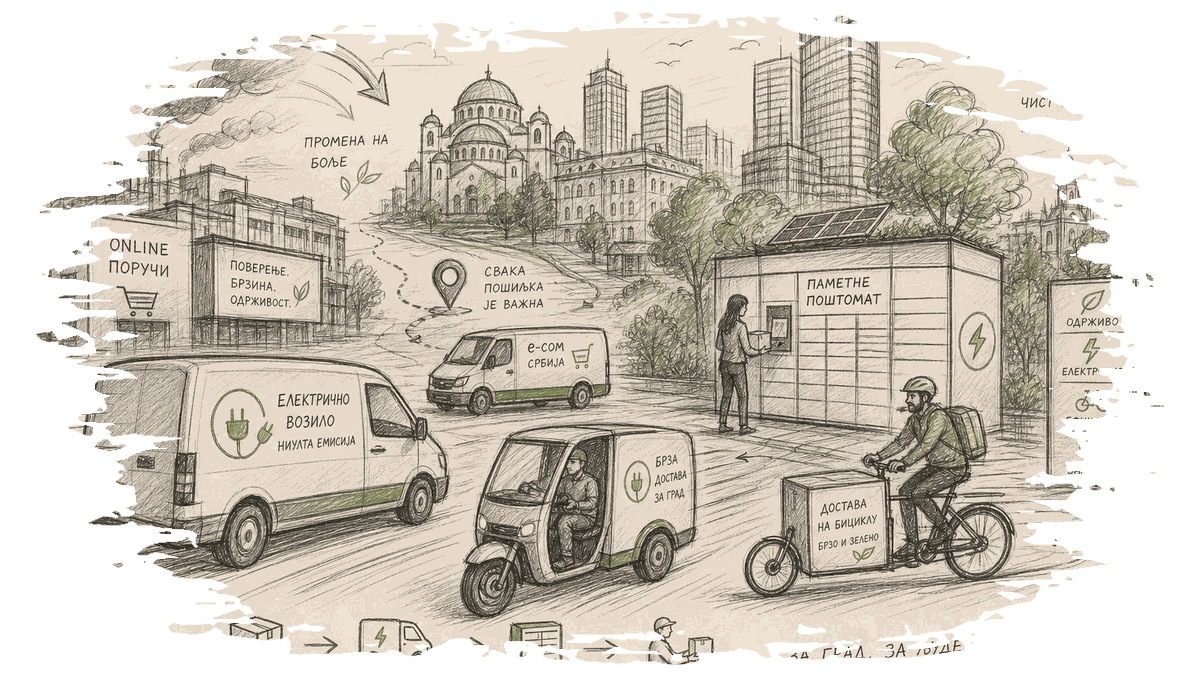
The rapid growth of e-commerce in Serbia has led to increased demand for fast deliveries, putting significant pressure on urban logistics, particularly in the last-mile delivery segment. This segment, which involves transporting goods from local distribution centers to end customers, is the most dynamic yet problematic part of the transport chain. It contributes heavily to urban air pollution and traffic congestion, with delivery vehicles frequently stopping and starting, often occupying bike lanes and sidewalks, exacerbating traffic jams and pollution.
In response to these challenges, logistics and courier companies in Serbia are testing sustainable delivery solutions. These include smart parcel lockers, cargo bicycles, micro-warehouses, and the electrification of delivery fleets. These initiatives aim to reduce harmful emissions and improve efficiency in urban areas. Smart parcel lockers, for example, allow couriers to deliver multiple packages to a single location, reducing the number of stops and travel distance by over 60%. Cargo bicycles and electric tricycles are being used in pedestrian zones and areas with limited parking, as they emit no pollutants and can easily navigate congested streets.

The electrification of delivery fleets is another significant step, with companies replacing traditional diesel vans with light electric commercial vehicles, eliminating emissions at the point of use. This shift is crucial as studies indicate that without fundamental changes in urban delivery organization, emissions from last-mile logistics could increase by over 30% in the next decade.
Local governments play a vital role in supporting this transition by establishing regulatory frameworks that encourage sustainable logistics practices. Western European cities have introduced Low Emission Zones (LEZ), where only zero-emission vehicles are allowed, and similar strategies could be adopted in Serbian cities. This would involve creating designated loading and unloading zones, offering incentives for purchasing eco-friendly delivery vehicles, and providing public spaces for smart parcel lockers and micro-fulfillment centers.
The move towards sustainable last-mile logistics is at a critical juncture. The growing demands of e-commerce can no longer be met by simply increasing the number of delivery vehicles on the streets. Instead, a combination of advanced technologies, expanded use of parcel lockers, cargo bicycles, and smart urban regulations is seen as the only sustainable path forward. Companies that adopt these green solutions will not only improve urban air quality but also ensure long-term efficiency and competitiveness in the logistics sector.




0 Comments