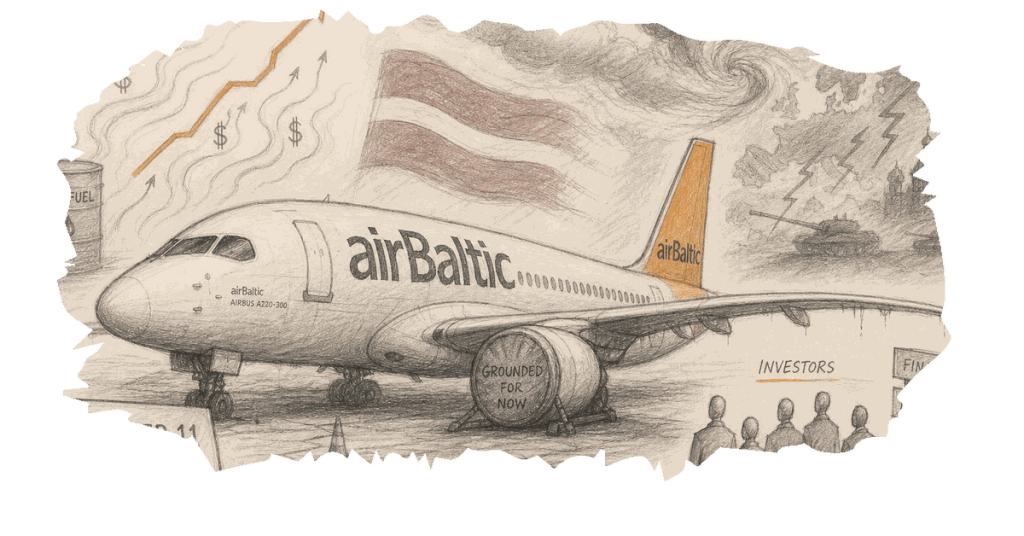
AirBaltic, the national airline of Latvia, has filed for Chapter 11 bankruptcy protection in the United States as part of a strategic move to restructure its substantial debt, which amounts to $600 million. This development comes amid escalating financial pressures attributed to rising fuel costs and geopolitical tensions, notably those involving Iran, which have disrupted air traffic and increased operational expenses.
The airline has secured €350 million in new financing from a consortium of investors and banks, including Strategic Value Partners, Barclays, Morgan Stanley, and Oaktree Capital Management. However, the approval of this financing arrangement is contingent upon court confirmation, adding a layer of uncertainty to the airline’s restructuring efforts.

AirBaltic’s leadership anticipates that the restructuring will stabilize operations and facilitate negotiations with creditors to achieve more favorable and sustainable terms. The company projects that its new business plan could enhance its annual financial results by approximately €44 million. Despite these efforts, the airline is considering delaying or canceling orders for 40 new Airbus A220 aircraft, valued at around $3.5 billion, as a cost-saving measure.
The airline’s current fleet consists of around 50 aircraft, with the Latvian state holding a majority ownership stake and German airline Lufthansa owning a 10% minority share. The financial strain on AirBaltic has intensified following the outbreak of conflicts involving Iran, which have led to a surge in fuel prices and significant disruptions in air traffic. The airline’s financial obligations include approximately $583 million in leasing debts and an additional €106 million owed in taxes, wages, and various fees.
In recent years, AirBaltic pursued an ambitious expansion strategy, aiming to increase its fleet to 100 aircraft. This strategy relied heavily on transit passengers from Russia, Belarus, and Ukraine. However, shifts in the market and rising fuel costs have cast doubt on the sustainability of this model. Latvian Prime Minister Andris Kulberg has remarked that the airline may have grown too large for the market it serves, suggesting that a fleet of about 30 aircraft would suffice for covering Latvian and Baltic routes.
The restructuring process, expected to conclude by June next year, may also involve workforce reductions. AirBaltic employs over 3,000 people, and negotiations with unions regarding potential layoffs have already commenced. Additionally, the airline plans to scale back its involvement in “wet lease” arrangements, which involve renting aircraft along with crew to other airlines.
The Latvian government views the Chapter 11 filing as a viable option to preserve AirBaltic and secure the necessary time for implementing the restructuring plan. Concurrently, efforts to identify a strategic investor who can provide long-term support for the airline are ongoing.
AirBaltic’s financial challenges reflect broader economic difficulties facing the aviation sector, exacerbated by geopolitical conflicts and fluctuating fuel prices. The airline’s situation underscores the vulnerability of the industry to external shocks and the complex interplay of economic and geopolitical factors that can severely impact operational stability.