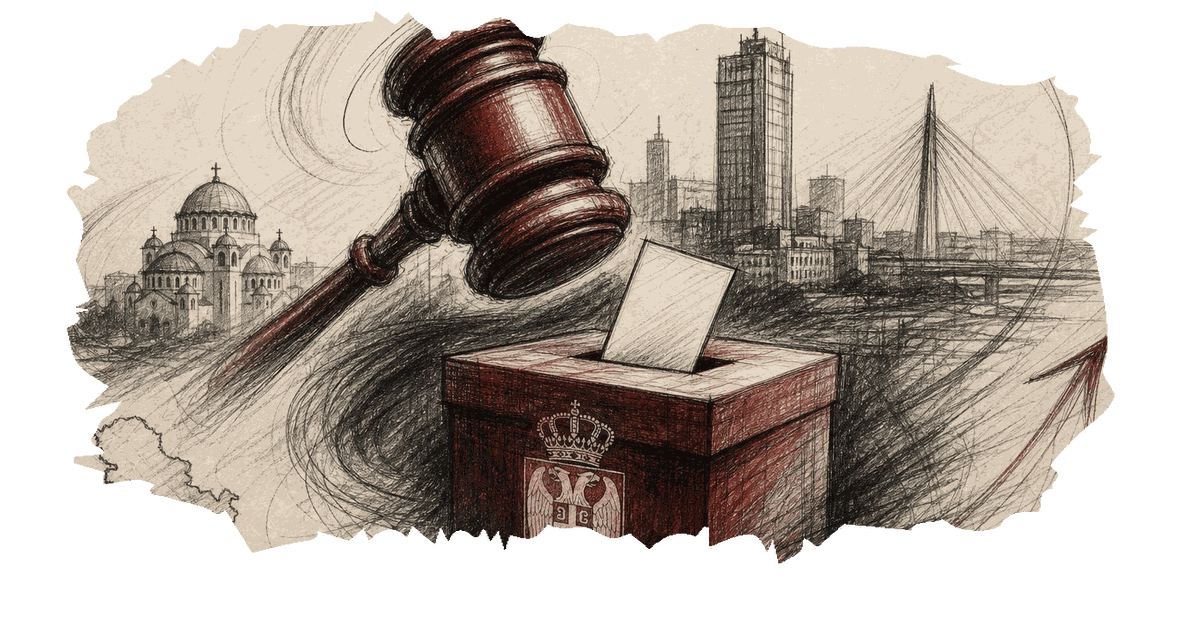
Students in Serbia have launched a guerrilla marketing campaign aimed at increasing voter turnout for their electoral list, “Students Win,” ahead of the upcoming parliamentary elections. This campaign marks a shift from previous efforts that focused on mobilizing citizens for protests to now communicating a political program and encouraging electoral participation.
The students’ campaign employs unconventional advertising strategies, leveraging creativity and low-cost methods to reach citizens. They have primarily utilized social media platforms and direct communication methods such as door-to-door interactions and setting up stands in cities across the country. Their messages are spread through various means, including t-shirts, badges, banners, and stickers, all carrying the slogan “Students Win.”

Marketing expert Igor Avžner has noted that despite the students’ limited financial resources, their focus on social networks could be advantageous. Avžner explained that the target group for the student list is more oriented towards social media, reducing the necessity for expensive traditional media campaigns. He emphasized that the students’ approach capitalizes on the motivation and eagerness of their supporters to vote, suggesting that word-of-mouth communication could play a significant role in their campaign’s success.
The campaign’s innovative tactics contrast with the traditional methods employed by the ruling Serbian Progressive Party (SNS), led by President Aleksandar Vučić. The SNS, with its substantial financial resources, is expected to invest heavily in media advertising. However, Avžner argues that the electorate has become fatigued by such conventional approaches, which may not be as effective as before.
The student movement has been gaining momentum in Serbia, previously mobilizing citizens through protests. This new electoral focus aims to translate that momentum into votes. The campaign officially kicked off in Novi Sad, where students organized a rally to present their political program and engage with citizens. The students’ strategy includes reaching out to voters across Serbia, although Avžner acknowledges the challenges of reaching every village.
The broader political landscape in Serbia is characterized by a fragmented opposition, with several parties failing to unite against the SNS. Some opposition groups have chosen to support the student list as a viable alternative to the ruling party. The students’ campaign, therefore, represents not only a challenge to the SNS’s dominance but also an opportunity for opposition forces to rally around a common cause.
As the elections approach, the effectiveness of the students’ guerrilla marketing tactics in translating support into actual votes remains uncertain. There is a lack of comprehensive polling data to gauge public sentiment towards the student list, making it difficult to predict their electoral success. Nonetheless, the students’ innovative campaign methods and the enthusiasm of their supporters suggest a potential shift in Serbia’s political dynamics.
The upcoming elections will test the students’ ability to convert public support into electoral success and could significantly impact Serbia’s political landscape. The students’ campaign, with its emphasis on social media and grassroots engagement, challenges the traditional campaign methods of established parties and highlights the evolving nature of political campaigning in Serbia.