

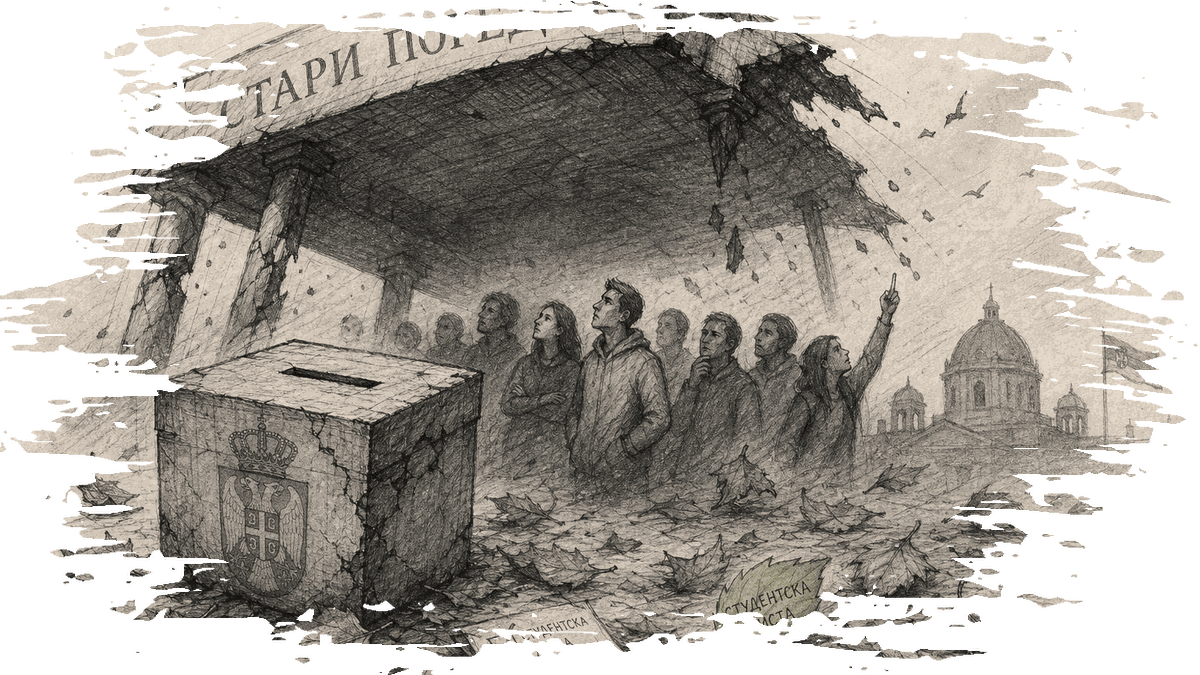
Rasim Ljajić, leader of the minority electoral list “Ljudski,” has provided a critical analysis of the Serbian Progressive Party’s (SNS) recent electoral defeat, attributing it to a non-political issue. Ljajić argued that the SNS’s loss was significantly influenced by the public’s reaction to the collapse of a canopy, an incident he believes was mismanaged by the government. He stated that the societal dissatisfaction stemming from this event was a key factor in the party’s downfall, as the authorities failed to adequately address the public’s concerns, effectively “extinguishing the fire with gasoline.”
Ljajić emphasized that the elections held on October 25, 2026, were not traditional in nature but rather functioned as a referendum on the leadership of former President Aleksandar Vučić. He suggested that the electorate was less focused on specific political programs or candidates and more driven by a desire to change the current leadership. According to Ljajić, the elections were characterized by a polarized environment, akin to sports rivalries, with voters divided into camps rather than making choices based on political platforms.
The collapse of the canopy, which Ljajić referenced, became a symbol of broader public dissatisfaction, overshadowing other political debates on topics such as Kosovo, the European Union, and democracy. Ljajić criticized the government’s response to the incident, suggesting that their efforts to downplay the growing public movement were ineffective.
In the aftermath of the elections, the Students’ List emerged victorious, ending the SNS’s long-standing dominance with 53.01% of the vote. The SNS, under Vučić’s leadership, secured 38.98%. Ljajić remarked that the minority representatives, including those from his list, would have a limited impact in the new parliamentary configuration, as they hold only seven seats, compared to previous assemblies.
Looking ahead to the upcoming presidential elections, Ljajić speculated that the SNS might struggle to present a viable candidate against the Students’ List, given the current political climate. He suggested that the SNS might conclude that no candidate could effectively challenge the Students’ List’s nominee.
Ljajić’s comments highlight a shift in voter sentiment in Serbia, where non-political issues and public dissatisfaction with governance have played a pivotal role in shaping electoral outcomes. His analysis provides insight into the changing dynamics of Serbian politics, where traditional political debates are being overshadowed by broader societal concerns.


0 Comments