

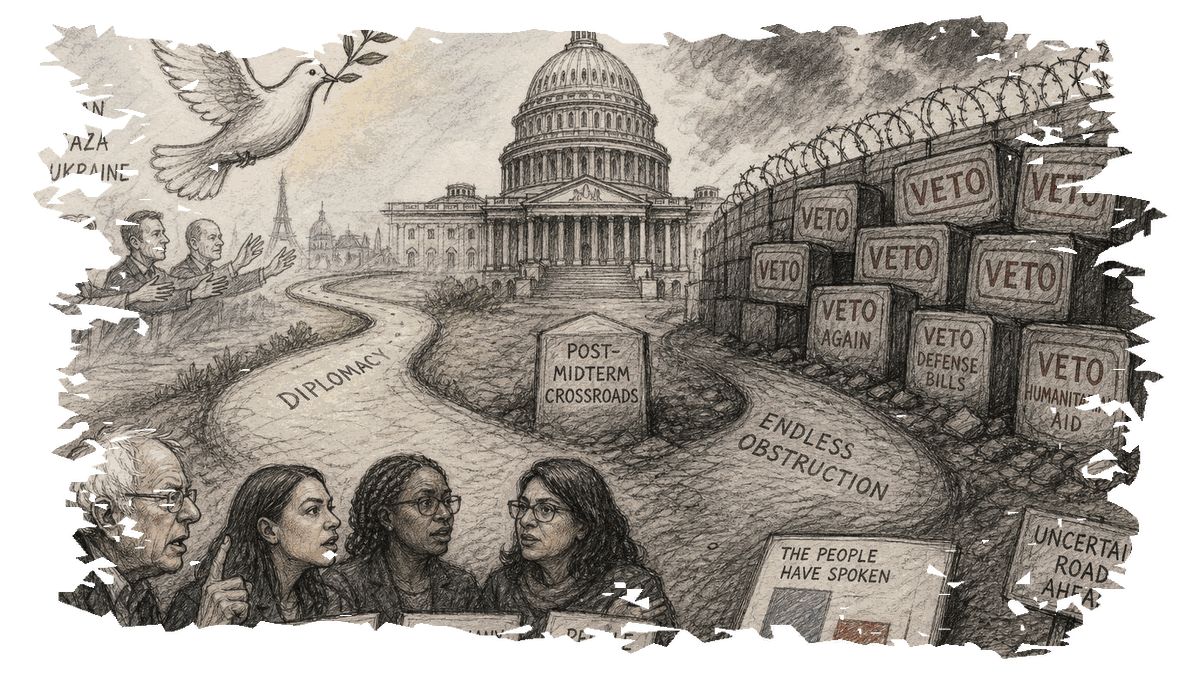
In the wake of the recent U.S. midterm elections, Democrats have gained control of both the House of Representatives and the Senate, a shift that is expected to significantly impact U.S. foreign policy, particularly concerning conflicts in Iran, Gaza, and Ukraine. This political shift comes as a direct response to widespread dissatisfaction with President Donald Trump’s policies, notably his decision to engage in a war with Iran, which has been unpopular among American voters due to its economic repercussions, including a spike in fuel prices.
The Democrats’ victory, which includes securing 242 seats in the House and 54 in the Senate, marks a substantial political shift and presents a challenge to Trump’s administration. Despite this, the Democrats do not hold the two-thirds majority needed to override a presidential veto, which Trump has vowed to use against any Democratic policies he deems “insane.” Nonetheless, the Democratic majority is poised to challenge Trump’s military strategies, particularly in Iran, where the war has cost U.S. taxpayers an estimated $47 billion and contributed to the Republicans’ electoral losses.
Prominent Republicans, including Vice President JD Vance, have started to distance themselves from the Iran conflict, indicating a potential shift in bipartisan support for military actions. Meanwhile, European leaders have expressed cautious optimism that the Democrat-led Congress will help mend transatlantic ties and reinforce support for Ukraine, which has seen diminished backing from Trump. The President has criticized Ukrainian President Volodymyr Zelenskyy and suspended sanctions on Russian oil, blaming Ukraine for strikes on Russian oil facilities that have exacerbated the fuel crisis.
The election results also underscore a significant change in the Democratic Party’s stance on Israel. Newly elected progressive Democrats have voiced strong opposition to U.S. military support for Israel, particularly in light of the ongoing conflict in Gaza and actions against Palestinian communities in the West Bank. This represents a departure from previous administrations, which have largely supported Israel’s policies.
Despite the Democrats’ control over Congress, analysts suggest that restricting funding for the Iran war might be complex, given the presence of U.S. troops in the region. James Boys, a research fellow at the Centre on US Politics at University College London, noted that cutting funds could be seen as endangering American lives, complicating efforts to leverage Congress’s “power of the purse” to end the conflict.
The midterm results have not only reshaped the domestic political landscape but also set the stage for potential changes in U.S. foreign policy. However, the effectiveness of these changes remains uncertain, as Trump’s veto power poses a significant hurdle. As Democrats prepare to take office in January, the international community will be watching closely to see how these developments influence ongoing global conflicts and the U.S.’s role in them.


0 Comments