

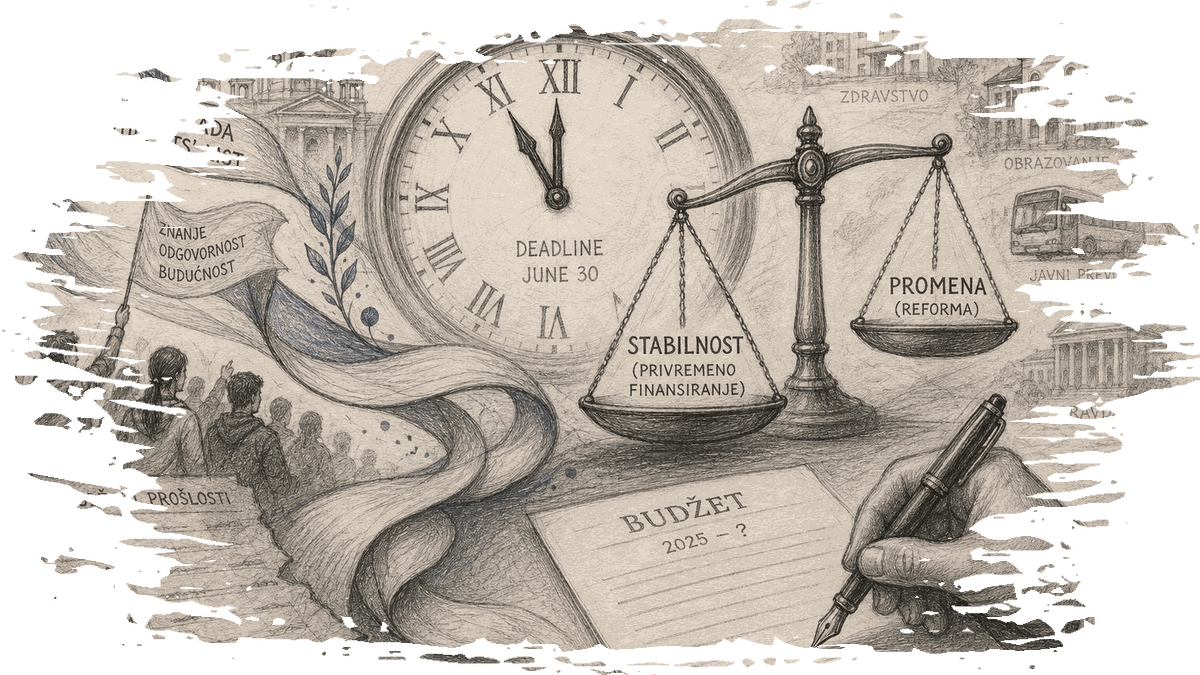
As Serbia approaches the December 20, 2026, deadline for approving its 2027 budget, the country faces the possibility of resorting to temporary financing due to ongoing political transitions. This situation arises amidst the recent parliamentary elections where the Students’ List emerged victorious, signaling a significant shift in Serbia’s political landscape. The new government, still in the process of formation, may require additional time to thoroughly review and finalize the budget, according to economist Milojko Arsić.
The Serbian budget for 2027 must be approved by December 20, as mandated by the country’s budgetary law. However, given the current political transition, the likelihood of meeting this deadline appears slim. Arsić suggests that temporary financing is the more probable scenario, allowing the government up to three months to operate based on the previous year’s budget while crafting a new one. This interim measure, he notes, is not uncommon during periods of political change and would not significantly disrupt public financial operations.
Minister of Finance Siniša Mali has reassured the public that salaries and pensions in the public sector will continue to be paid on schedule, irrespective of the budget’s approval status. This assurance aims to alleviate concerns over potential financial instability during the transition period. Mali emphasized that public finances remain stable, and the government is committed to maintaining regular financial operations.
The transition to temporary financing would mean that the government would not be able to increase salaries and pensions in the short term. Additionally, the government would be restricted from issuing new guarantees or taking on new project loans during this period. This approach allows the new administration time to align the budget with its priorities and policies without immediate financial disruptions.
The outgoing government had prepared a draft budget, but the extent of its alignment with the incoming administration’s priorities remains uncertain. Dejan Šoškić, an economist and candidate from the Students’ List, highlighted the challenges in predicting the financial state inherited from the previous administration. He noted that the new government has teams ready to assess the situation, but they are yet to assume full control.
Historically, Serbia has resorted to temporary financing during similar political transitions, most recently in early 2007. This mechanism provides a buffer period for the new government to establish itself and make informed budgetary decisions. The Students’ List, which has pledged to address issues such as corruption and improve public services, may use this time to implement its agenda once the budget is finalized.
The political dynamics in Serbia are crucial as the new government navigates the budgetary process. The Students’ List’s victory has prompted significant changes, and the new administration’s approach to budgetary decisions will be a critical test of its governance capabilities. As the deadline approaches, the focus remains on how the new government will handle this transition and align its financial policies with its broader political objectives.

0 Comments