Goran Vesić and Anita Dimoski, both indicted for serious crimes against public safety, remain free despite a confirmed indictment by the Appellate Court in Novi Sad over two months ago. A technical error has delayed their placement under house arrest, a measure that has already been enforced on four other individuals involved in the same case. The higher court is currently addressing the procedural issues that have allowed Vesić and Dimoski to remain at liberty.
The case revolves around a confirmed indictment related to the collapse of a canopy, which has implicated six individuals. While four of the accused have been returned to house arrest, Vesić and Dimoski’s situation remains unresolved due to what has been described as a “technical error.” The Criminal Non-Trial Chamber of the Higher Court in Novi Sad is set to deliberate on the reasons for this delay, following a request for interpretation from the Appellate Court.

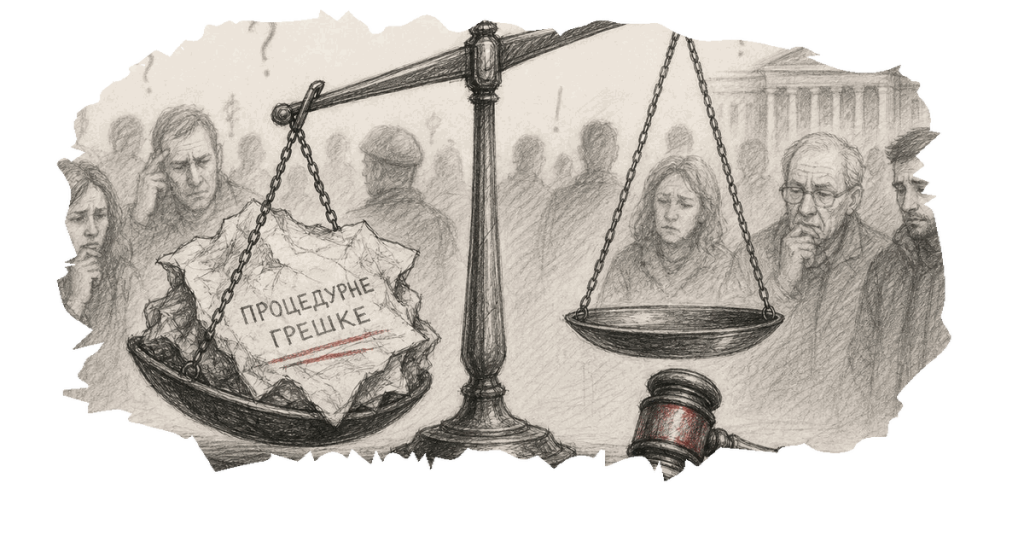
The Higher Court in Novi Sad received the necessary interpretation from the Appellate Court and is expected to make a decision soon. The court’s explanation for the delay points to a procedural oversight, as the duration of the house arrest measure for Vesić and Dimoski was calculated from the date when their previous restriction, a ban on leaving their residence, was lifted. This date, January 30, 2026, has already passed, leading to their continued freedom.
The Appellate Court had issued its decision on June 15, 2026, extending the house arrest for all six defendants. However, the enforcement of this decision for Vesić and Dimoski has been called into question, leading to a series of communications between the Higher Court and the Appellate Court. The Higher Court has sent multiple requests for clarification to the Appellate Court, which finally responded on September 16, 2026, with an interpretation of its earlier decision.
The delay in enforcing the house arrest for Vesić and Dimoski has raised questions about the integrity of judicial processes in Serbia, particularly in cases involving public officials. Attorney Veljko Milić, representing one of the accused, expressed skepticism about the explanation of a technical error, suggesting that such mistakes are unlikely in cases of significant public interest. Milić pointed out that the facts in question are easily verifiable and should have been checked by the court before issuing the decision.
The ongoing situation has sparked concerns about potential political influence and the effectiveness of the legal system in Serbia. The lack of clarity on the timeline for resolving these procedural issues further complicates the matter. The Higher Court is expected to make a decision soon, which will be closely watched as it could set a precedent for future legal proceedings involving public officials.
This case is part of a broader pattern of legal controversies in Serbia, where judicial integrity and the handling of high-profile defendants have been under scrutiny. Previous cases have highlighted similar issues, raising concerns about the accountability and transparency of the judicial process in the country. The outcome of this case could have significant implications for public trust in the legal system and the perception of judicial fairness in Serbia.