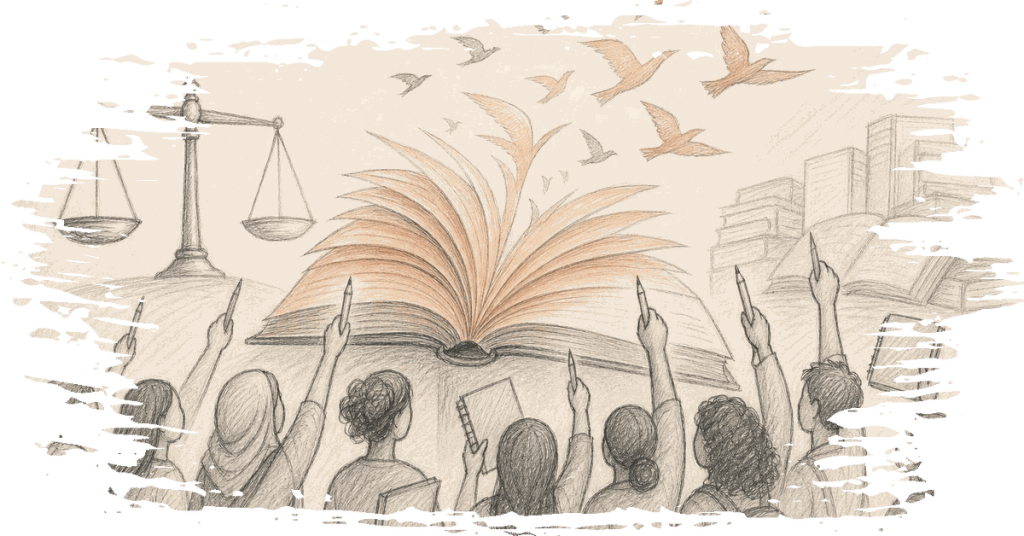
Students in Serbia are advocating for a comprehensive model of free textbooks for all elementary and high school students, as part of a broader educational reform agenda. This initiative is being put forward by a student movement that emphasizes the financial burden of educational materials on families and aims to treat education as a public good. The proposal suggests that free textbooks should be accessible to students regardless of their place of residence, reflecting a commitment to educational equity across the country.
Ana Dimitrijević, a candidate on the Students’ List – Students Win, explained to the news outlet Danas that the initiative is not merely an election promise but a part of a larger principle that education should not impose basic costs on families. “If textbooks are essential tools for schooling, then the system should ensure they are available to every child,” she stated. Dimitrijević emphasized that the proposal is not just about the state covering the current costs borne by parents but involves a comprehensive reevaluation of the textbook selection process, pricing, quality, and the influence of commercial interests.

The proposal has been met with skepticism by some experts, who view it as a potential political promise rather than a feasible solution. They argue that the focus should instead be on improving the quality of educational materials. Despite this skepticism, Dimitrijević and her supporters argue that the issue of expensive school books is a significant concern for parents, identified through discussions and fieldwork conducted by students.
The initiative also proposes that textbooks should be provided by schools for use and returned at the end of the school year to allow multiple generations to benefit from them. This approach, according to Dimitrijević, would foster a sense of responsibility among students to care for shared resources. However, she acknowledges the challenge of balancing this with the need for students to engage actively with their textbooks, such as by underlining or making notes.
The concept of providing free textbooks is not new in Serbia. Over the past fifteen years, it has been a recurring promise from various political parties, although its implementation has been inconsistent. Some local governments have distributed free textbooks, but many students across different municipalities still lack access. Dimitrijević criticized these past efforts as often being populist measures tied to specific political campaigns rather than sustained policy changes.
The proposal also includes a special “school allowance” for students who qualify for financial support, recognizing that children from economically disadvantaged backgrounds require additional resources beyond textbooks, such as workbooks, school supplies, meals, and transportation.
The student movement’s proposal comes as part of their broader campaign for the upcoming parliamentary elections in Serbia, scheduled for October 25, 2026. The Students’ List – Students Win has been actively campaigning, including organizing bicycle tours across Serbia to raise awareness and gather support for their platform. This initiative is seen as part of a larger effort to address systemic issues within Serbia’s educational system and to challenge the current political establishment’s approach to education.
The feasibility of this proposal remains uncertain, with questions about its political viability and potential reception among the public. Nonetheless, the students are determined to bring this issue to the forefront of the national conversation, advocating for a model of education that prioritizes accessibility and quality for all students.