Serbian students have shown a significant decline in literacy and numeracy skills, according to the latest results from the Program for International Student Assessment (PISA) conducted in 2025. The results, published on September 8, 2026, reveal that Serbian students scored considerably lower in science, reading, and mathematics compared to previous years, raising concerns about the effectiveness of the country’s education system.
Dragica Pavlović Babić, a professor at the Faculty of Philosophy in Belgrade and former national coordinator of the PISA study, highlighted the alarming nature of these results. She noted that over 50% of Serbian students failed to reach the level of functional literacy: 53% in mathematics, 48% in reading, and 43% in science. This marks a significant drop from previous years when Serbia had managed to stabilize its scores around 440 points in these domains.

For the first time, Serbia has been surpassed by Albania and Montenegro in certain educational areas. Traditionally, Serbia had outperformed these countries, maintaining a regional standing just below Croatia and significantly below Slovenia. However, the latest PISA results indicate a shift in this trend, with Serbia now trailing behind its regional counterparts in some aspects.
The study also uncovered a growing negative perception of education among Serbian students, with 20% agreeing with the statement that school is a waste of time. This is slightly below the OECD average of 24%, suggesting that the issue of disengagement with formal education is not unique to Serbia but is more pronounced in other OECD countries.
Despite the overall disappointing performance, Serbian students excelled in computer-based problem-solving, achieving their best score of 437 points in this additional domain. However, even in this area, a significant 60% of students did not reach the level 2 threshold, considered the benchmark for functional literacy.
Pavlović Babić pointed out some positive aspects of the results, particularly regarding educational equity. Serbia performed better than in previous cycles and above the OECD average in terms of equity in education. The socio-economic background of students explained only 9% of the variance in student achievement, compared to the OECD average of 12%. This indicates that socio-economic status has a lesser impact on student performance in Serbia than in many other countries.
Additionally, Serbia showed favorable results in academic resilience, with 14% of the poorest students achieving top performance, compared to the OECD average of 12%. However, the support students perceive from their families and teachers in science was rated low, with 71% of students relying on peer support and learning.
The PISA 2025 study was initially scheduled for March and April of the previous year but was postponed to mid-September due to disruptions in some educational institutions. Pavlović Babić dismissed the idea that this delay significantly impacted student motivation or the overall results, emphasizing the robustness of the PISA assessment tool.
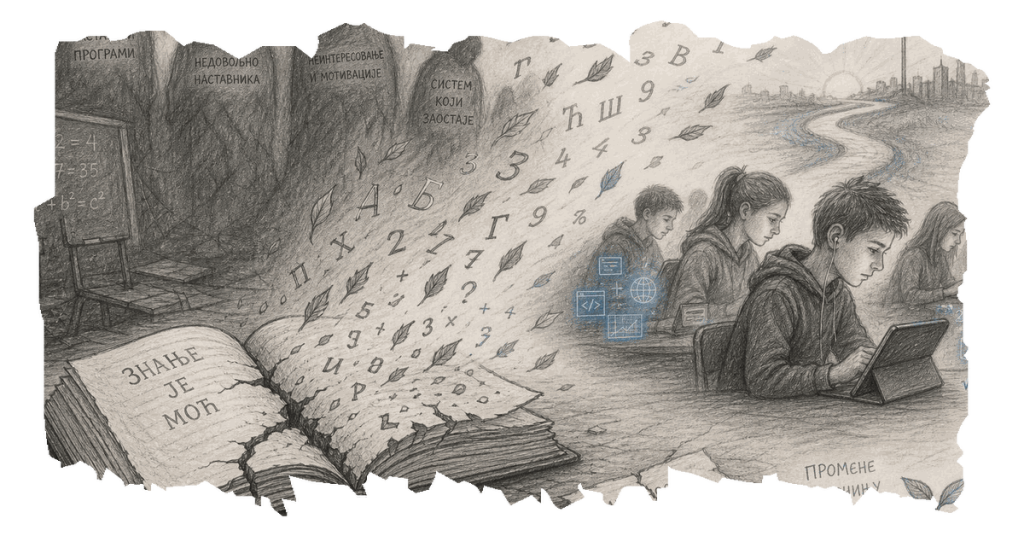
The findings have sparked a discussion on the need for systemic changes within Serbia’s educational framework to address these declines. While the reasons behind the drop in performance are not fully explored, the results underscore the necessity for further investigation into potential systemic issues affecting student learning and engagement.
The latest PISA results serve as a wake-up call for Serbian educators and policymakers, highlighting the urgent need to reassess and improve the quality of education to ensure that students are adequately prepared for future challenges.