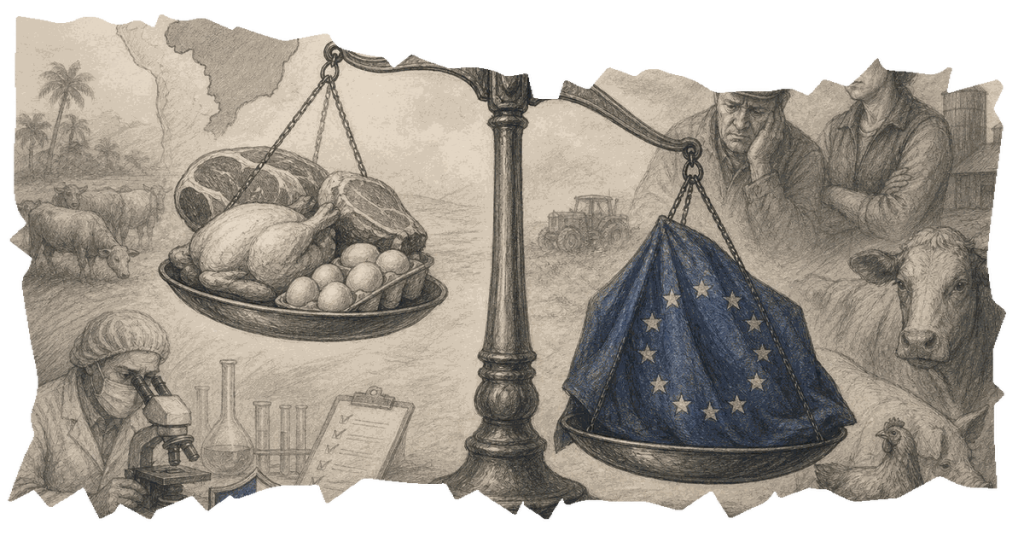
The European Union has suspended imports of Brazilian meat and other animal products as of September 3, 2026, due to Brazil’s failure to provide necessary guarantees that its exports comply with EU standards regarding the use of antibiotics in livestock. This decision has sparked significant debate over the competitiveness of European farmers who adhere to stricter production standards compared to their Brazilian counterparts. The suspension is part of a broader scrutiny of the Mercosur trade agreement, with critics highlighting the unequal production standards between the EU and Mercosur countries.
Marko Vešligaj, a member of the European Parliament, has been vocal in his criticism of the Mercosur agreement, arguing that the differing standards pose a threat to European agricultural competitiveness. He emphasized that the agreement allows for the import of food produced under less stringent regulations concerning pesticides, hormones, and genetically modified organisms, which undermines European farmers who must comply with stricter rules. Vešligaj stated, “The latest decision from Brussels is yet another argument against the agreement in its current form.”

Brazil, as the second-largest supplier of beef to the EU in 2025, faces a significant impact from this suspension. The ban extends beyond beef to include poultry, eggs, honey, and other animal-derived products intended for human consumption. This move underscores the EU’s commitment to maintaining high food safety standards and protecting both its consumers and local producers.
The EU’s decision comes after Brazil was removed from the list of countries compliant with EU antibiotic use regulations in May. The European Commission has highlighted the importance of these regulations as part of its broader policy to combat antimicrobial resistance, a growing concern worldwide. Vešligaj pointed out that the EU Commission’s response to these issues has been inadequate, stressing the need for more stringent enforcement of standards.
The suspension of Brazilian meat imports is not only a trade issue but also a matter of consumer protection and food safety. Vešligaj questioned the quality of food being consumed in Europe and the effectiveness of measures to protect local producers and consumers. He noted that the decision to suspend imports is a response to ongoing criticism from both the European Parliament and European farmers regarding the Mercosur agreement.
The implications of this suspension are significant, as it could affect the availability and prices of meat products within the EU. The decision also raises questions about the future of the Mercosur agreement and whether Brazil will take steps to align its production standards with those of the EU. As the situation develops, it remains to be seen how Brazil will address the EU’s concerns and whether this will lead to changes in import policies.
This development is part of a larger context of international trade agreements and their impact on local economies. The EU’s strict food safety standards are a critical component of its trade policies, and the suspension of Brazilian meat imports highlights the challenges of balancing trade agreements with domestic agricultural interests. As the EU continues to navigate these complex issues, the focus remains on ensuring that imported products meet the same high standards required of European producers.