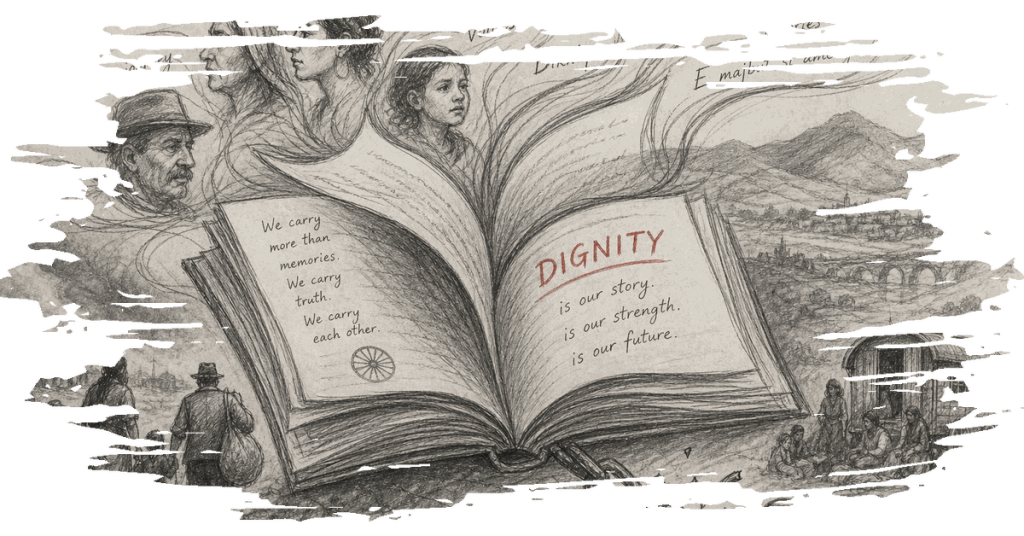
The Center for Education of Roma and Ethnic Communities (CEREZ) has launched a new book titled “Ljudi govore – Manuša vakharena,” which documents the experiences of the Roma community during the Kosovo conflict of 1998-1999. The book, presented in Belgrade, aims to shed light on the hardships faced by the Roma during the war, a subject that has received limited public attention.
The publication is a compilation of testimonies that detail the struggles, displacement, and personal stories of the Roma community caught in the crossfire of the conflict. Ljuan Koko, President of CEREZ, emphasized the importance of this initiative, stating that the primary goal is to preserve authentic accounts of those who lived through the war, ensuring that their experiences are not forgotten. He stressed that the book is not an attempt at political interpretation but rather a documentation of human stories and historical facts that have long been overlooked.
During the book’s presentation, Koko highlighted the severe impact of the conflict on the Roma, many of whom were forced to flee their homes, with numerous families still searching for missing relatives. The publication underscores the ongoing consequences of the war, which continue to affect many Roma families today. Koko noted that while a significant number of testimonies have been collected, further research and documentation will continue to expand the historical record.
Ninoslav Jovanović, State Secretary in the Ministry of Labor, Employment, Veteran, and Social Affairs, attended the event and underscored the necessity of addressing all war victims’ experiences responsibly and without bias. He advocated for the recognition of all suffering, regardless of the victims’ ethnic backgrounds, as a crucial step towards reconciliation and the establishment of a society grounded in human rights and dignity.
The book’s launch also brought attention to the issue of missing persons, a poignant reminder of the unresolved questions that many families still face. Koko called for continued efforts by institutions to clarify these cases, emphasizing that time should not diminish the pursuit of truth and justice.
This initiative by CEREZ is part of a broader effort to raise awareness about the suffering of marginalized communities and to promote a culture of remembrance. By documenting these experiences, the organization hopes to contribute to a more comprehensive understanding of the conflict’s impact and foster dialogue and understanding among different communities.
The testimonies collected in “Ljudi govore – Manuša vakharena” serve as a reminder of the need for open discussions about war atrocities, irrespective of the victims’ nationalities. The book aims to ensure that the stories of the Roma community are recorded for future generations, highlighting the importance of historical documentation in achieving lasting peace and justice.
As the narratives of the Roma during the Kosovo conflict become more widely known, they contribute to the collective memory and understanding of the past. This endeavor not only aims to preserve history but also to pave the way for a more inclusive and empathetic society. By bringing these stories to light, CEREZ hopes to inspire ongoing dialogue and reflection