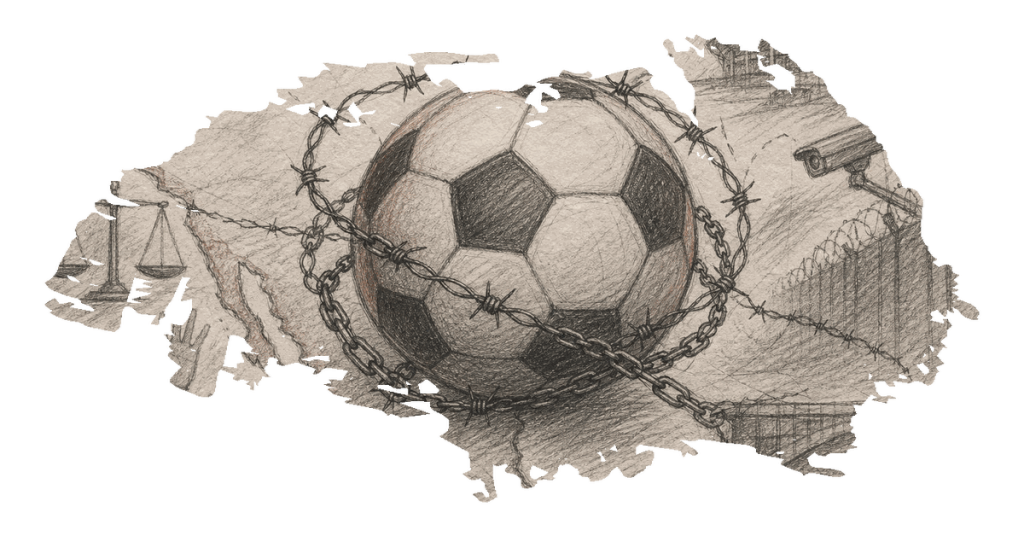
Concerns about human rights and safety loom as the FIFA World Cup in the United States approaches, set to kick off on June 11. A coalition led by the Sports and Rights Alliance has raised alarms over potential threats to journalists and fans, largely pointing to policies from former President Donald Trump that have been described as creating a “dangerous climate of fear.”
The coalition has criticized FIFA for failing to adequately address these potential threats. Andrea Florence, executive director of the Sports and Rights Alliance, stressed that FIFA’s weak response has fostered an environment of fear, uncertainty, and repression. She specifically highlighted Trump’s aggressive immigration policies and mass deportations as already affecting the world’s largest sporting event.
The White House offers a contrasting view. It describes the World Cup as one of history’s most exciting events, stressing coordination between the Trump administration, FIFA, and federal, state, and local authorities. White House spokesperson Davis Engel stated that President Trump aims to make the event both spectacular and historically safe. Engel dismissed concerns from liberal groups and media as “silly scare tactics.”
Despite these assurances, fears persist about potential crackdowns by U.S. Immigration and Customs Enforcement (ICE) on fans and residents due to Trump’s immigration policies. These concerns intensified when Iran relocated its primary training camp from Arizona to Mexico after joint U.S.-Israeli strikes on Iran earlier this year.
FIFA President Gianni Infantino has promised a warm welcome in the U.S., co-hosted with Canada and Mexico. However, his friendly ties with Trump have drawn criticism amid geopolitical tensions and U.S. policy impacts on the global stage.
Complicating matters is Trump’s administration’s dealings with African nations, such as an agreement with the Central African Republic to accept deported migrants. Critics argue these deals undermine migrant rights, while the U.S. asserts their legality.
The World Cup, featuring 48 teams, is more than a sports event; it’s a platform for debates on human rights, immigration policies, and international diplomacy. The success of the tournament hinges on how well the U.S. and FIFA handle these complex issues while ensuring safety for all.
As the tournament nears, global attention will focus on how these challenges are managed. The outcome could have significant implications for future international events.