

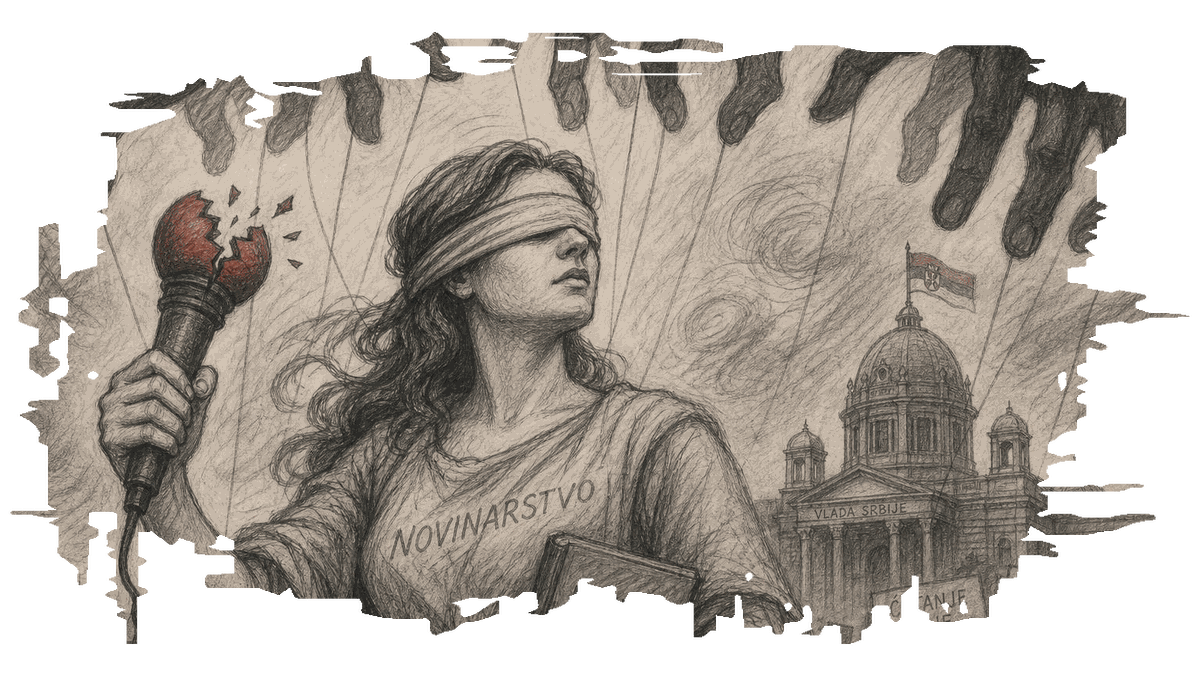
Dragan J. Vučićević, the editor-in-chief of the Serbian tabloid Informer, has publicly criticized the national broadcaster, Radio Television of Serbia (RTS), for allegedly failing to report on violence against Informer journalists. Vučićević’s remarks come in response to a segment aired on RTS’s Dnevnik 2, which discussed attacks on journalists but, according to him, omitted any mention of the harassment and violence faced by Informer staff over the past two years.
Vučićević expressed his discontent over the omission, highlighting several incidents where Informer journalists were reportedly targeted. He cited the severe beating of an Informer cameraman in Novi Sad as a particularly egregious example of violence that was ignored by RTS in their reporting. Instead, Vučićević claims RTS focused on an incident involving the breaking of a camera belonging to N1 television, which he argues was given undue prominence.
In his statement, Vučićević accused RTS of becoming a “blockader’s mouthpiece” following the elections held on October 25, 2026, suggesting that the broadcaster has ceased to serve as a public service for all citizens of Serbia. He described the RTS report as a manipulation of facts and an example of media bias, asserting that the public broadcaster is deliberately falsifying reality by not acknowledging the attacks on Informer journalists.
The editor-in-chief’s comments also touched on broader issues of media freedom and suppression in Serbia. Vučićević criticized the RTS for not reporting on past incidents where the broadcaster itself was blockaded, preventing employees from entering or leaving the premises for weeks. He described the current media environment as one of impending darkness, warning that the suppression of diverse opinions could lead to a dictatorial regime.
Vučićević’s allegations against RTS are set against a backdrop of ongoing tensions in Serbia’s media landscape, particularly following the electoral victory of the Students’ List. The new political climate has been marked by accusations of censorship and political persecution of media outlets that are critical of the government. Vučićević’s statements reflect concerns about the potential for increased media suppression under the new administration.
The situation underscores the contentious relationship between Informer and other media entities in Serbia. Informer has been involved in several legal and public disputes, including recent actions by the Regulatory Authority for Electronic Media (REM) to temporarily ban one of its programs. Vučićević has consistently positioned Informer as a defender of free speech, despite criticisms of the tabloid’s own practices, which some claim include inflammatory rhetoric and targeting of other journalists.
Vučićević’s outburst is likely to fuel further debate about media freedom in Serbia, as the country continues to navigate its complex political landscape. His call for public resistance against what he describes as a “media blackout” reflects the heightened stakes for journalists operating in a polarized environment. The broader implications of these developments remain to be seen, particularly as the new government settles into power and its policies on media regulation become clearer.
0 Comments