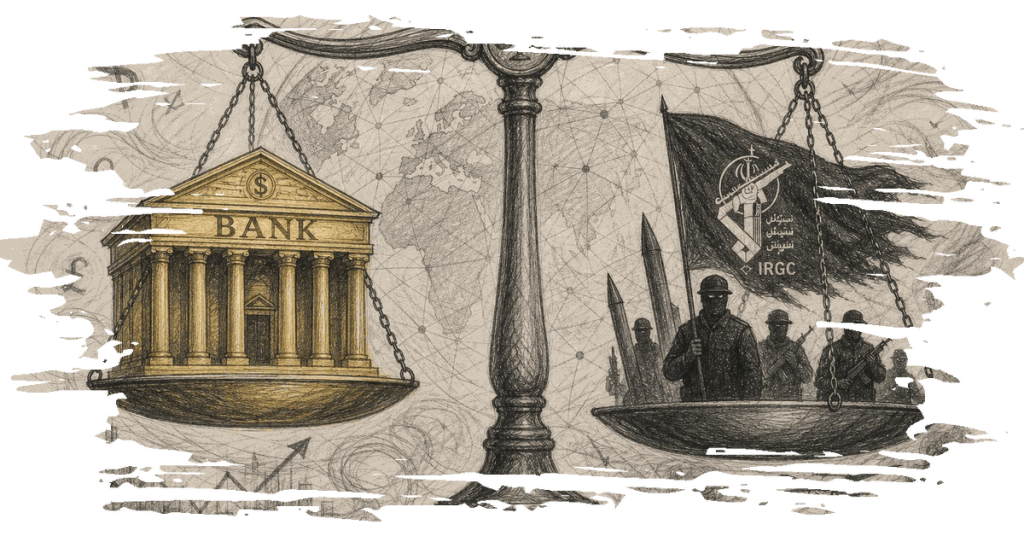
The United States has imposed sanctions on a Turkish bank and its subsidiaries, accusing them of facilitating financial transactions for Iran’s Islamic Revolutionary Guard Corps (IRGC) Quds Force. The U.S. Treasury’s Office of Foreign Assets Control (OFAC) announced the sanctions on Golden Global Yatirim Bankasi Anonim Sirketi and its Istanbul-based units, Golden Global Varlik Kiralama Anonim Sirketi and Golden Global Portfoy Yonetimi Anonim Sirketi. These entities are alleged to have moved tens of millions of dollars on behalf of the IRGC, helping to channel Iranian oil revenues from China to Turkey through a network of exchangers converting funds into cash and gold.
This move is part of Washington’s broader initiative, known as Operation Economic Outcast, aimed at economically isolating Iran by severing its financial networks globally. U.S. Treasury Secretary Scott Bessent emphasized the seriousness of the sanctions, warning financial institutions worldwide to cease their ties with Iran or face severe consequences. “We know who you are, we know where you are, and we will continue to take action together with our allies and partners until we have buried the head of the Iranian snake,” Bessent stated, underscoring the aggressive stance of the U.S. in its economic campaign against Iran.

The sanctions are a continuation of the U.S.’s efforts to cut off Iran’s financial resources, a strategy that has been in place for several years amidst escalating tensions between the two nations. The U.S. has been particularly focused on targeting Iranian entities and their international collaborators to prevent the flow of funds that could support Iran’s military activities. The Treasury’s actions are also intended to deter other financial institutions from engaging with Iran, with Bessent indicating that further secondary sanctions could follow, potentially cutting off non-compliant institutions from the U.S. dollar system entirely.
The implications of these sanctions could be significant for U.S.-Turkey relations, as Turkey has historically maintained economic ties with Iran. The sanctions may also impact the Turkish bank’s operations and its standing within the international financial community. However, the primary source does not provide detailed information on the Turkish government’s response or the potential economic repercussions for the bank and its subsidiaries.
Regionally, the sanctions are likely to affect Iran’s ability to conduct international financial transactions, further straining its economy. The U.S. aims to disrupt Iran’s financial networks and diminish its capacity to fund activities deemed threatening by Washington and its allies. This move comes amid a broader geopolitical context where the U.S. is actively working to counter Iran’s influence in the Middle East and beyond.
The U.S. Treasury’s actions are part of a larger strategy to increase pressure on Iran following failed military objectives. Bessent likened the economic campaign to a historic military operation, stating, “In the Second World War, D-Day marked the historic beginning of a campaign with our allies to target and drive the enemy from its positions, including those in third countries. Today, in that same spirit, we are launching an economic onslaught against Iran’s financial connections around the globe.”
The sanctions against the Turkish bank and its subsidiaries are the latest in a series of measures by the U.S. to isolate Iran economically. The Treasury had previously barred the UAE branches of Egypt’s Banque Misr from accessing the dollar over alleged Iranian links, illustrating the U.S.’s commitment to targeting entities that facilitate Iran’s financial activities. As the U.S. continues to escalate its economic pressure on Iran, the effectiveness and broader consequences of these sanctions remain to be seen.