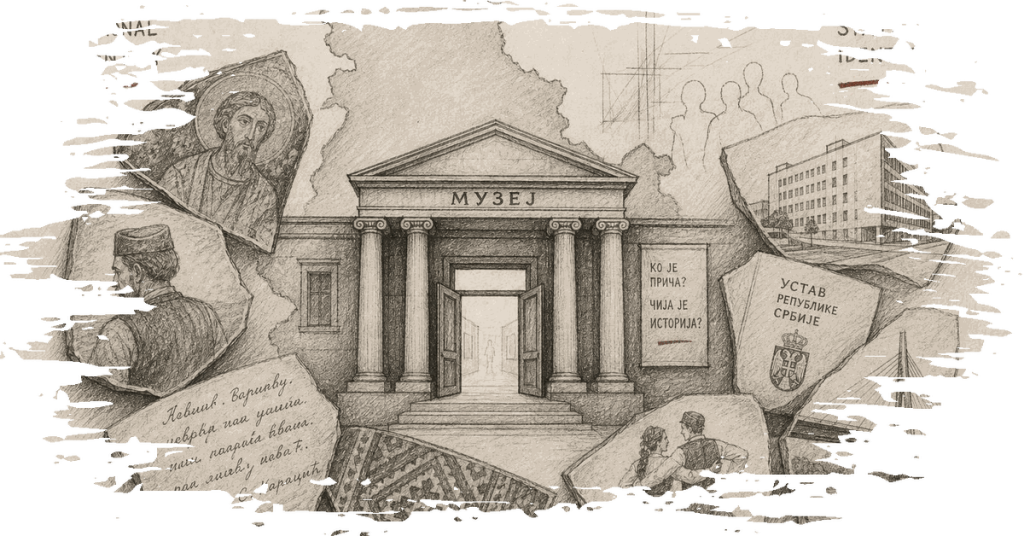
The Serbian government has officially renamed the Historical Museum of Serbia to the Serbian Historical Museum, a decision made during a session on September 3, 2026, and signed by Prime Minister Đuro Macut. The announcement, reported by the Tanjug news agency, did not include an explanation for the name change, leading to speculation and debate about the implications of this decision on national versus state identity in cultural institutions.
The renaming has sparked discussions regarding the broader trend of nationalistic rebranding within Serbia. This is not the first instance of such changes; similar actions have been taken with various sports federations and the Olympic Committee, where names were altered to emphasize a national identity. For example, water polo, handball, and boxing federations have been renamed to include “Serbian” in their titles, and the Olympic Committee of Serbia has been renamed to the Serbian Olympic Committee.

The difference between the original and new names of the museum is significant in terms of cultural representation. The original name, Historical Museum of Serbia, suggests an institution preserving the history of the Serbian state. In contrast, the new name, Serbian Historical Museum, implies a focus on the history of the Serbian nation, encompassing all Serbs worldwide. This shift aligns with the government’s apparent preference for emphasizing a “Serbian world,” which is reflected in the use of possessive adjectives in institutional names.
Critics have pointed out that the government has not provided a clear rationale for these changes, raising questions about transparency and the motivations behind the rebranding. The lack of official explanation has led to various interpretations and criticisms on social media. One commentator highlighted the irony of individuals who may not have visited a museum but are eager to change its name.
This decision is part of a broader cultural policy trend in Serbia, where national identity is increasingly emphasized in institutional names. Minister of Culture Nikola Selaković has previously referred to Hall 1 of the Belgrade Fair as the Home of the Serbian Opera, despite the absence of an official Serbian Opera, suggesting a potential renaming of the Opera of the National Theater.
The renaming of the museum is set to take effect eight days after its publication in the Official Gazette on September 4, 2026. This move has prompted discussions among cultural commentators and historians about the implications for Serbian cultural policy and identity. The debate centers on whether such changes reflect an attempt to strengthen national identity or if they risk alienating segments of the population who may feel excluded by the emphasis on a singular national narrative.
The government’s approach to cultural representation has been a topic of discussion in various contexts, including the development of new cultural institutions. Prime Minister Macut and Minister Selaković have been involved in projects such as the future Archaeological Museum in Belgrade, which aims to become a cultural center with significant historical and architectural value.
As Serbia continues to navigate its cultural and political landscape, the renaming of the Historical Museum of Serbia serves as a focal point for discussions on national identity, cultural representation, and the role of government in shaping these narratives. The outcome of this decision and its reception by the public and cultural institutions will likely influence future policies and the broader cultural identity of Serbia.