

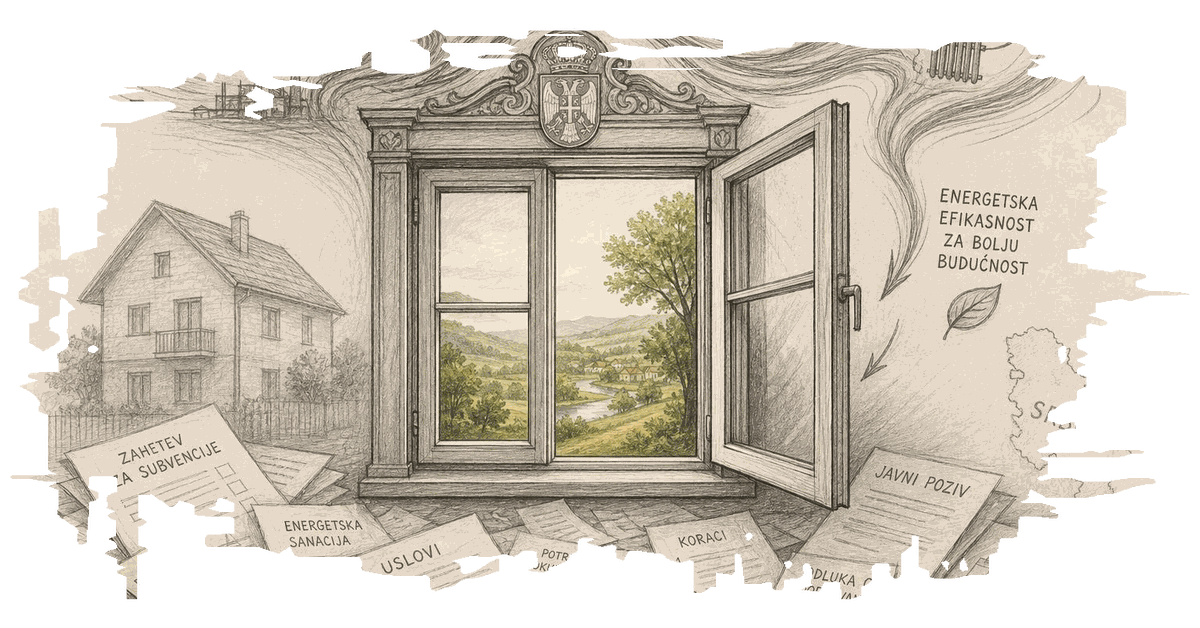
The Serbian government’s initiative to subsidize half the cost of replacing old windows and doors aims to improve energy efficiency in the country, which consumes energy at a rate three and a half times higher than the European average. This program, however, faces significant challenges in terms of accessibility and effectiveness, as evidenced by the experiences of citizens like Igor Marković from Belgrade.
Marković’s attempt to access the subsidy for new PVC windows was fraught with delays and additional costs. The process, which began with a six-month wait for a new public call for applications, was further prolonged by the requirement to choose a contractor from a pre-approved list. These contractors, according to Marković, were overwhelmed with work and charged 15 to 20 percent more than others. Ultimately, Marković decided to proceed with the window replacement on his own, spending approximately 2,000 euros for his 60-square-meter apartment. While the government would have reimbursed him about 700 euros, the subsidy did not cover additional costs like insect screens, which amounted to 300 euros. Over the course of a year, Marković managed to save around 500 euros on electricity with the new windows.

The subsidy program is limited to 10,000 households annually, which is a small fraction of the approximately 1.25 million households in Serbia with outdated windows and doors. This limitation raises concerns about the program’s accessibility for those who need it most. Many Serbian households struggle financially, with at least a quarter of the population barely making ends meet. The government does not publish data on absolute poverty, but estimates suggest that between 300,000 and 400,000 individual houses lack any thermal insulation, featuring only basic wooden windows that allow drafts.
The broader context of Serbia’s energy consumption highlights the urgency of improving energy efficiency. Buildings in Serbia consume about 60 percent of the country’s total energy, compared to the European average of 40 percent. The average energy consumption for heating in Serbia is nearly double that of other European countries, at approximately 150 kWh/m² annually.
The government’s subsidy program is part of a five-year project supported by the World Bank, set to continue until the end of November 2027. The Ministry of Energy expects that more than 50,000 households will benefit from the subsidies over the project’s duration. However, the impact of these efforts remains limited, with only about 22,000 households receiving grants for energy renovation over the past two years.
The process of obtaining these subsidies involves both the Ministry of Energy and local governments. After the Ministry allocates funds to municipalities, each local government issues public calls for applications. Citizens must navigate a complex application process, which includes ensuring their property is legally registered and meeting specific electricity consumption criteria.
The program’s limited scope and the financial constraints of many households mean that its potential impact on Serbia’s energy efficiency crisis is uncertain. Experts emphasize that a successful energy transition requires inclusive policies that do not leave vulnerable populations behind. Without addressing the broader economic challenges faced by many Serbian households, the program’s ability to significantly reduce energy consumption and emissions remains in question.
As the government prepares to issue a new public call for subsidies in the last quarter of 2026, the effectiveness of this initiative will depend on its ability to reach those most in need and address the systemic issues that have hindered its success thus far.


0 Comments