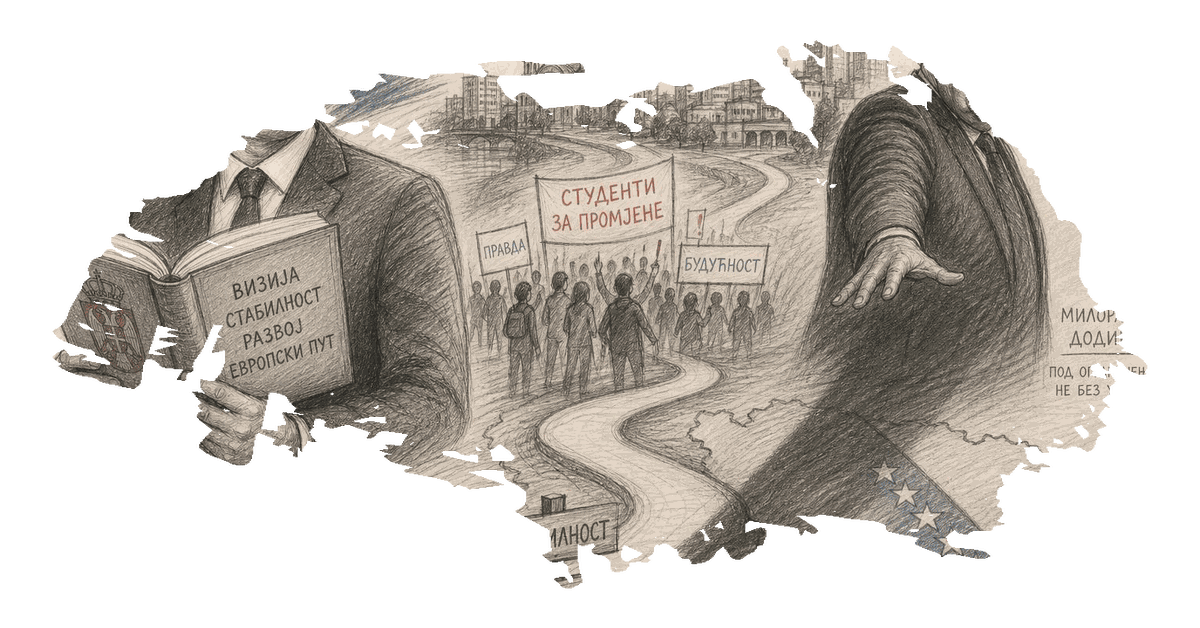
Student protests in Serbia have maintained a surprising level of energy and influence over the past two years, according to historian Florijan Biber. Speaking to the Serbian newspaper Danas, Biber highlighted the significance of these protests in the current political climate, noting that they have fundamentally altered societal dynamics in the country. He described the persistence and vigor of the student movement as remarkable, especially given the challenging circumstances and a general sense of hopelessness that has pervaded society.
Biber, a history professor at the University of Graz, observed that the student mobilization has created a “referendum-like atmosphere” in Serbia, suggesting that the upcoming elections could be a pivotal moment for change. He warned, however, that if the student movement fails to achieve electoral success, it may struggle to maintain its momentum. The historian drew parallels between the current situation and the atmosphere in Serbia during the summer of 2000, a time marked by significant political disillusionment but which led to substantial political change.

The student protests, which have been ongoing for two years, are seen as a serious threat by the current regime, led by President Aleksandar Vučić. Biber noted that the government has employed strategies of repression, including portraying the student movement as foreign agents and enemies of the state, a tactic reminiscent of those used by the Serbian Radical Party in the 1990s. Despite these challenges, Biber remains optimistic about the potential for change, emphasizing that authoritarian systems have a limited lifespan.
The student movement’s ability to mobilize support quickly and effectively has been demonstrated by their successful signature collection campaign, which Biber described as a crucial first step ahead of the elections. This effort has contributed to the perception that the upcoming elections represent a unique opportunity for societal transformation.
However, Biber cautioned that the outcome of the elections on October 25 will be closely contested. He expressed confidence in the students’ motivation to continue their efforts even if they do not succeed in the elections, but he also acknowledged the difficulties they may face in sustaining their energy without electoral victory. The historian suggested that continued mobilization and pressure from the student movement and the broader citizenry could lead to significant changes, including the potential end of Vučić’s regime.
The broader context of student activism in Serbia includes a history of successful challenges to authoritarian regimes. Biber’s reflections on past movements highlight the potential for the current protests to bring about meaningful change, provided they can maintain their momentum and overcome the challenges posed by government repression.
As the elections approach, the student movement’s impact on the political landscape remains a critical factor to watch. The stakes are high, with the potential for significant shifts in governance and accountability. Biber’s insights underscore the importance of the student protests in shaping the future of Serbia’s political landscape, as well as the challenges they face in sustaining their influence in the face of a repressive regime.