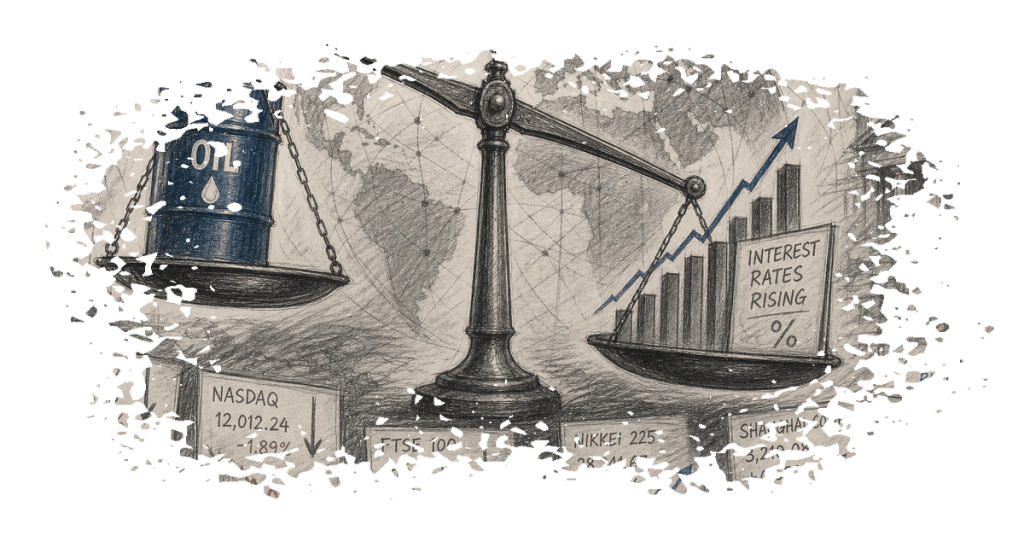
Global stock markets have experienced a decline for the second consecutive week, driven by concerns over rising interest rates and increasing oil prices. The American Federal Reserve (Fed) recently raised its key interest rates by 0.25 percentage points, marking the first increase since 2023. This move, aimed at curbing inflation, has sparked fears that higher borrowing costs could slow down economic growth. The Fed has also indicated the possibility of another rate hike before the end of the year.
The decision by the Fed was anticipated by the market, but it has nonetheless contributed to a downturn in stock prices. On Wall Street, the Dow Jones index fell by 1.7% to 51,682 points, while the S&P 500 slipped by 0.1% to 7,650 points. In contrast, the Nasdaq index saw a slight increase of 0.7% to 26,522 points. The European Central Bank and the Bank of Japan have also recently increased their interest rates, further contributing to the global trend of tightening monetary policy.

The backdrop to these financial maneuvers is a sharp rise in oil prices, which have surged by approximately 20% over the past two weeks. This increase is largely attributed to the ongoing crisis in the Middle East, which has exacerbated global inflationary pressures. As a result, central banks are under pressure to raise interest rates to manage inflation, despite the potential risk of stifling economic growth.
In Europe, stock markets have mirrored the global trend. The Frankfurt DAX index dropped by 1.05% to 25,304 points, and the Paris CAC 40 fell by 1.4% to 8,065 points. However, London’s FTSE index bucked the trend with a modest gain of 0.1% to 10,659 points. Investors were somewhat reassured by a three-day decline in oil prices towards the end of last week, which offered hope that inflationary pressures might ease. Nonetheless, these developments only slightly mitigated the losses in stock indices.
The rise in interest rates is part of a broader effort by central banks to combat persistent inflation, which has been fueled by the recent spike in oil prices. The Fed’s chairman, Kevin Warsh, emphasized the central bank’s commitment to price stability, stating that the current inflation rate remains unacceptably high. The White House, however, has criticized the Fed’s decision, arguing that it does not adequately address the primary drivers of inflation, particularly those related to energy supply shocks and oil prices in the Middle East.
The global economic landscape remains uncertain as central banks navigate the delicate balance between controlling inflation and supporting economic growth. Analysts are closely watching for further signals from the Fed regarding the timing and extent of any additional rate hikes. The possibility of further increases in interest rates by the Fed and other central banks continues to loom, with analysts speculating on whether these could occur in October or December.
The situation underscores the interconnected nature of global markets, where geopolitical tensions and monetary policy decisions in major economies can have widespread repercussions. As central banks continue to respond to inflationary pressures, the impact on global economic growth and market stability remains a key concern for investors and policymakers alike.