The European Central Bank (ECB) is currently conducting a public survey to gather opinions on the design of new euro banknotes, with the survey set to conclude on September 21. This initiative has sparked significant public debate over the proposed themes, which include portraits of famous Europeans and various bird species. The banknotes, which are expected to be introduced in 2029, represent a shift from the current designs that feature architectural styles.
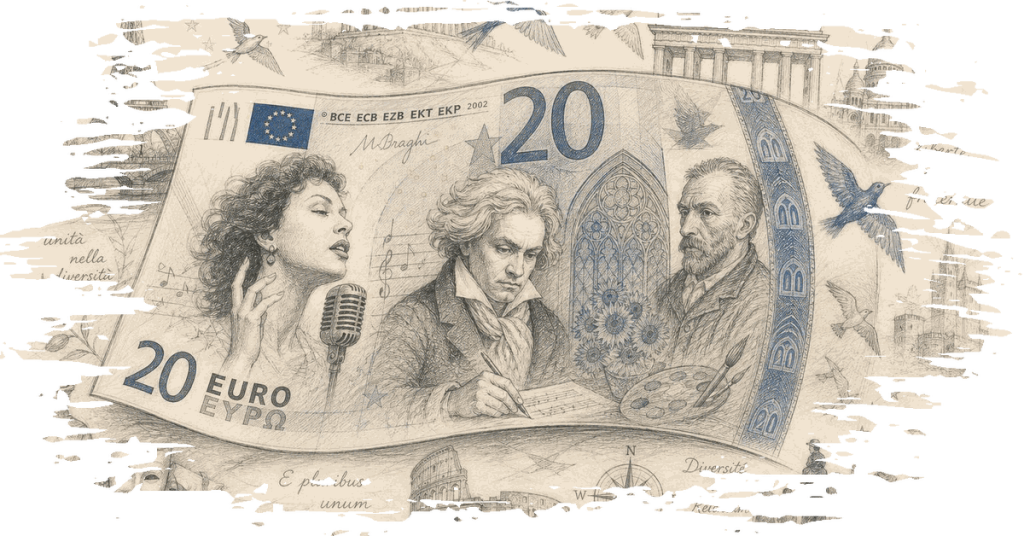
The proposed designs include notable figures such as opera singer Maria Callas on the €5 note, composer Ludwig van Beethoven on the €10 note, physicist Marie Curie on the €20 note, and writer Miguel de Cervantes on the €50 note. The €100 note features Renaissance artist Leonardo da Vinci, while the €200 note includes Austrian writer and pacifist Bertha von Suttner. This selection has been met with criticism due to the perceived subjectivity in choosing these figures. Critics argue about the exclusion of other significant Europeans, questioning why figures like Wolfgang Amadeus Mozart, Johann Wolfgang von Goethe, or Nicolaus Copernicus were not included.

In addition to the famous Europeans, another set of proposals features bird species, some of which are not widely recognized or typically associated with Europe. These include the wallcreeper on the €5 note, the kingfisher on the €10 note, and the bee-eater on the €20 note. The €50 note features the white stork, more familiar to Europeans, while the €100 and €200 notes depict the avocet and the northern gannet, respectively. This choice has also drawn criticism, as many of the birds are not considered emblematic of Europe, leading to questions about their representation of European identity.
The ECB’s decision-making process involves a jury of 21 members, but the final designs will also consider public opinion gathered through the survey. The banknotes’ reverse sides will feature either EU institutions or various cultural activities, ranging from street performances to university scenes, reflecting a mix of photorealism and artistic interpretations.
This redesign effort follows a previous survey where over nine million citizens across the Eurozone participated, indicating strong public interest in the banknote designs. The ECB aims to finalize the designs by the end of the year, ensuring that the new banknotes not only reflect European culture and identity but also enhance security features to prevent counterfeiting.
As the survey nears its conclusion, the ECB continues to engage with the public, seeking to balance cultural representation with practicality and security in its new banknote designs. The outcome of this process will likely influence perceptions of European identity and the symbolic value of the euro in the coming years.