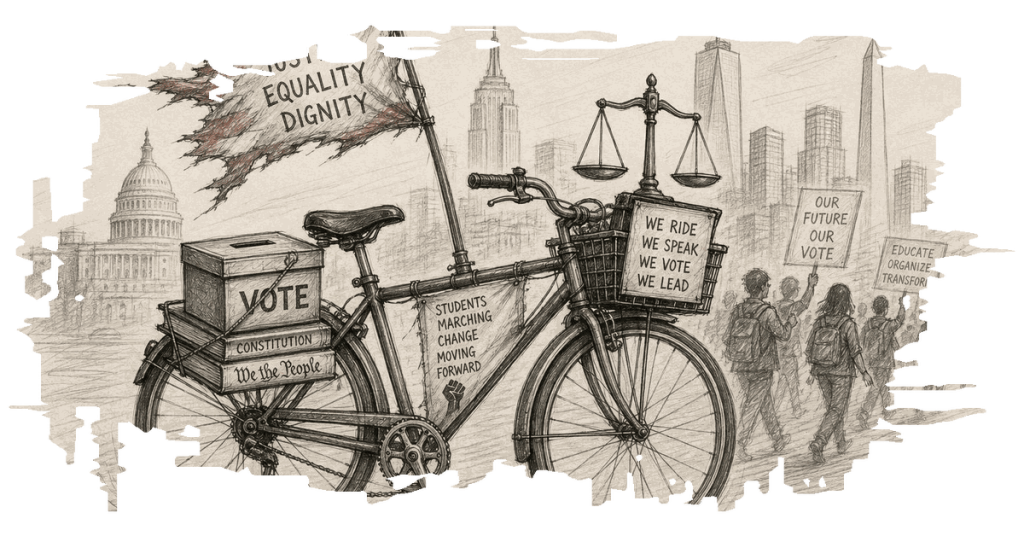
Students in Serbia have embarked on a unique bicycle campaign, named “Bici tura – čuvari Ustava,” to promote their electoral list ahead of the upcoming parliamentary elections scheduled for October 25. The initiative kicked off on September 17, with participants starting their journey from the center of Belgrade. The campaign aims to cover major cities across Serbia by the end of September, highlighting the students’ commitment to political engagement and activism.
This bicycle campaign is part of a broader trend of increasing student activism in Serbia, which has been gaining momentum, particularly following anti-government protests. These protests were notably fueled by an incident on November 1, 2024, when a roof collapse at the Novi Sad railway station resulted in 16 fatalities and one severe injury. In response, students previously cycled to Strasbourg to seek support from European Union institutions, demonstrating their dedication to political causes.

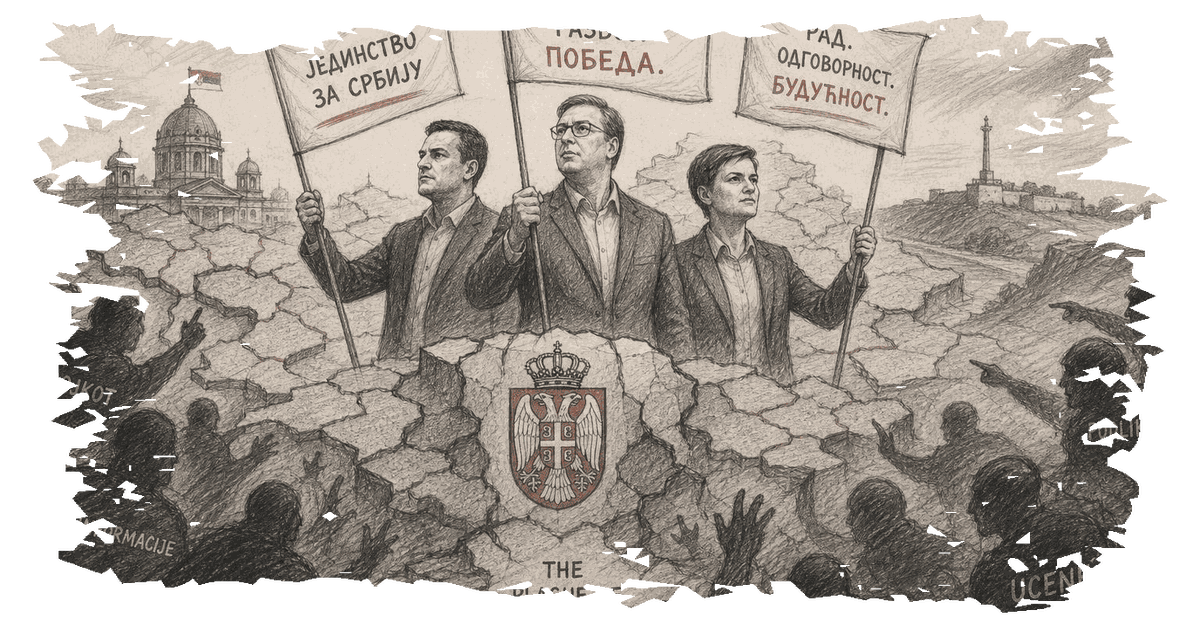
The Republic Election Commission (RIK) has dismissed claims that Serbian President Aleksandar Vučić is in a conflict of interest regarding his candidacy for the upcoming elections. Vučić, who has announced his intention to resign from the presidency on September 27, plans to run as a private citizen. The RIK’s decision came after 17 out of 20 members voted against the conflict of interest claims, while two members supported them. Vladimir Dimitrijević, the president of RIK, noted that similar candidacy restrictions are not present in any EU country except Croatia, nor in Serbia.
Vučić’s resignation is set to take effect upon his return from the United Nations in New York, where he is expected to deliver a speech. His resignation will trigger the process for presidential elections, which must occur within three months. In the interim, Ana Brnabić, the president of the dissolved national assembly, will serve as acting president. Vučić has served as Serbia’s president since 2017 and is constitutionally barred from serving more than two terms.
The student group “Studenti u blokadi” has reported that police officers from the Economic Crime Department visited their warehouse on September 16, where promotional materials for future actions were stored. The students view this as an intimidation attempt, although details about the incident, including the warehouse’s location and whether any items were seized, remain unspecified.
In a separate development, a recording surfaced on social media showing a meeting of the opposition party “Mi – snaga naroda,” where members discussed a potential coalition with Aleksandar Vulin’s party. The recording also mentioned Andrej Vučić, the president’s brother, although the authenticity of the video could not be verified by BBC. The discussions reportedly involved negotiations about government ministries and media access, with claims of interference by the ruling Serbian Progressive Party (SNS) in opposition activities.
The student movement’s bicycle campaign and the ongoing political dynamics underscore the heightened political engagement in Serbia as the elections approach. While the impact of these efforts on voter turnout and election results remains uncertain, the campaign reflects a significant push by students to influence the political landscape in Serbia.