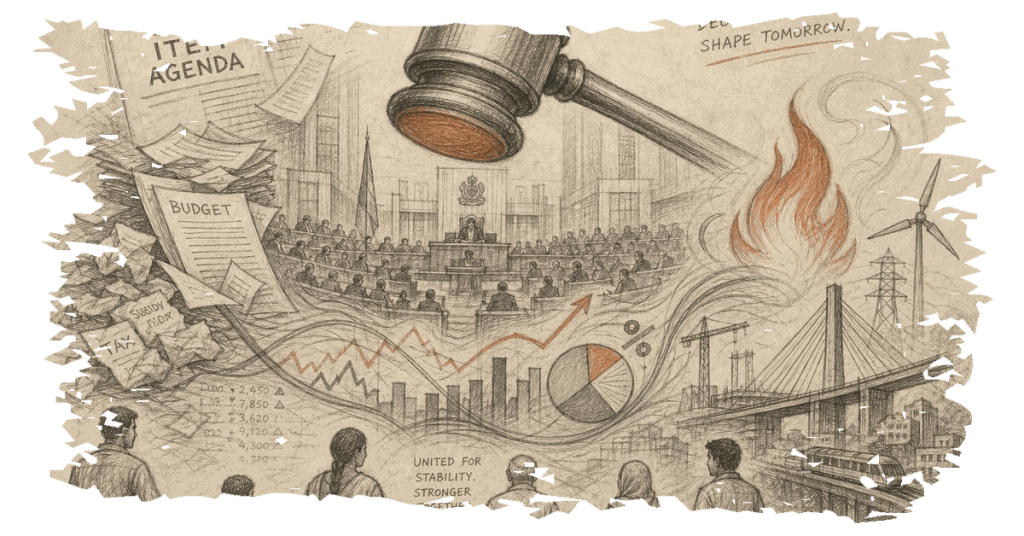
The Serbian Parliament is set to convene an extraordinary session to address a substantial agenda comprising 59 items, with a primary focus on the first budget rebalancing of the year. Scheduled to begin on August 24, 2026, this session will tackle a range of legislative changes aimed at mitigating the financial challenges faced by the nation, particularly in light of the ongoing energy crisis and escalating living costs.
Among the key agenda items is a proposed law designed to provide financial support to citizens adversely affected by the energy crisis. This measure includes one-time financial assistance and monetary compensation for specific population categories. The session will also deliberate on significant changes to laws related to the judiciary, property registration, and anti-corruption efforts.
The legislative agenda includes proposed amendments to the Law on the Judiciary Academy, changes to the property registration laws, and updates to the anti-corruption legislation. These proposals are part of a broader effort to enhance transparency and efficiency within the Serbian legal and administrative systems.
Additionally, the session will consider amendments to the Law on Public Interest and Special Procedures for Expropriation and Issuance of Construction Permits, which are crucial for the realization of the “Belgrade Waterfront” project. The Serbian government has also submitted proposals for amendments to the Public Debt Law.
Further legislative changes under discussion include modifications to electronic dispatch, electronic invoicing, fiscalization laws, and excise duties. Amendments to the tax procedure and administration laws, as well as the law on greenhouse gas emissions, are also on the agenda. These changes aim to streamline fiscal processes and address environmental concerns.
The parliament will also review amendments to the Budget System Law, the Value Added Tax Law, the Corporate Income Tax Law, the Personal Income Tax Law, and the Law on Mandatory Social Insurance Contributions. Proposals to amend the Tobacco Law, the Free Zones Law, and the final account of the 2025 budget are also slated for discussion.
Infrastructure projects are another focal point, with several legislative proposals concerning loans for infrastructure development. These include projects for the construction of expressways and highways, such as the Bački Breg-Sombor-Kikinda section and the Belgrade-Zrenjanin-Novi Sad section. The government has proposed borrowing from various banks to finance these initiatives.
International agreements related to tax and credit arrangements are also on the agenda. This includes the confirmation of agreements with Angola and Algeria to eliminate double taxation and prevent tax evasion. Additionally, a framework agreement with the Council of Europe Development Bank for financing public sector renovations is up for confirmation.
The extraordinary session underscores the Serbian government’s commitment to addressing pressing economic and infrastructural issues through legislative reforms. The outcomes of this session are expected to have a significant impact on the country’s financial stability and development trajectory. However, the effectiveness of these measures will largely depend on achieving political consensus and ensuring public awareness of the implications of the discussed laws.