

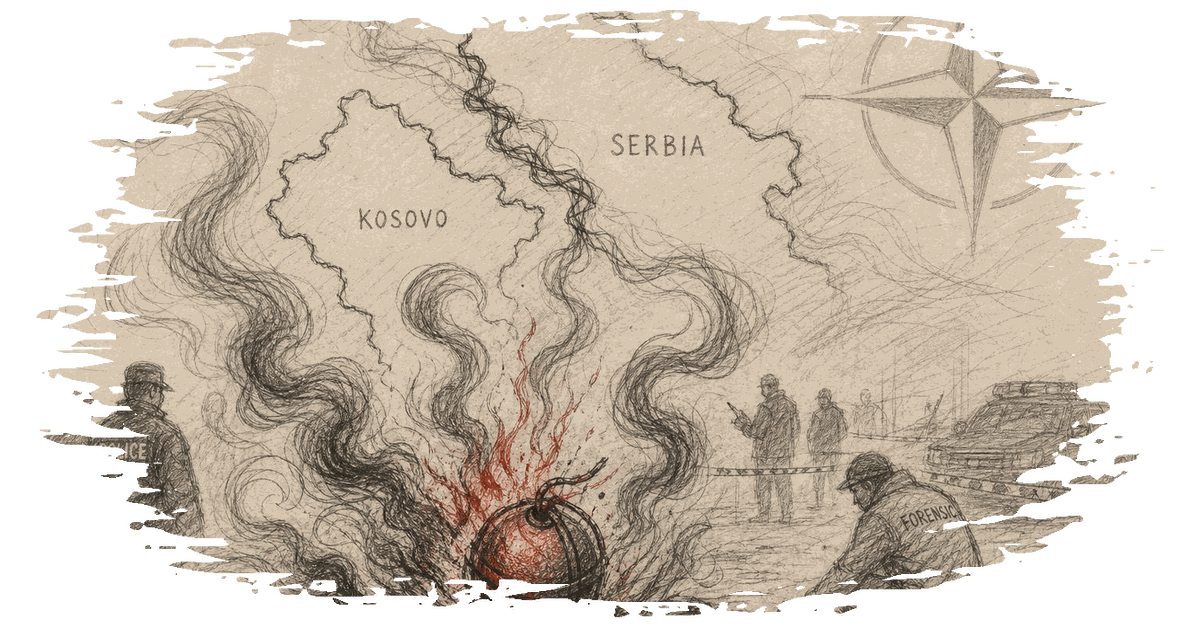
A suspected terrorist attack involving a fireball device launched from Kosovo into central Serbia has heightened security concerns in the region. The incident occurred overnight between Saturday and Sunday, when an incendiary device, referred to as a “fireball,” was fired from the southern Serbian province of Kosovo and landed in the area of Brnjak. Fortunately, the device did not explode, but it was reportedly designed to cause a large-scale fire. The local police in Novi Pazar and the prosecutor’s office, led by Sanja Mrlješ, have been notified, and an investigation is currently underway.
Former intelligence officer Božidar Spasić described the incident as a serious attempt at terrorism. He emphasized that the presence of such an explosive device on Serbian territory indicates not only an intent to cause physical damage through fire but also to instill fear and anxiety among the populace. Spasić noted the importance of a thorough investigation to analyze the device’s components and characteristics, drawing parallels to similar devices used by terrorist groups in the past. According to Spasić, these types of devices are often manufactured in intelligence service laboratories and used by trained operatives.

The incident comes amid a period of significant wildfires in the region, which Spasić suggests could have provided the conditions necessary for such a “criminal operation.” He pointed out that recent events in the occupied territories of Kosovo and Metohija suggest that the investigation should focus on the temporary Albanian authorities in the region.
The response from international bodies such as KFOR and EULEX is awaited, as their reaction could significantly influence the political landscape. Retired Lieutenant Colonel Ljuban Karan expressed skepticism about the intentions of the self-proclaimed authorities in Pristina, suggesting that such acts of “ecological terrorism” are part of a broader strategy to harm Serbia and its citizens. Karan criticized the silence or lack of action from international peacekeeping forces, implying that such incidents warrant a strong response to prevent future occurrences.
The broader geopolitical context includes long-standing tensions between Serbia and Kosovo, which have historically led to violent incidents. The current situation is exacerbated by the political dynamics within Kosovo, where the government, led by Albin Kurti, has faced criticism for its handling of regional issues. The absence of a scheduled meeting between KFOR commander Özkan Ulutaş and Kurti, due to “unforeseen circumstances,” has further complicated the situation. This meeting was intended to discuss the opening of the main bridge on the Ibar River in Kosovska Mitrovica, a critical point of contention between Serbian and Albanian communities.
Serbian President Aleksandar Vučić has previously expressed concerns about the implementation of the Brussels Agreement, signed in 2013, which aimed to normalize relations between Belgrade and Pristina. Vučić has called for urgent discussions with NATO Secretary-General Mark Rutte to address the ongoing tensions and prevent further escalation.
The incident in Brnjak underscores the fragile security situation in the Balkans and the potential for isolated events to trigger broader regional instability. As investigations continue, the focus will likely remain on identifying the perpetrators and understanding the motivations behind this act. The Serbian authorities, along with international partners, are expected to take steps to enhance security measures and prevent similar incidents in the future.




0 Comments