

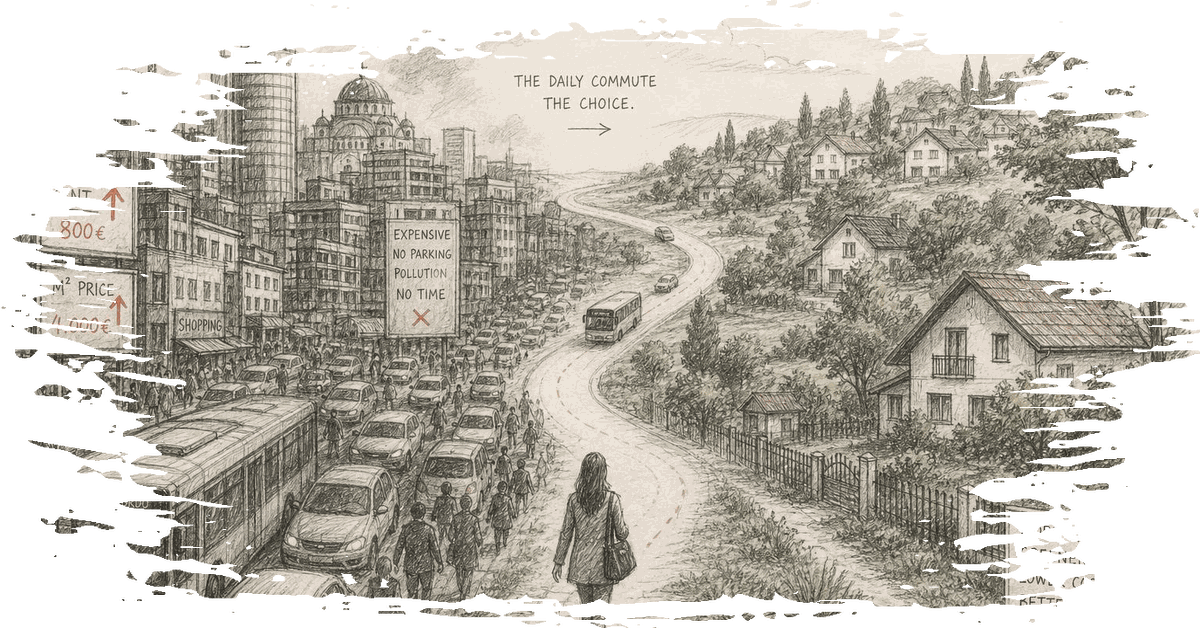
The trend of relocating from central Belgrade to its suburban areas is gaining momentum as residents seek to escape the city’s high living costs and traffic congestion in favor of a more tranquil lifestyle. According to the latest census, of the 1,681,405 residents in Belgrade, approximately 484,000 live in suburban areas, while over 1.1 million reside in the city center. This migration is driven by the desire for a quieter daily life and more affordable housing options.
Tamara, a 25-year-old resident of Belgrade, exemplifies this trend. She plans to purchase an apartment in Pančevo, a town near Belgrade, with her fiancé. Despite both intending to continue working in the city, they have chosen Pančevo due to its more affordable real estate market. “In Belgrade, apartment prices are too high for what we can afford. In Pančevo, we can buy a decent apartment for the same or less money and still be close enough to Belgrade for work,” Tamara explained to N1.

Tamara’s decision is not solely based on financial considerations. She values the prospect of a simpler, more accessible lifestyle in Pančevo, contrasting it with the hectic pace of life in Belgrade. “I am aware that we will have to commute to Belgrade for work, but I prefer an organized trip by car or train to spending a lot of time in Belgrade’s traffic. Life in Pančevo seems simpler and more within reach,” she added.
The statistics from the Republic Institute for Statistics support this growing trend. Between 2019 and 2025, a significant number of people moved from Belgrade to nearby towns such as Stara Pazova and Pančevo. Specifically, 4,276 individuals relocated to Stara Pazova, and 3,969 to Pančevo during this period. Other towns like Aranđelovac, Valjevo, Inđija, and Sremska Mitrovica also saw an influx of new residents from Belgrade.
The daily commute from these suburban areas to Belgrade is a common practice. Data from the 2022 census reveal that 10,326 economically active residents travel daily from Pančevo to Belgrade for work. Similarly, Mladenovac, another suburban area, sees 6,196 daily commuters to the city. These figures highlight the compromise many residents make to balance work in the city with family life in quieter, suburban settings.
Tamara and her fiancé are also considering the long-term benefits of suburban living, particularly for raising a family. She expressed concerns about the complexities of raising children in Belgrade due to traffic, distance, and the lack of peaceful spaces. “I would like, if we have children one day, not to constantly worry about where they will play or how long it will take us to get somewhere. A quieter life suits me better,” she said.
The migration to suburban areas around Belgrade is not a new phenomenon but has gained more attention recently due to rising living costs and urban congestion. While the trend reflects individual choices like Tamara’s, it also suggests a broader shift in living preferences among Belgrade’s residents. However, comprehensive data on the overall impact of this migration on local economies and infrastructure is still lacking.
This movement raises questions about the future of urban planning and development in Serbia. As more people choose suburban living, there may be implications for transportation networks, housing markets, and public services in both the city and its surrounding areas. The trend underscores the need for strategic planning to accommodate the growing number of commuters and ensure sustainable development in these suburban regions.



0 Comments