

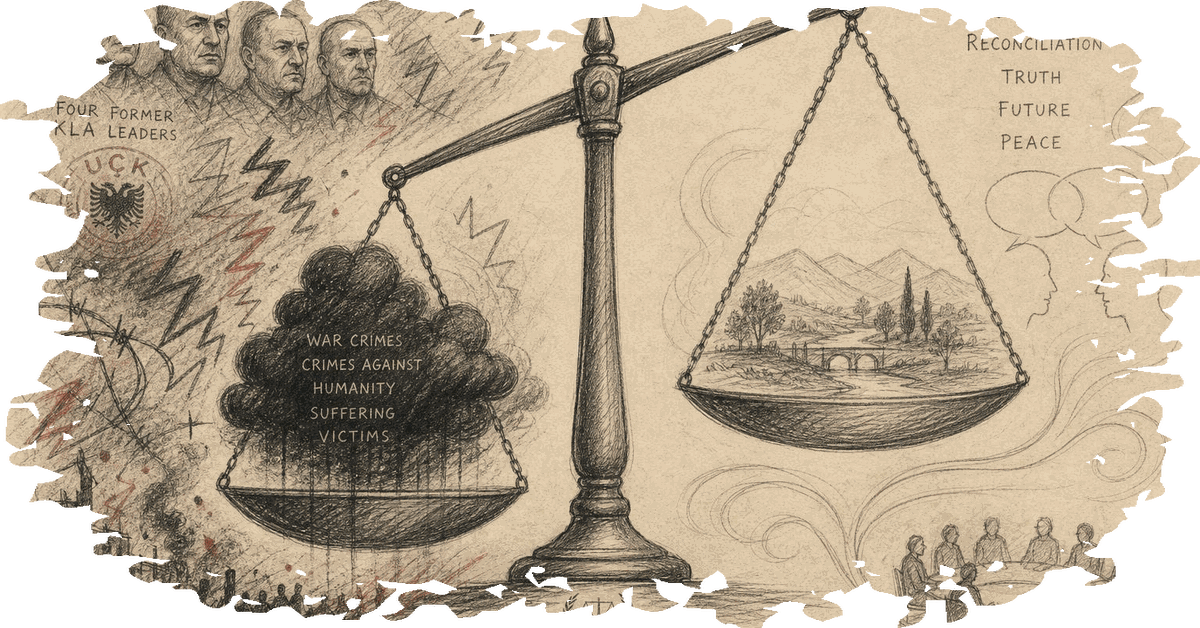
Veljko Odalović, the head of Serbia’s government commission for missing persons, has issued a stark warning about the potential consequences of an upcoming verdict from the Hague on September 16. The verdict concerns four former leaders of the Kosovo Liberation Army (KLA): Hashim Thaçi, Kadri Veseli, Rexhep Selimi, and Jakup Krasniqi. Odalović stated that the announcement of the verdict marks a pivotal moment, suggesting that “nothing will be the same” for Serbs afterward. He emphasized the gravity of the crimes committed against Serbs and described the current atmosphere as tense, with threats of unrest if the accused are convicted.
Odalović asserted that the evidence presented against the accused is undeniable, with documented facts supporting the charges. He noted that the crimes include killings and the existence of illegal detention facilities. According to Odalović, the verdict carries significant political implications, particularly for the Albanian political scene in Kosovo. He highlighted that the indictment covers only 103 names, whereas over 3,000 people were reportedly killed by KLA members, indicating the limited scope of the charges as just “the tip of the iceberg.”

The potential ramifications of the verdict extend beyond the immediate legal outcomes. Odalović pointed out that the decision could impact the political dynamics among Albanians in Kosovo. He also mentioned that the verdict might serve to distance the current political landscape from the legacy of the KLA, bringing to light the true events of the past.
Odalović’s comments reflect broader concerns about the legacy of the Kosovo conflict and the perception of international justice. Serbian officials have previously expressed skepticism about the impartiality of international courts, often viewing them as biased against Serbs. This sentiment is echoed in Odalović’s remarks, which suggest a long-standing grievance regarding the lack of accountability for crimes against Serbs.
In addition to the legal and political implications, Odalović warned of potential security risks. He mentioned that if Thaçi is convicted, the Serbian population in Kosovo could become a target, posing a significant threat to their safety. He criticized international forces, such as KFOR, for their perceived inaction, accusing them of merely observing rather than intervening in past and current tensions.
The situation is further complicated by the historical context of the Kosovo conflict and the ongoing tensions between Serbs and Albanians in the region. The verdict is seen as a critical juncture that could either exacerbate or alleviate these tensions, depending on its outcome and the subsequent reactions from both communities.
As the date of the verdict approaches, the atmosphere remains charged, with concerns about potential unrest and the broader implications for regional stability. The outcome of the trial and the international community’s response will be closely watched, as they hold the potential to influence the future trajectory of Serbian-Albanian relations in Kosovo.

0 Comments