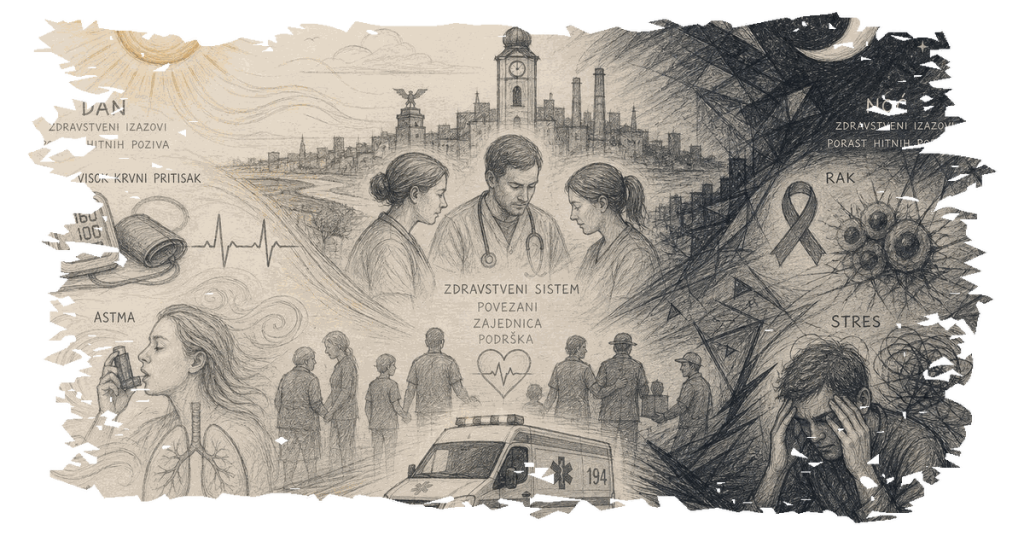
Kragujevac, Serbia, has experienced a marked increase in emergency medical calls, with local health services noting a significant rise in urgent care cases. Over the past 24 hours, the Emergency Medical Institute of Kragujevac managed 40 emergency calls, equally divided between day and night. Daytime cases included high blood pressure, fever, heart problems, and asthma; nighttime calls primarily involved cancer patients, those with high blood pressure, stress reactions, and stomach issues.
This surge underscores the strain on Kragujevac’s healthcare system. Emergency services have been busy, conducting 42 examinations of adult patients—17 during the day and 25 at night. Additionally, 12 public interventions were carried out, further stressing healthcare infrastructure.
There is growing concern over the causes of these health issues. Although specific reasons have not been officially detailed, speculation suggests environmental factors, lifestyle choices, and possibly seasonal changes. Local health authorities are expected to investigate further to develop preventive strategies.
Similar patterns in other parts of Serbia indicate a broader need for effective public health strategies to manage sudden increases in healthcare demand. Public awareness about symptoms requiring immediate medical attention is crucial.
Healthcare professionals urge residents to monitor their health closely and seek prompt medical advice for symptoms like high blood pressure or persistent fever. Public health campaigns may be necessary to educate the community on recognizing serious conditions early and understanding the importance of timely intervention.
Kragujevac’s healthcare system faces dual challenges: managing immediate patient care needs while addressing long-term public health concerns. A coordinated effort among healthcare providers, local authorities, and the community is essential to ensure resources are available for emergencies.
As this situation evolves, closely monitoring trends in emergency calls and patient conditions will be vital. This data can offer insights into potential health crises and inform targeted interventions to improve community health outcomes. Enhancing healthcare capacity and resilience will be key to preventing similar occurrences in the future.
The recent spike in emergency calls in Kragujevac highlights the need for a proactive approach to public health that addresses both immediate and long-term challenges.